The Anthropic engineering post on Managed Agents is getting read as a product announcement. It shouldn't be. Underneath the launch copy is a detailed architecture document: an account of how Anthropic structured harness primitives, tool execution isolation, durable state, and upgrade resilience. For Australian teams building bespoke agent systems, that's a design brief, not a press release.
Most Australian regulated enterprises building bespoke agent systems aren't doing it because they prefer complexity. They're doing it because APRA CPS 230 operational resilience requirements, the Privacy Act's Australian Privacy Principles, or specific data-residency obligations make a fully managed, US-hosted agent service a non-starter. The situation is particularly common in Australian financial services, government departments, and healthcare organisations, where sovereign data requirements sit alongside strict operational standards.
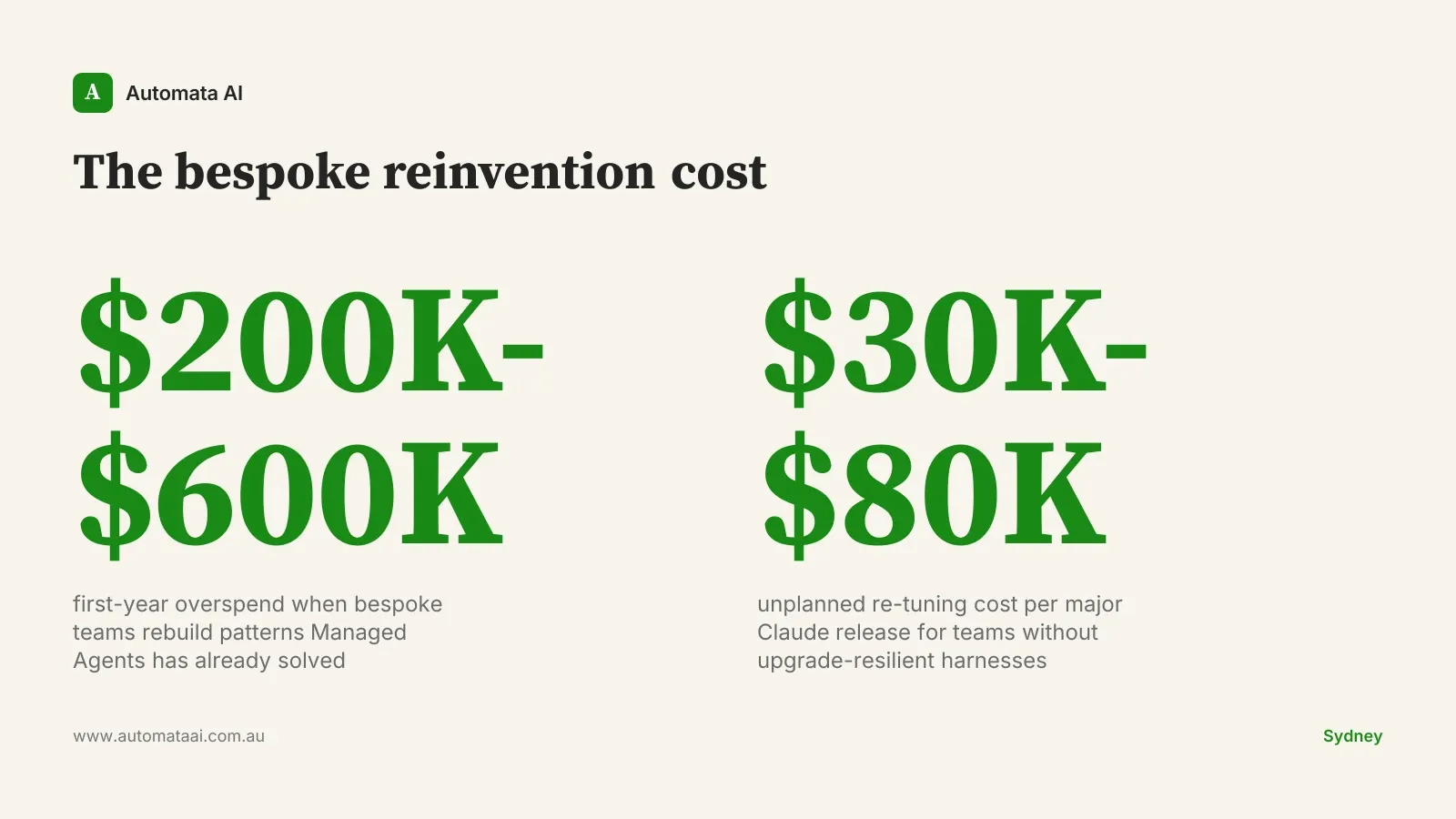
The problem is that bespoke teams routinely rebuild patterns Anthropic has already spent considerable engineering effort solving. Our experience across financial services, professional services, and healthcare firms puts the first-year cost of this reinvention at $200,000 to $600,000, mostly unplanned engineering hours and rework following the first production incident. Run the numbers through our ROI Calculator before committing to a bespoke architecture.
That's not a data problem. It's an architecture problem.
The four patterns worth copying
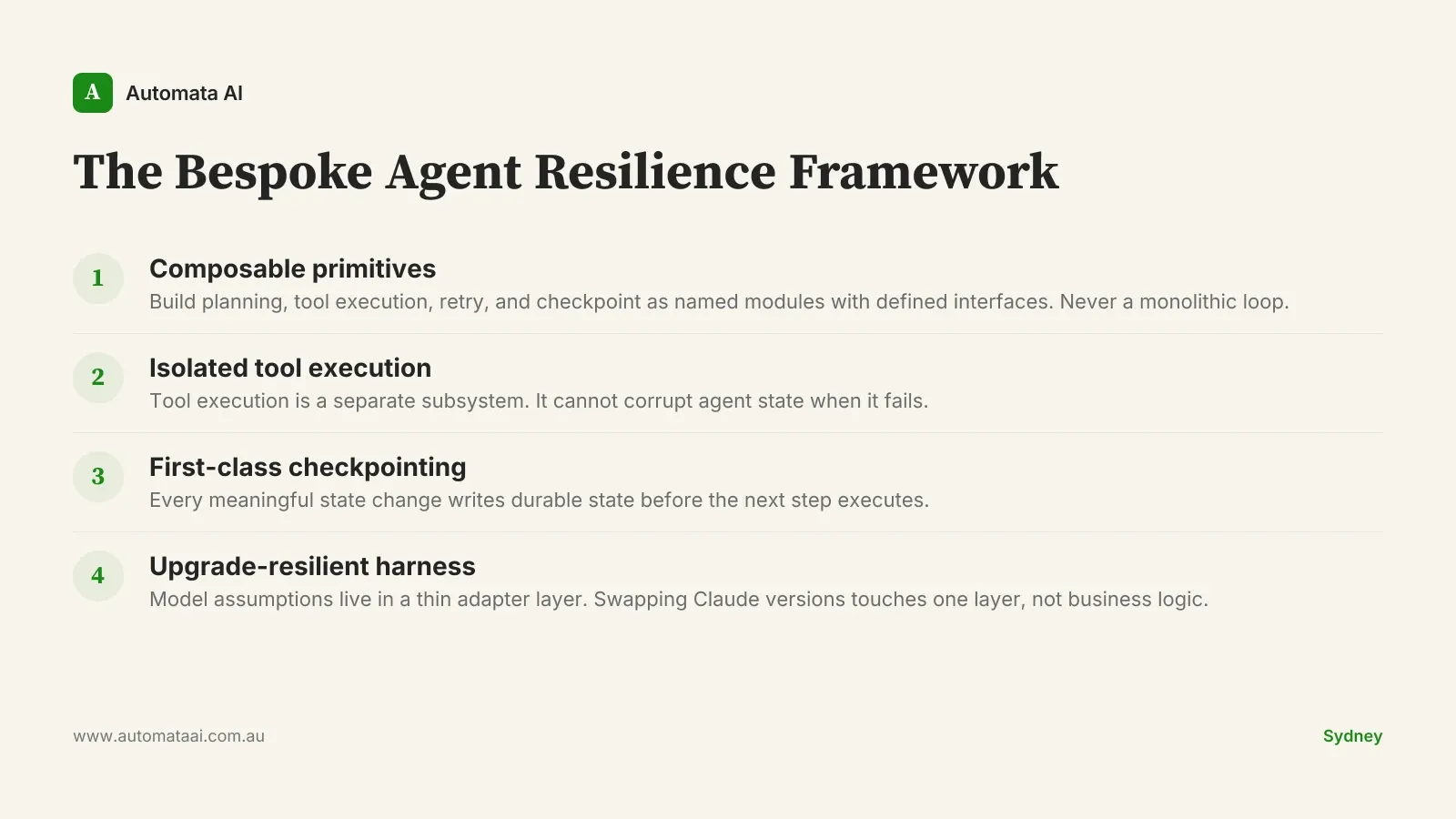
Anthropic's Managed Agents design documented four architectural choices that translate directly to bespoke builds. None of them are proprietary, and none require Managed Agents itself. They're the kind of engineering decisions that become obvious in hindsight, usually after a production incident that costs more to fix than the original build. The point of reading the engineering post isn't to admire the product. It's to extract the architecture.
1. Build primitives, not monolithic loops
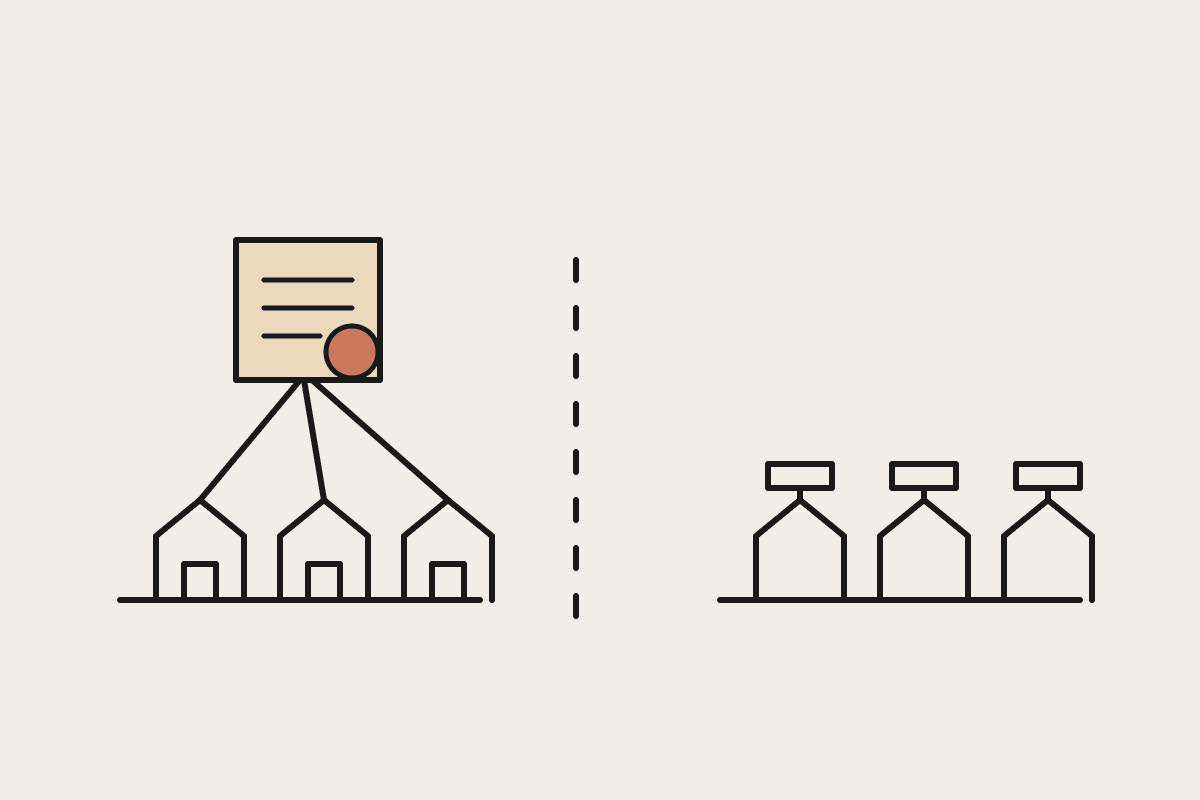
Anthropic structured the harness as composable primitives: planning, tool execution, retry, and checkpoint. Each primitive has a defined interface and can be swapped or extended independently. Bespoke teams almost always do the opposite. They write one long agent loop, wire everything inline, and then spend months untangling it when one component needs to change.
The discipline is to treat each concern as a named module with its own error model before wiring anything together. It feels slower at the start. It pays for itself the first time you need to upgrade the model version without touching the tool layer.
2. Tool execution is a separate component
In Managed Agents, tool execution is a separate subsystem with its own sandboxing, scaling, and failure handling. The agent loop calls it. It doesn't own it. Bespoke builds that inline tool execution directly into the agent loop produce systems where a single tool failure can corrupt the entire agent state. That's manageable in staging. In production at an APRA-regulated financial institution handling live transaction data, it becomes an operational incident under CPS 230 and potentially a breach of reporting obligations.
3. Checkpoint every meaningful state change
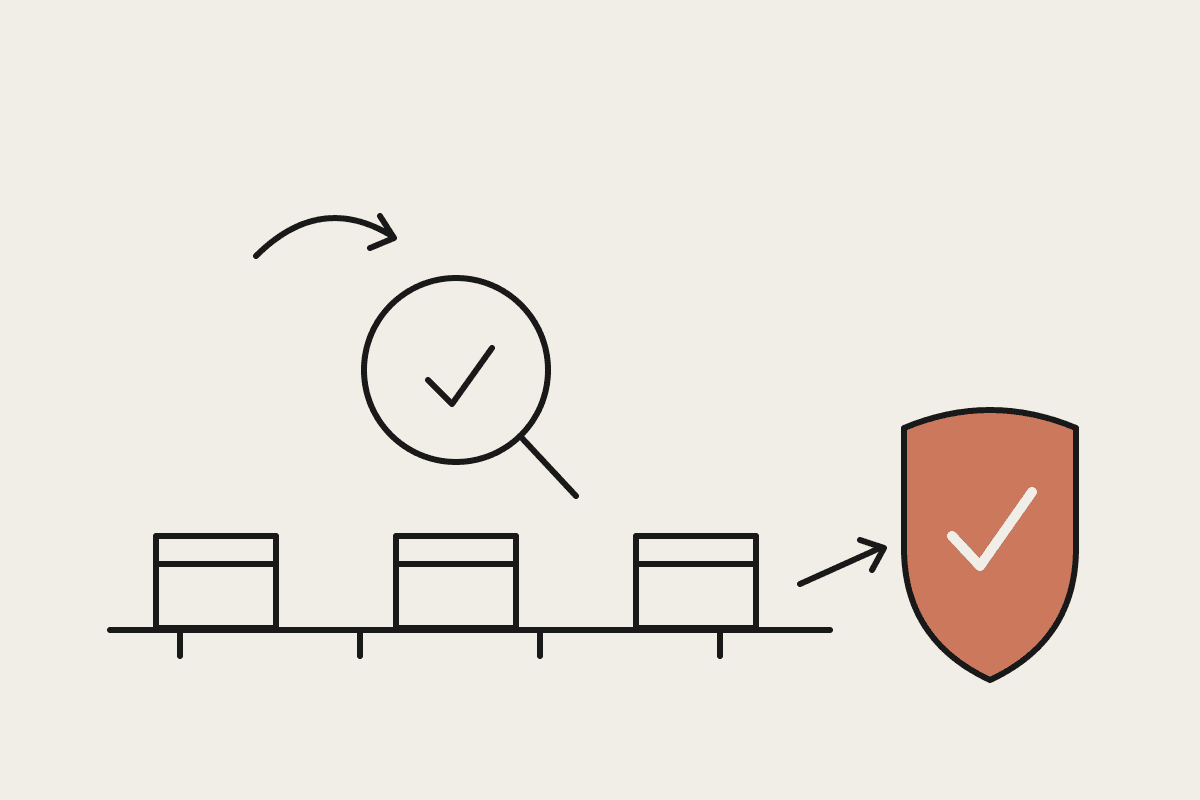
Checkpointing is the pattern bespoke teams most consistently under-invest in during the build, and most consistently regret in production. The Managed Agents architecture writes durable state at every meaningful state change so the system can resume from any interruption without data loss. A long-running document review agent that fails mid-task and loses its progress isn't just an engineering inconvenience. In a healthcare or financial services context, that failure carries Privacy Act implications.
The pattern is simple: if a state change matters, it gets written to durable storage before the next step executes. Getting there requires structural decisions early in the build that are expensive to add retroactively. Teams that skip checkpointing in the early build almost always add it later under production pressure, at three to five times the initial cost.
4. Design the harness for model upgrades
Anthropic built the Managed Agents harness assuming Claude versions will change. Prompt formats, response structures, capability constraints: none of these are hardcoded into business logic. Bespoke teams that skip this step pay $30,000 to $80,000 in unplanned re-tuning engineering costs per major Claude release, based on our engagements with teams that didn't plan for upgrade resilience.
The structural fix is straightforward: isolate all model assumptions into a thin adapter layer. Business logic calls the adapter. Nothing in the agent loop knows which Claude version it's running. When the model changes, you swap the adapter. The migration from Claude 3 to Claude 4 took teams with this pattern a day. Teams without it took three weeks.
When borrowing the architecture still isn't enough
These four patterns make bespoke builds substantially more resilient. They don't make bespoke equivalent to Managed Agents, and they don't answer the resource question. For a professional services firm in Melbourne with a four or five-person engineering team, properly implementing composable primitives, tool isolation, checkpointing, and upgrade resilience from scratch costs $150,000 to $250,000 in fully loaded engineering time. If data residency isn't actually a hard regulatory requirement at your organisation, that's an expensive way to replicate what a managed service delivers out of the box.
The honest question for any team planning a bespoke build is whether the compliance requirement driving it is real. Some teams cite data residency as a constraint when the actual constraint is procurement policy, internal risk appetite, or technical team preference. Those aren't the same thing, and they don't carry the same architectural weight. Run the actual requirement past your legal or risk team before committing to a twelve-month bespoke build. Get it in writing. A verbal 'we probably need this onshore' from a risk manager isn't an APRA obligation.
An architecture checklist for AU enterprise teams
For teams that have confirmed the bespoke path is right, the architectural audit is a half-day exercise. It produces a short gap list and a prioritised remediation plan.
Audit for monolithic loops. If your agent execution lives in a single callable with conditional branches, that's a monolithic loop. Break it into named primitives before adding more capability.
Verify tool execution is isolated. Tool failures must not be able to corrupt agent state. If they can, the tool layer needs structural separation before production.
Map your checkpoint coverage. List every meaningful state transition. For each one, confirm there's a write to durable storage before the next step. Gaps here are production incidents on a timer.
Document your model assumptions. Every place in your codebase where a Claude version is assumed or constrained is upgrade risk. Listing them is the first step to isolating them.
Teams that work through this before production deployment avoid the rework cycle. Teams that find these gaps after a production incident fix them under pressure, at higher cost and lower quality. Our AI Readiness Assessment walks through this checklist alongside your specific compliance context and identifies which gaps carry the highest production risk.
The architectural lessons from Anthropic's Managed Agents engineering work are available to any team willing to read them carefully. The expensive part has never been the knowledge. It's the discipline to apply it before the first production failure, not after.