Adelaide professional services firms occupy an awkward seat in the Australian market. Margins are tighter than what comparable Sydney and Melbourne firms enjoy, and the talent market clears faster but runs shallower. A senior associate who walks out the door on a Friday is genuinely difficult to replace by the following month. Claude, the AI assistant built by Anthropic, has become the practical tool we recommend for firms in this band who want to recover capacity without burning the partner team out chasing a rebuild.
This piece is a working guide for principals and managing partners at Adelaide firms between $5M and $30M revenue. The workflows below are the ones we have actually deployed for Australian professional services clients, with rough AUD figures attached. Nothing here requires a data science team or a six-figure platform investment.
The Adelaide squeeze: why margins are different
Adelaide CBD office rents sit around $480 to $620 per square metre per annum, against $920 to $1,400 in Sydney CBD. That is roughly half the property cost per fee earner. The relief mostly goes the wrong way: clients in Adelaide know the cost base is lower and price accordingly. A Sydney commercial litigator at six years post-admission is billing $650 to $780 per hour. The same person in Adelaide is billing $520 to $620.
That gap matters because the work itself does not get any easier. A 200-page contract review takes the same number of hours in either city. A South Australian Civil and Administrative Tribunal matter is no less procedural than a NSW Civil and Administrative Tribunal one. The Adelaide firm running an SA Government panel arrangement is operating under the same procurement and probity rules as the federal panels, except the panel rates are usually capped lower.
The economic implication is straightforward: every recovered hour is more valuable in Adelaide, not less. A firm running 25 fee earners at an average $580 hourly rate has roughly $30,000 in daily fee capacity to defend.
Where Claude actually moves the needle for Adelaide firms
Across our Adelaide engagements, four workflow patterns produce the bulk of the recovered capacity. They are unglamorous on purpose.
File-note and matter-summary drafting from existing source documents. A Claude workflow that reads the email thread, calendar entries, and uploaded attachments produces a first-draft file note that an associate edits in seven minutes instead of writing for forty. At 25 file notes per week across the firm, that is around $245,000 of recovered annual capacity at typical Adelaide blended rates.
Inbound RFP and tender response assembly. SA Government, Renewables SA, and Department for Infrastructure and Transport panels all run on similar response templates. A Claude assistant that pulls boilerplate, past responses, and the firm's CVs into a structured first draft cuts response preparation from three days to one. Most Adelaide firms we work with are missing two to four panel opportunities per year because the partner team cannot find the time.
Compliance and regulator correspondence triage. ASIC notices, AUSTRAC AML/CTF reporting prompts, ATO portal correspondence, and Privacy Act breach assessment requests are all amenable to a Claude-assisted first read that classifies, summarises, and drafts the routine response.
Client advisory memo first drafts. Partners explain the same five tax positions, M&A structures, or commercial questions every quarter. A Claude workflow with the firm's prior advice on hand produces a 70 percent finished memo, leaving the partner to make the judgement calls rather than write paragraphs.
Across a 25-person firm, these four workflows alone return roughly $320,000 to $580,000 of annual capacity. The wider range reflects how much of that capacity gets re-billed versus reinvested in business development or partner thinking time.
A four-week pilot pattern that fits a 25-person firm
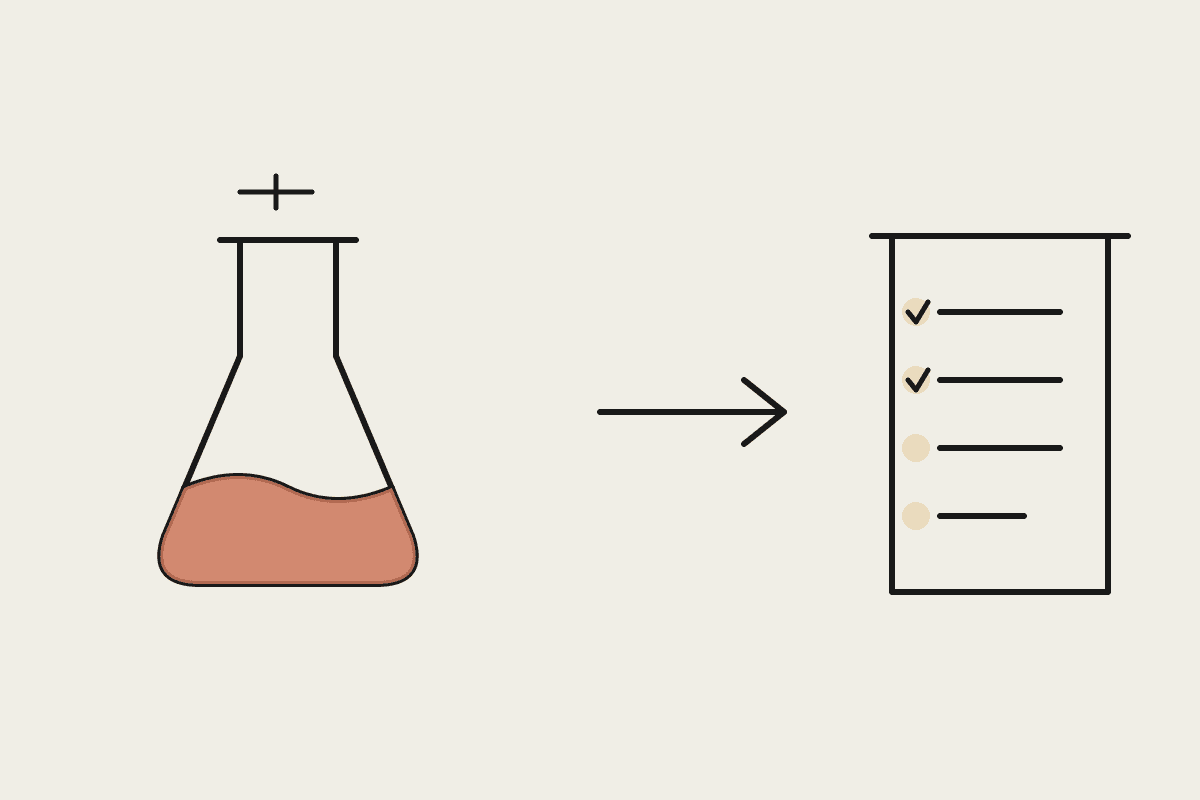
We have stopped recommending the twelve-month transformation programme. It does not fit how Adelaide firms actually buy services. The pattern that works is a four-week, single-workflow pilot, run through Claude's enterprise account.
Week one: pick the single workflow with the largest weekly time leak. For a transactional law firm that is usually file notes. For an accounting practice, it is BAS preparation or year-end working paper drafting. For an engineering consultancy, it is technical report drafting.
Week two: configure Claude with the firm's house templates, past examples, and the basic style guide. Two principals plus one senior associate in a single afternoon will get this done.
Week three: run the workflow in parallel, with humans doing it the old way and Claude doing it the new way, then results compared. This is the step everyone wants to skip and nobody should.
Week four: lock the workflow in, write the SOP, train the rest of the team. Measure recovered hours against the pilot baseline.
Adelaide firms that follow this pattern usually budget around $18,000 to $35,000 for the four weeks all in, covering software, our advisory time, and internal hours. The recovered capacity in the first quarter after the pilot typically clears that figure four to six times over.
The Adelaide talent question
There is a quieter argument for this work that we hear from Adelaide managing partners more often than from their Sydney counterparts. The talent market in Adelaide is thinner. Senior associates with seven to twelve years of practice experience can choose to go in-house at the same salary band and never bill another timesheet. Once they leave, replacing them takes six to nine months and a lift in the offered package of $25,000 to $45,000.
Claude-assisted workflows reduce the proportion of senior time spent on first-draft work. A partner whose week is currently 35 percent drafting and 65 percent advisory can shift toward 15 and 85. That is the lever most Adelaide partners actually want, with more advisory time and less production. The retention signal that sends to senior associates is real.
The Privacy Act 1988 amendments that flowed through in 2024 and 2025 created a workable framework for using AI assistants on client matters, provided the firm runs reasonable controls. Most Adelaide firms running this stack are operating under engagement letter updates plus a one-page internal use policy. APRA-regulated client work is the only setting where we have asked clients to slow down and design a tighter control set.
Three things we would skip
Not every AI workflow earns its place. We tell Adelaide clients to skip three things.
The first is client-facing chatbots embedded on the firm's website. The conversion economics for a professional services firm at this size do not justify the build, and the brand risk of a bad answer to a prospect is meaningful.
The second is custom-trained models on the firm's document corpus. The marginal accuracy gain over running Claude with the right context loaded at inference time is small. The cost and the ongoing engineering overhead are not.
The third is internal AI committees that produce policy documents but no workflow shipped. The committee tends to outlast the appetite. Pick a workflow, run a four-week pilot, ship the result, then write the policy from what worked.
Adelaide professional services firms have a real opportunity in front of them, and a closing window. The first firms in each segment to absorb AI workflows into their operating model will compound the margin advantage for several years before peers catch up. If you would like to compare notes on what would actually move the needle for your firm, the easiest next step is to book a 30-minute conversation via our contact page.