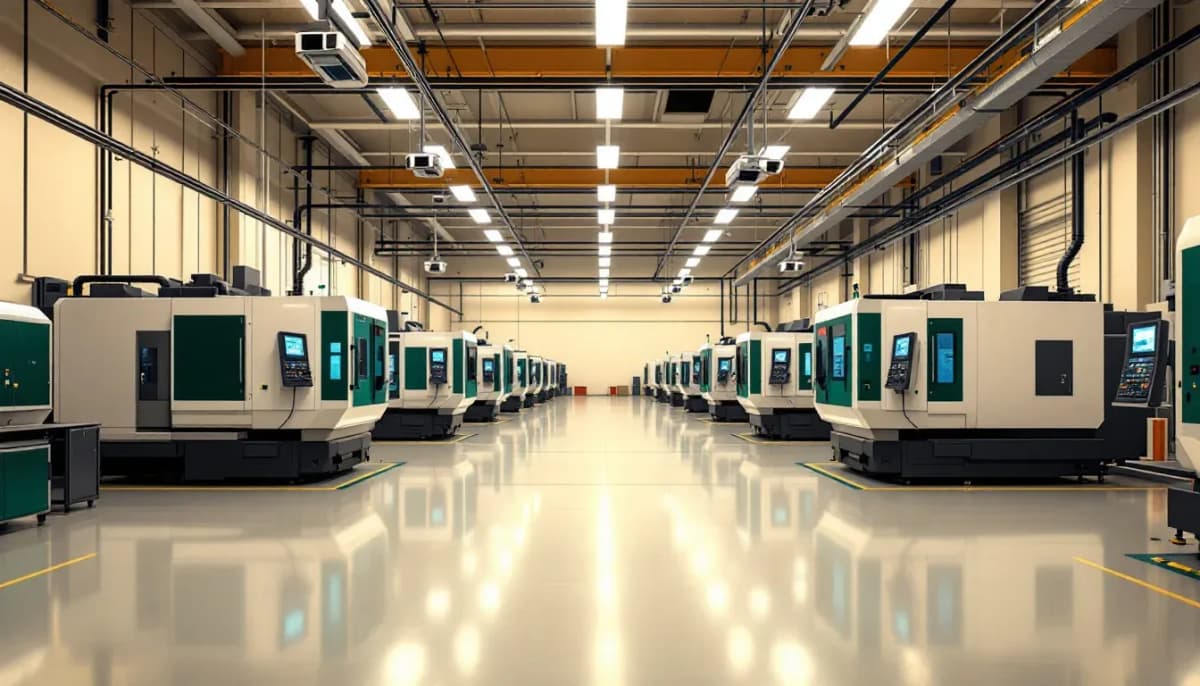
Australian manufacturers in the $30 million to $200 million revenue band sit in an awkward middle. You are too large to run the plant on spreadsheets and tribal knowledge, and too lean to fund the kind of data-science team that a multinational deploys against the same problems. Three operational areas decide whether a mid-market plant in this band makes or loses money each quarter: how production is scheduled, how quality is caught, and how equipment failure is predicted. Claude can take meaningful work off each one without a multi-year platform rebuild.
Production scheduling against real demand and machine availability
Most plants still schedule from a static weekly plan that ignores two moving targets: actual order intake and the real availability of each line. When a CNC cell goes down or a food line needs an unplanned washdown, the plan is rebuilt by whoever has the most experience, usually in their head. That person is a single point of failure and they are expensive to lose.
A practical first build uses Claude to read the current order book, the maintenance log, and shift rosters, then propose a schedule that respects sequencing rules and changeover costs. The output is a draft, not an autonomous controller. A production planner reviews it, adjusts, and approves. The value is speed and consistency: a schedule that took four hours of a senior planner's time can be drafted in minutes, leaving the human to handle the judgement calls.
For a Sydney metals fabricator running two shifts, cutting two hours of senior planning time per day at roughly $55 an hour is about $28,000 a year in recovered labour, before counting the throughput gained from fewer idle changeovers. The bigger return usually shows up as reduced overtime and fewer late orders, which on a $60 million revenue base can move the needle by far more than the labour figure alone.
Computer-vision quality assurance without a research lab
Visual quality inspection is where Australian manufacturers most often assume AI is out of reach. The common belief is that you need a dedicated machine-vision integrator and a six-figure capital project. For many defect types, that is no longer true.
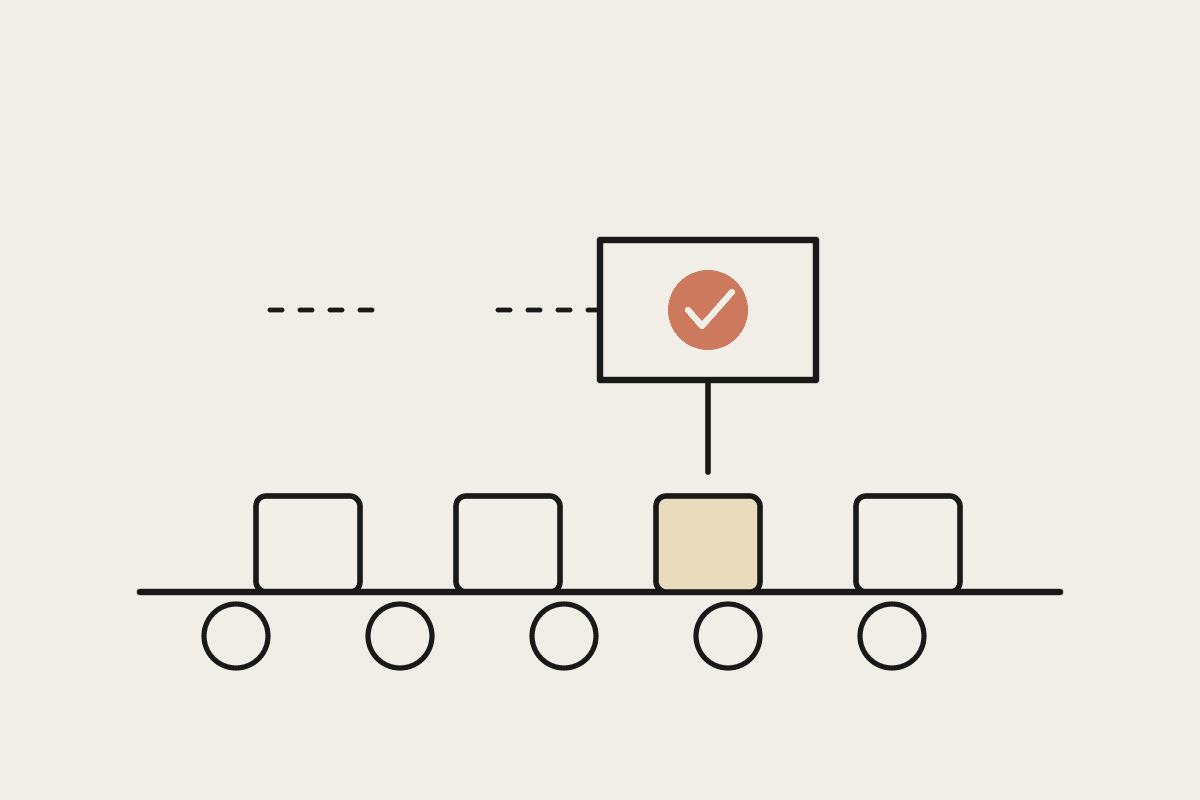
Claude can read images captured by inexpensive cameras already mounted on a line and flag anomalies against a reference set: a misaligned label, a surface scratch, a short-fill on a food package, a weld that does not match the approved profile. It will not replace a calibrated metrology system for tight tolerances, and it should not. Its job is the first-pass screen that catches the obvious defects a tired inspector misses at the end of a shift.
Start with one defect class that causes the most rework or customer returns, not the whole inspection program.
Keep a human inspector in the loop for anything the model flags as uncertain, and log every decision so the reference set improves.
Measure against your current escape rate, the proportion of defects that reach the customer, rather than against a theoretical accuracy number.
A Melbourne food processor that ships even a single contaminated or mislabelled pallet can face a recall running well past $120,000 once logistics, destruction, and retailer penalties are counted, and that ignores the reputational cost. A screening layer that catches one such event a year pays for itself many times over against a setup cost in the low tens of thousands.
Predictive maintenance from data you already collect
Predictive maintenance has a credibility problem in the mid-market because vendors oversold it. The honest version is narrower and more useful: most plants already collect sensor readings and maintenance records, and that history contains early-warning patterns that no human watches consistently.
Claude can read vibration trends, temperature drift, and the free-text notes that technicians type into the maintenance system, then surface the assets whose pattern resembles past failures. A fitter still inspects and decides. The point is to move from fixing what has already broken to checking what is about to break.
Unplanned downtime on a critical line commonly costs an Australian mid-market plant between $8,000 and $20,000 an hour in lost output and idle labour. Avoiding even three or four unplanned stoppages a year through earlier intervention is a six-figure swing, and the data to start with already sits in your historian and your maintenance system.
Where the government programs fit
The federal Modern Manufacturing Initiative and the Industry 4.0 testlabs network exist precisely to de-risk this kind of adoption for Australian firms. The testlabs let a manufacturer trial sensing and analytics on real equipment before committing capital, and several grant streams have co-funded digital projects in priority sectors including food, defence, and resources technology. Factor these into the business case: a project with a $90,000 internal cost can look materially different after co-funding.
None of this requires betting the plant on a single platform. The pattern that works for mid-market Australian manufacturers is to pick one painful problem in scheduling, quality, or maintenance, build a narrow Claude-assisted tool with a human firmly in the loop, prove the number, and only then expand to the next area.
If you want to map which of these three has the clearest payback for your plant, we can work through it together. Book a short brainstorm and bring one real bottleneck from your floor.