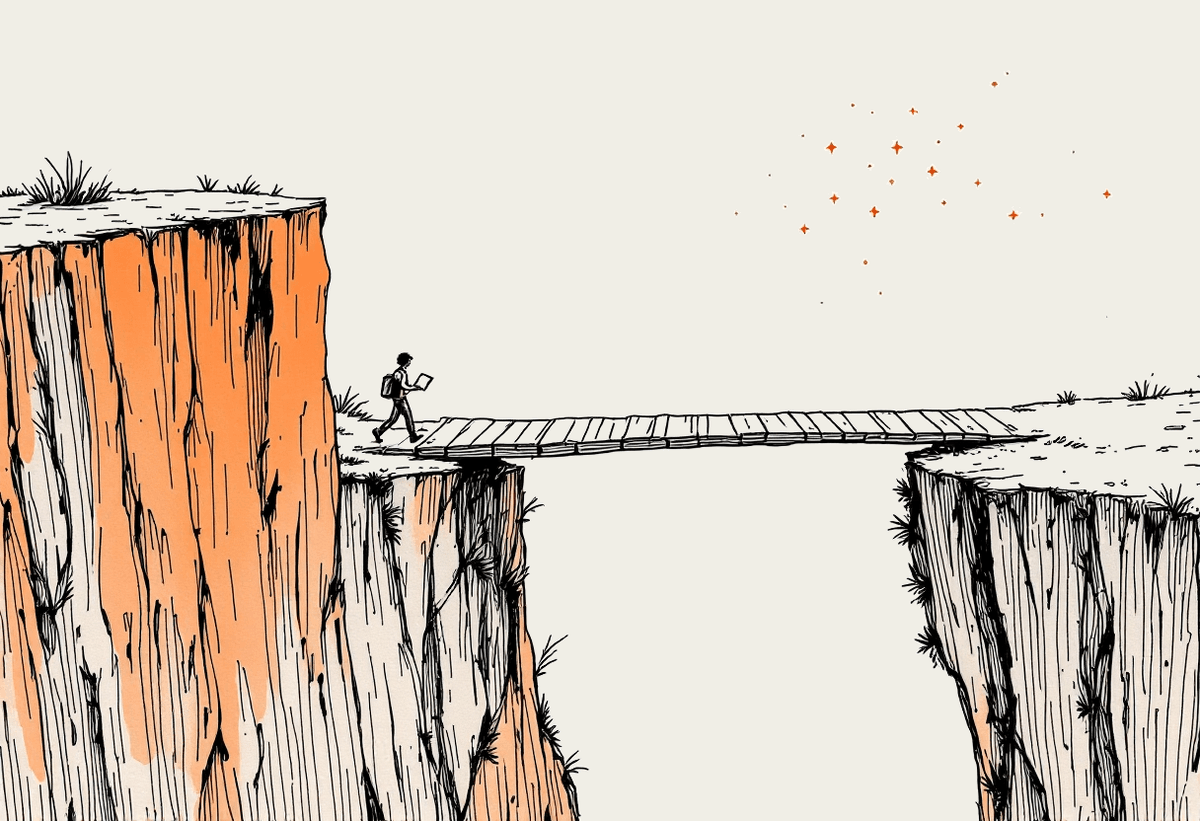
Australian L&D teams in mid-market companies are facing a change problem larger than any tool rollout of the past decade. AI does not just add another item to the stack. It reshapes workflows, role design, performance expectations, and the social contract of work itself. The teams that have shipped AI well in 2026 share one habit: they treat change management as the project, not as a phase bolted on at the end.
The budget reality matches the stakes. For a 1,500-person Australian mid-market company rolling out AI capability, the change program typically costs $400,000 to $1.2M, separate from licence spend. Under-resourcing it produces an adoption curve that flattens at 20 to 30 percent of capability, which leaves most of the productivity prize on the table.
What good change management looks like
Across the Sydney and Melbourne rollouts we have watched succeed, five elements keep appearing together:
Role-specific training rather than generic AI literacy sessions that wash over everyone equally
Hands-on practice scheduled during work hours, not optional self-paced modules people never open
Senior leaders visibly using the tools in their own day-to-day work, not just sponsoring the budget
A clear acceptable-use policy with worked examples for each role, so people know where the lines are
A feedback loop from frontline users back to the rollout team, reviewed weekly
The combination matters more than any single element. Any one of these alone produces shallow adoption that decays within a quarter.
Patterns by role family
Generic training produces generic adoption. The L&D teams getting real traction design a different rollout pattern for each role family:
Knowledge workers such as analysts, marketers, and project managers get prompt and pattern training plus a shared library of working examples built from their own documents
Engineers get a Claude Code rollout combined with team-level conventions, shared slash commands, and a skills library that encodes the team's standards
Customer-facing roles get tightly scoped Claude Skills with explicit guardrails on what the AI does and does not handle
Senior leaders get executive shadowing: four to eight hours paired with a coach inside their real calendar, not a demo environment
The pattern library does not need to be invented from scratch. Most of the work is mapping what each role family already does, then choosing the two or three workflows where Claude saves real hours in the first month. Quick visible wins buy patience for the slower structural changes.
Common failure modes
The failures repeat so reliably across Australian rollouts that they are worth naming:
Training delivered weeks before tools are accessible, so the learning evaporates before anyone can practice
Tools rolled out before the policy is settled, producing risk-averse non-use across exactly the teams you most need to adopt
Executives signing off on the program but never using the tools themselves, which staff read instantly
L&D treating AI as a one-off training event rather than an ongoing capability that needs maintenance
Each of these is preventable, and each shows up in 60 to 80 percent of the rollouts that flatten early. Boards in APRA-regulated sectors also expect the acceptable-use policy to line up with existing data-handling obligations under the Privacy Act, which is far easier to design upfront than to retrofit after an incident.
Measure the program, not the people
Without measurement, change programs drift into anecdote. The metrics that earn their keep:
Active usage rate by role family, tracked weekly from platform data
Self-reported productivity impact captured in monthly pulse surveys
Capability scores from short periodic skill checks tied to each role family's training
Before-and-after time studies on specific workflows, written up as internal case studies
One boundary is non-negotiable: the measurement exists for the program team, not for performance management of individuals. Mixing the two destroys trust faster than anything else on this list.
Sequencing a rollout that holds
A working sequence for an Australian mid-market AI rollout looks like this:
Months 1 to 2: senior leader practice and visible adoption
Months 2 to 4: pilot teams across three to five functions, chosen for influence as much as fit
Months 3 to 8: phased rollout by role family with embedded training
Months 6 to 12: capability uplift, internal pattern sharing, and advanced training for power users
Ongoing: continuous capability development as models, tools, and patterns evolve
The whole program runs nine to eighteen months. Compressing it saves money on paper and then costs more when shallow adoption has to be redone, usually with a more sceptical workforce the second time around.
Sizing your own rollout
If your team is scoping an AI rollout for FY27 planning, the highest-value early step is an honest assessment of where your role families sit today and what the change program will actually cost. Automata AI runs that assessment for Australian mid-market companies, grounded in Claude deployments we operate ourselves. Book a rollout consult and bring your org chart.