Winning a new client is a good day. The week that follows is often where the shine comes off. Someone has to collect identity documents, set up files, send engagement letters, request access to systems, and chase the three things the client forgot to send. For most Australian firms this work is done by hand, and it quietly costs more than anyone admits.
Client onboarding automation is the practice of handing the repeatable parts of that first week to software, so your people spend their time on judgement rather than data entry. Done well, it shortens the gap between a signed proposal and real work starting, and it removes the small errors that erode trust before an engagement has even begun.
Why onboarding is the quiet drain on Australian firms
Onboarding feels like overhead because it is invisible when it goes right and painful when it goes wrong. A single new client might touch five or six systems and three or four staff members before any billable work happens. Multiply that across a busy quarter and the cost adds up fast.
Consider a mid-sized advisory firm in Sydney onboarding 15 new clients a month. If each onboarding takes a staff member around four hours of admin, that is 60 hours a month, or roughly $45,000 a year in loaded salary spent on copying details between forms. That figure does not count the revenue lost while a client waits, or the occasional compliance slip that has to be unwound later.
The pain usually shows up in a few predictable places:
Data re-entry: the same client details typed into a CRM, an engagement letter, a billing system, and a project tool.
Document collection: back-and-forth emails chasing identity documents, signed forms, and account access.
Inconsistent steps: every staff member runs onboarding slightly differently, so nothing is auditable.
Slow starts: the client is ready to go, but internal setup lags by days.
What client onboarding automation looks like with Claude
The point is not to remove people from onboarding. It is to remove the parts of onboarding that never needed a person. Claude sits well in this role because most onboarding work is reading messy inputs, deciding what they mean, and writing tidy outputs, which is exactly the kind of language work it handles reliably.
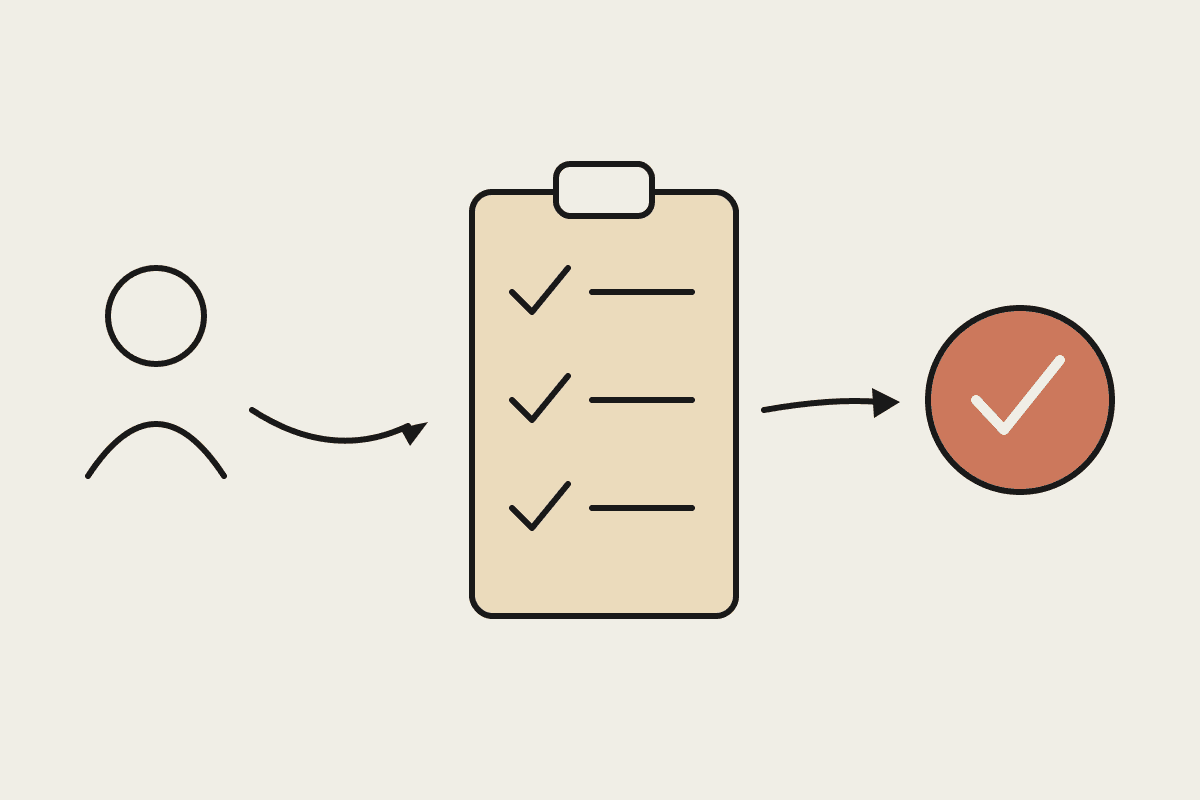
A practical setup uses Claude to read an incoming client email or intake form, pull out the details that matter, draft the engagement letter and welcome pack, flag anything missing, and prepare records for your existing systems. A staff member reviews and approves before anything is sent. The firm keeps control; the typing disappears.
Three capabilities do most of the heavy lifting:
Extraction: turning a forwarded email or a scanned form into structured fields your systems can accept.
Drafting: producing the first version of engagement letters, checklists, and welcome messages in your firm's voice.
Triage: checking each new client against your required documents and raising a clear list of what is still outstanding.
A worked example
Take that same firm. Before automation, a new client took four hours of admin spread over several days. After building an onboarding assistant with Claude, the review-and-approve step takes closer to 30 minutes, and the client receives their welcome pack the same day.
At 15 clients a month, the firm recovers roughly 50 hours monthly. Even after the cost of building and running the system, the payback lands inside the first quarter, and the harder-to-price benefit is that clients start their engagement feeling looked after rather than chased. A build like this typically sits in the $8,000 to $20,000 range depending on how many systems it touches, which is modest against the ongoing saving.
Getting the compliance layer right
Onboarding is also where a firm's obligations bite hardest, so automation has to respect them rather than route around them. Any firm handling personal information sits under the Privacy Act, which means client data collected during onboarding must be stored and handled with care, and only kept for as long as it is needed.
Firms with anti-money-laundering obligations have a further layer. If your onboarding includes customer identification, AUSTRAC expects that process to be consistent and recorded. This is actually an argument for automation, not against it: a system that runs the same identity checks every time and logs each step gives you a cleaner audit trail than a process that lives in individual inboxes. The rule of thumb is that Claude drafts and checks, a person approves, and every decision is written down.
A practical rollout sequence
The firms that succeed do not try to automate everything on day one. They pick the single most repetitive step, prove it, and expand. A sensible order looks like this:
Map your current onboarding end to end and mark which steps are pure admin.
Pick one high-volume step, such as drafting the engagement letter, and build only that.
Keep a human approval gate on anything client-facing or compliance-related.
Measure time saved and error rate for a month before widening scope.
Add the next step once the first is trusted, and document the whole flow so it is repeatable.
This staged approach keeps risk low and gives your team time to trust the system. It also means the first win pays for the next stage of work, so the project funds itself as it grows.
Where to start
If onboarding is eating your team's first week with every new client, the fix is rarely more staff. It is a clear map of the process and a small, well-scoped assistant that takes the repetitive parts off their plate while leaving judgement where it belongs. Australian firms that get this right convert the awkward first week into a genuinely good first impression.
If you would like to see what this could look like for your firm, book a short brainstorm with us and we will map your onboarding and show you the one step worth automating first.