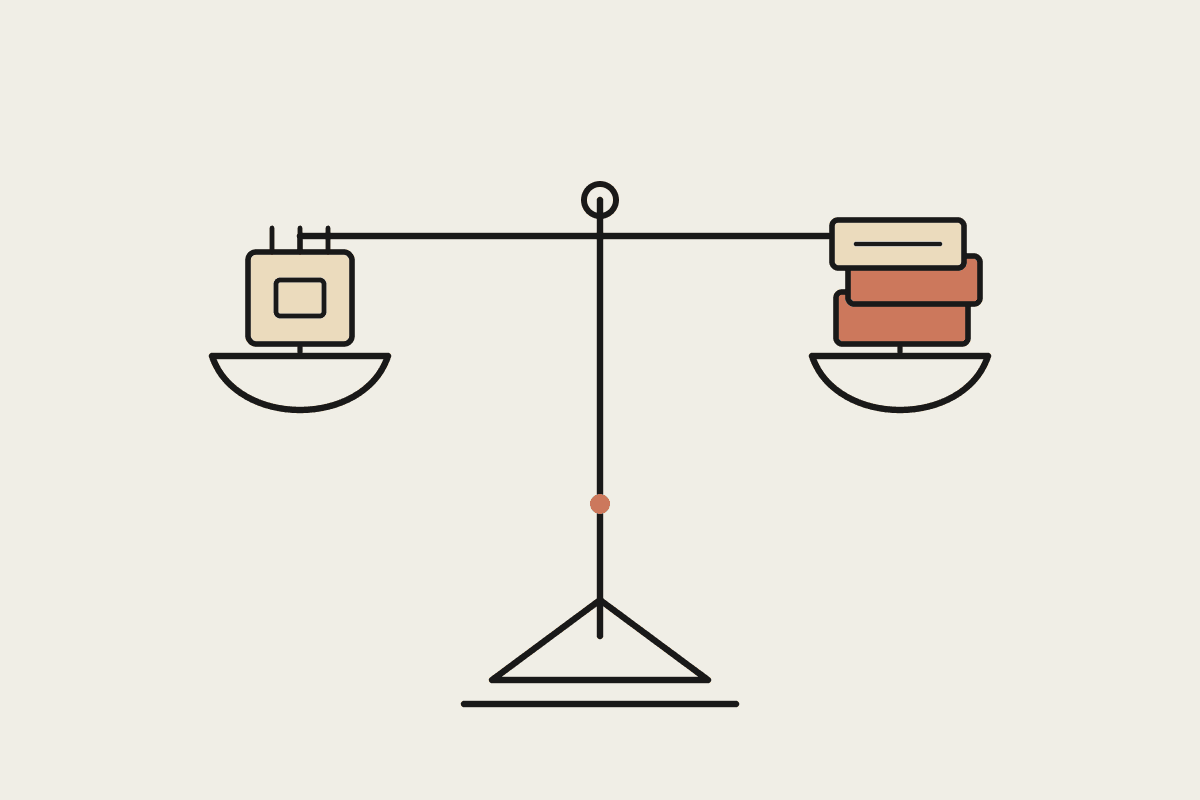
Australian mid-market companies standing up an AI Centre of Excellence in 2026 face a pattern problem. The consulting-firm-shaped CoE is too heavy: a 20-person function with steering committees and a three-year roadmap that ships nothing in year one. The "one engineer with Claude" CoE is too light: a single enthusiast with no authority, no budget, and no mandate to set policy. The right shape sits in between, calibrated to the size and risk profile of the organisation.
For a 1,500-person Australian company, running a properly sized CoE costs around $1.2M to $2.8M AUD per year fully loaded. The cost of running it badly, or not at all, is the larger number. It shows up as failed pilots, duplicated tooling spend across departments, and productivity gains your competitors capture first.
What a CoE actually does
The right CoE has four jobs. Anything else is scope creep.
Set the organisation's AI policy and the decision criteria for adoption, so every team is not inventing its own rules
Run a small portfolio of high-return pilots with clear before-and-after outcomes
Operate the platform layer: LLM access, MCP infrastructure, observability, and cost controls
Build the organisation's AI literacy through training and pattern sharing
The CoE does not do the work. The CoE enables business teams to do the work safely and quickly. That distinction decides whether the function compounds value across the organisation or becomes an internal gatekeeper that every project has to route around.
Right size for the Australian mid-market
A working Australian mid-market CoE in 2026 is typically:
4 to 8 full-time staff, mixed across engineering, governance, and change management
A senior leader at executive level or one level down, with real authority to set policy
A platform team of 2 to 3 engineers running the AI infrastructure
A change and capability lead handling rollouts and training
A fractional governance contributor from legal, privacy, or risk, embedded part-time
Smaller than this and the CoE cannot ship. Larger than this and it becomes a bottleneck. A 400-person firm can run the same model with 2 to 3 people, provided the platform lead and the change lead are senior enough to make decisions without convening a committee.
What to ship in year one
The trap is trying to ship too much in year one. The right year-one programme is narrow and measurable:
Stand up the platform layer: Claude access, an MCP framework for connecting internal systems, and observability
Ship 3 to 5 pilots with clear before-and-after metrics, not a portfolio of twenty experiments
Publish the AI policy and the decision criteria for new use cases
Run AI literacy training across all leaders and a representative sample of staff
Build the evaluation discipline for measuring AI work in production
Year two extends the platform, scales the pilots that worked, and starts building organisation-wide capabilities. Year three is when AI becomes a normal capability instead of a CoE-managed function. If the CoE still owns every AI decision in year three, it has failed at its actual job.
Governance is a feature, not overhead
Australian boards ask the same three questions of every CoE: what data is going into these models, who is accountable when an AI output is wrong, and where does this sit against our regulatory obligations. Privacy Act obligations apply to personal information in prompts and retrieval pipelines. APRA-regulated entities need CoE controls that map cleanly to CPS 230 operational risk requirements. Financial services firms face ASIC expectations on disclosure when AI touches customer outcomes.
A CoE that can answer these questions in writing shortens procurement, survives legal review, and unblocks pilots that would otherwise stall for months. The practical governance kit is small: a data classification rule for what may enter an LLM, a human-review threshold for customer-facing output, an incident escalation path, and a register of AI systems in production. Build it in month one, not month nine.
Charter discipline
Most CoEs fail because the charter is too vague. A working charter has:
An explicit list of the decisions the CoE makes versus the decisions business teams make
A budget envelope and the authority to spend within it without re-approval
A reporting line to the executive committee with a quarterly review
A measurement framework tied to organisation-level outcomes, not activity metrics
The budget conversation
Boards want a number. A sensible envelope for the Australian mid-market: $250,000 to $400,000 for a serious first pilot programme including platform setup, then $1.2M to $2.8M per year for the steady-state CoE. Companies with disciplined pilot selection typically see returns of three to five times the annual spend within 24 months. It is cheaper to start small and grow the envelope on evidence than to fund a large team before the first outcome lands.
Where Australian mid-market CoEs fail
Trying to ship too many pilots in parallel with too little focus
Letting the CoE drift into an internal consulting practice instead of a platform team
Underinvesting in change management and training, then wondering why adoption is flat
Skipping evaluation discipline early, then losing trust as production behaviour drifts
Every one of these failure modes is avoidable, and avoiding them is far cheaper than recovering from them. The organisations that get this right in 2026 will treat the CoE as scaffolding: essential while the building goes up, removed once the structure stands on its own.
If your organisation is standing up a CoE this year, we run scoping engagements that produce the charter, the sizing, and the year-one pilot portfolio. Book a CoE scoping conversation.