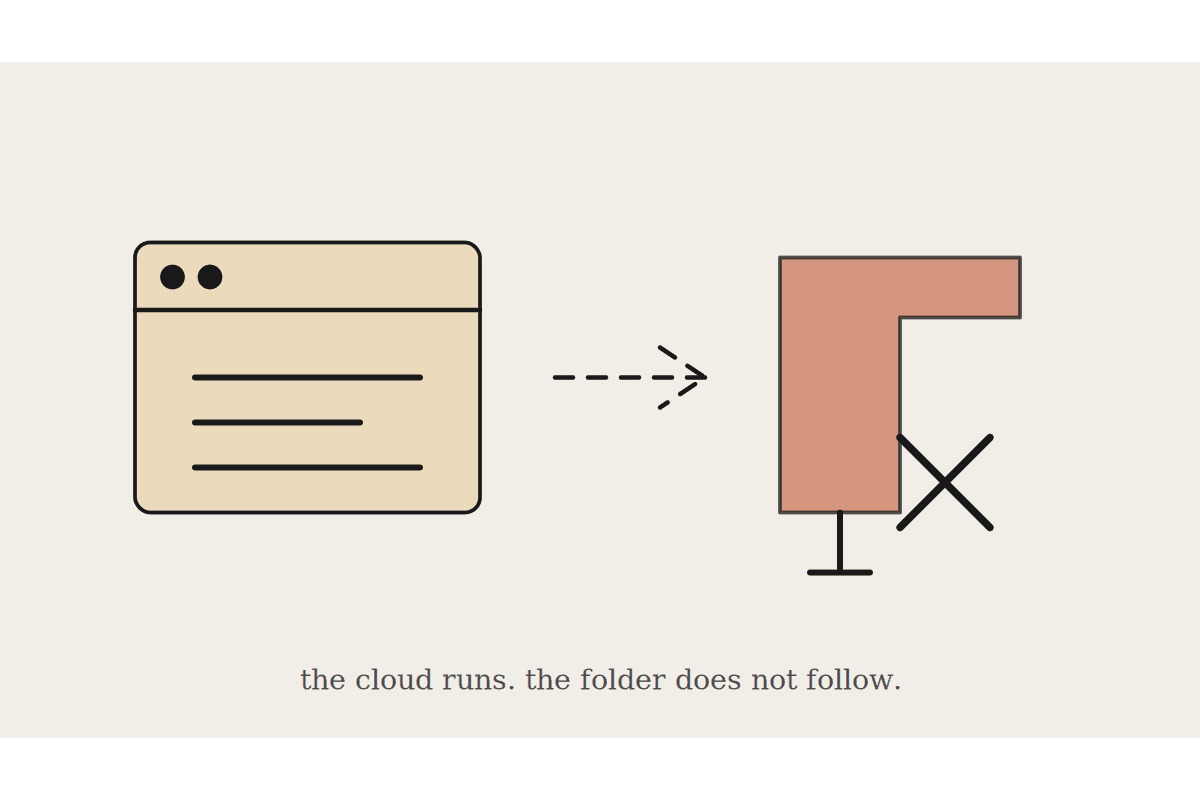
Every operations, finance and marketing team runs on a pile of small jobs that never earn an engineering ticket. Renaming four hundred files to a naming standard. Reconciling two CSV exports that almost match. Pulling one weekly number out of a system that has no report for it. Each task is a ten-minute nuisance, and each one repeats every week until someone finally scripts it away. The question has always been who is allowed to write that script. Claude Code moves that line.
The backlog that never gets a ticket
In most Australian businesses the engineering queue is booked out months ahead. A request to automate a finance reconciliation that saves two hours a week loses every prioritisation meeting to revenue features and production incidents. So the two hours stay manual. Multiply that across a dozen quiet tasks and a mid-sized team can lose the equivalent of a full salary, easily $45,000 a year, to work that a short script would erase.
Claude Code is a command-line tool that reads plain English, writes and runs code on your own machine, and explains what it did in language a non-programmer can follow. The person who describes the job no longer has to be the person who can write Python. The finance analyst who understands the reconciliation can now build the fix herself.
What a non-developer can actually do
You do not need to know a programming language. You need to be able to describe the task clearly and check the result. Claude does the translation from intention to working code. The jobs that fit best are the repetitive, rules-based ones you already do by hand:
Batch file work: rename, sort, or convert hundreds of documents against a rule you describe in a sentence.
Data cleanup: merge two exports, flag the rows that do not match, and produce a tidy spreadsheet ready for review.
Recurring reports: pull the same figures each week and drop them into a formatted summary.
Format conversion: turn a folder of invoices into a single structured file your accountant can import.
One-off migrations: move records between two tools that were never designed to talk to each other.
A worked example
A Sydney property firm had an analyst spending three hours every Monday matching payment exports from two systems by hand. She opened Claude Code, described the two file formats and the matching rule in a short paragraph, and watched it write a script that did the match in seconds. It flagged the rows that did not reconcile so a person could look at those, and only those. The three-hour job became a five-minute review. Across a year that single script returned more than 140 hours, worth roughly $10,500 at her charge-out rate, without a single line going to the engineering backlog.
The guardrails that keep it safe
Letting more people write scripts only works if the boundaries are clear. A few rules keep it responsible:
Work on copies. Point early scripts at a copy of the data, never the only version, until the output is trusted.
Read before you run. Claude explains each step in plain English; read that explanation before approving anything that changes or deletes files.
Keep sensitive data local. Handling personal information means honouring the Privacy Act and your own policies, so keep customer records on approved systems and out of anything you would not normally paste into a tool.
Escalate the risky ones. Anything that touches production systems, customer-facing data, or money movement still goes to the engineering team.
Getting started in an afternoon
The first session matters more than any tutorial. Pick one task you already understand well and that has an obvious right answer, so you can tell immediately whether the output is correct.
Choose a task with a clear pass or fail, like a file rename where you can see the result in a folder.
Describe the steps you currently do by hand, in order, as if briefing a new colleague.
Ask Claude to write the script, then ask it to walk through what the script does before you run it.
Run it on a copy, check the output against what you expected, and adjust your description if it missed something.
Save the working version so next week is a one-line command rather than a rebuild.
Most people are surprised that the skill that matters is not coding but describing. Staff who write clear process documents tend to get good results quickly, because a clear description is most of the work. The analyst who can explain exactly why two reports disagree can now turn that explanation into a tool.
Where engineering still belongs
This does not replace developers. It clears their queue of the small jobs that were never a good use of their time, so they can focus on the systems that genuinely need engineering rigour. The reconciliation script an analyst builds in ten minutes was never going to reach the top of a sprint. Now it does not have to. The dividing line is simple: quick, low-risk, internal jobs belong to the people who own them, and anything durable, shared, or risky belongs to engineering.
The teams getting the most from this are not the most technical ones. They are the teams that mapped their quiet, repetitive tasks and handed the low-risk ones to the people who feel the pain each week. If you want help drawing that line for your own business and training staff to work this way safely, book a brainstorm and we will map it with you.