Microsoft opened June with its biggest model announcement to date: seven in-house MAI models, including an agentic coding model headed for GitHub Copilot and VS Code. Alongside the official news, community reports from Microsoft Build describe a new Copilot desktop app built around running multiple coding agents in parallel. If your engineering team has standardised on Claude Code, the question landing in your Slack right now is whether any of this should change your tooling plans.
The short answer is no, not on launch-week information. But the announcement is worth reading carefully, because it shows where Microsoft thinks agentic coding is going, and how much of that destination Claude Code users already occupy.
What Microsoft actually announced
The verified part comes straight from Microsoft's June 2 announcement. The company introduced seven new in-house models under the MAI banner:
Models spanning image generation, voice, transcription, coding, and reasoning
MAI-Code-1-Flash, an inference-efficient agentic coding model being integrated into GitHub Copilot and VS Code
MAI-Thinking-1, Microsoft's first in-house reasoning model, positioned for complex tasks and agentic systems
An explicit framing: a Microsoft-controlled AI stack across Copilot, GitHub, and Foundry
Microsoft also claims MAI-Thinking-1 outperforms Claude Sonnet 4.6 in blind evaluations. Treat that as exactly what it is: a vendor claim made at launch. Launch benchmarks consistently compress under independent testing, and no third-party evaluation of the MAI family exists yet.
The Copilot desktop app, as reported from Build
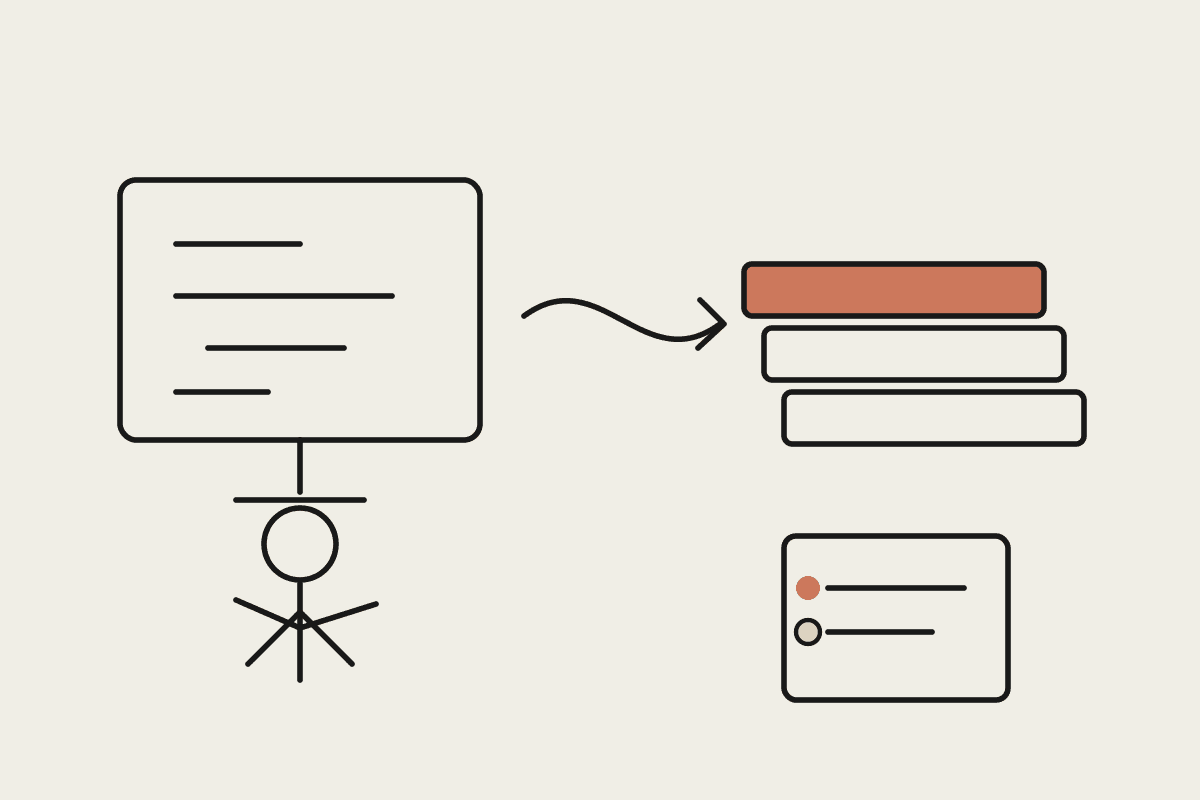
The more interesting piece for Claude Code users is not officially confirmed. Attendees at Microsoft Build describe a GitHub Copilot desktop app where you dispatch several coding agents at once, each working in an isolated git worktree, with an Agent Merge feature that watches your CI and merges automatically when conditions are met. Until Microsoft documents it, hold those details loosely.
Taken at face value, the design is deliberate counter-positioning against Claude Code: manage your agents from a dashboard instead of a terminal. What it is not is a new capability. Parallel agents in isolated worktrees is a pattern Claude Code teams already run today using git worktrees and subagents. The news here is packaging and distribution, not what the agents can do.
What this means if your team runs Claude Code
Three things are worth taking from the announcement, none of which require panic:
Vendor benchmarks are marketing until independently reproduced. Every major model launch in the past two years has claimed superiority over the incumbent, and the gap has narrowed or reversed on neutral evaluations.
Microsoft's dependence on OpenAI just dropped. With its own model family, Microsoft can route Copilot traffic to MAI models. Enterprises that chose Copilot because it felt like the safe Microsoft option should notice the models underneath just changed.
The dashboard-over-terminal bet is real. Microsoft is wagering that most developers want agent orchestration abstracted away. Whether that produces better software than direct agent control is an open question your own trial can answer.
None of this says Copilot is bad. It says the comparison is now between two different philosophies of agentic development, and the right way to settle it is evidence from your own codebase.
There is also a procurement angle. Australian mid-market companies often inherit Copilot through their Microsoft 365 enterprise agreement, which makes it feel free relative to a separate Claude contract. It rarely is. Licence cost is a small fraction of the total cost of an agentic tool; the dominant terms are engineer time spent steering, reviewing, and reworking agent output. A tool that saves each engineer two hours a week beats a bundled discount by an order of magnitude.
The sensible evaluation for an Australian engineering team
A senior engineer in Sydney or Melbourne costs about $150,000 a year fully loaded. If a tooling change moves real output by even five percent, that is roughly $7,500 per engineer per year, which justifies a proper evaluation but not a rushed migration. The structured version looks like a two-week trial on your own repository, not a decision made from launch coverage.
Run both tools against the same set of real tickets and measure three things: the quality of the agent's first attempt, the review overhead your seniors carry to get the work mergeable, and how each tool behaves with your CI pipeline. For Australian companies with data governance obligations under the Privacy Act, add a fourth check: confirm where each vendor processes and retains your code before the trial starts.
Where this leaves your roadmap
If Claude Code is working for your team, this announcement changes nothing today. Put MAI-Code-1-Flash on your watch list, wait for independent benchmarks, and revisit at your next planning cycle with data instead of launch-week claims. Teams still choosing their first agentic coding tool have a useful forcing function: both vendors now ship parallel-agent workflows, so the deciding factors are model quality on your code and the working style your engineers prefer.
Automata AI runs Claude Code rollouts and structured tool evaluations for Australian engineering teams. If you want the two-week comparison run properly on your own repository, book a brainstorm session.