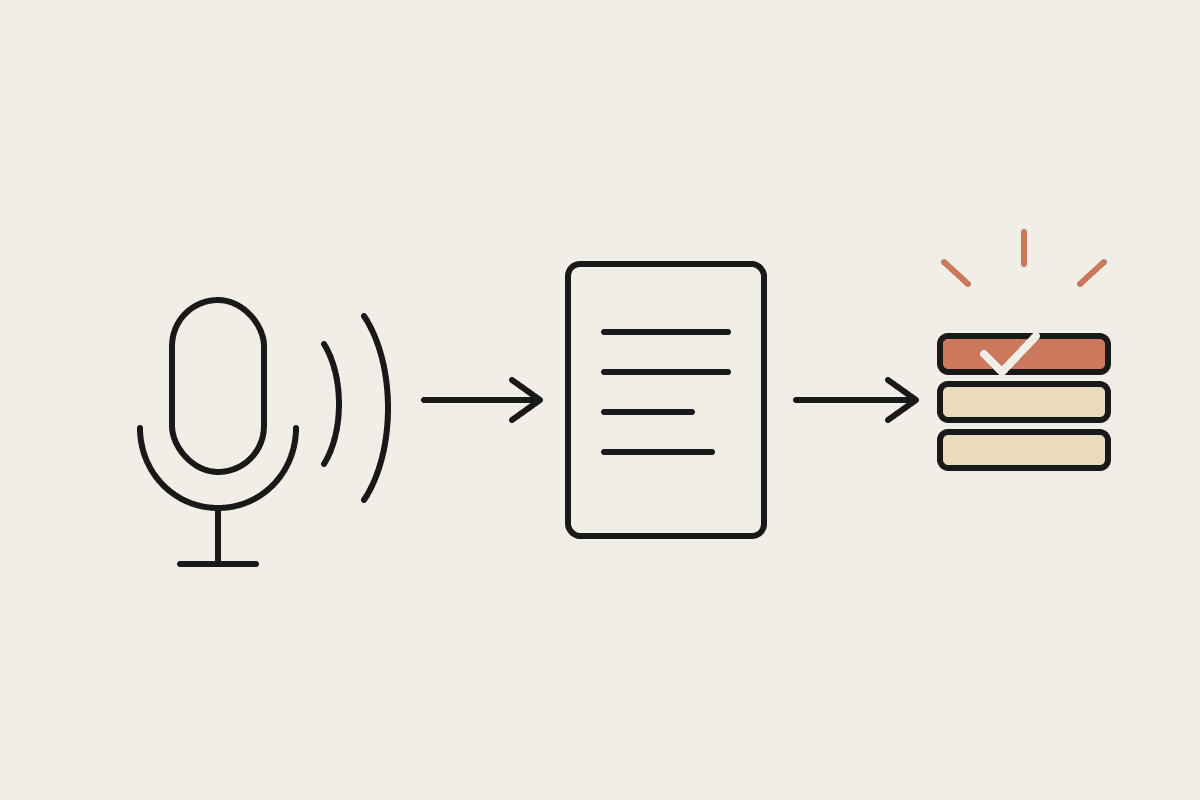
Claude Cowork spent the past year defining a new category: agentic AI that does real knowledge work on real files instead of answering questions in a chat window. On June 2, OpenAI confirmed the category is real. Its announcement, titled Codex for every role, tool, and workflow, pushes Codex beyond software engineering and into general knowledge work, with role plugins aimed at sales teams, analysts, designers, and bankers. For Australian businesses weighing a platform decision, the landscape just got clearer, and the case for taking Claude Cowork seriously just got stronger.
What OpenAI shipped
The announcement bundles several pieces:
Six role-specific plugins covering data analytics, creative production, sales, product design, equity investing, and investment banking. Together they span 62 apps and 110 skills.
A roadmap of further plugins for corporate finance, private equity, marketing strategy, strategy consulting, and legal teams.
Sites, a preview feature for Business and Enterprise customers that lets Codex create and share interactive hosted websites and apps from a URL.
Annotations, which lets users point at part of a document and refine it in place.
Community reporting adds context the official post leaves out. Posts circulating in builder communities on June 3 put Codex at roughly 5 million weekly active users, with non-developers the fastest-growing segment at around 20 percent of the user base. Treat those numbers as community-reported rather than audited, but the direction matches what OpenAI itself is signalling: a coding tool is being repositioned as a general work platform.
Why this validates the Claude Cowork approach
Claude Cowork launched as a dedicated product for non-technical knowledge work. It operates on your actual folders and documents, connects to the systems your team already uses through MCP connectors, and packages repeatable tasks as skills that anyone on the team can run. OpenAI moving Codex in the same direction is the strongest signal yet that this is where the market is heading.
The differences still matter for buyers:
Product focus. Cowork was designed for non-technical users from the start. Codex is a coding tool growing role plugins outward, and its interface and workflow assumptions still reflect that origin.
Extension model. Claude skills and MCP connectors are open building blocks. Any firm can write a connector to its own systems or a skill for its own processes. Role plugins are curated bundles assembled by OpenAI, useful if your role matches one, limiting if it does not.
Maturity of the surface. Cowork has been running scheduled tasks, folder-level work, and connector-driven workflows in production for months. Sites and Annotations are preview features.
The Australian lens
For Australian businesses, the platform question carries obligations a product demo never shows. Any rollout that touches customer data needs to satisfy the Privacy Act, and APRA-regulated entities carry CPS 234 information security duties that extend to third-party providers. Those requirements apply to either platform, which is exactly the point: the deciding factor is not the launch-week feature list but which platform your team can run securely against its own data, with access controls and audit trails your compliance function will sign off on.
There is also a procurement angle. Brisbane and Perth businesses we speak with increasingly run AI platform decisions through the same vendor risk process as any other cloud service, asking where data is processed, what the retention terms are, and whether the vendor will sign their security addendum. Both Anthropic and OpenAI publish enterprise terms, but the answers differ in detail, and those details decide approvals faster than benchmark charts do.
The commercial reality is similar on both sides. For a Sydney or Melbourne mid-market business, the gap between buying subscriptions and having a working deployment is typically a $20,000 to $80,000 integration project covering connector setup, folder structure, security review, and workflow design. A typical Australian knowledge worker on an $85,000 salary spends roughly a day a week on assembly work like status updates, deck formatting, and spreadsheet reconciliation. That is the work both platforms are chasing, and recovering even half of it pays for the integration inside a year for a 20-person team.
How to run a fair evaluation
If your team is mid-decision, resist picking based on announcements. A two-week structured trial answers more than any comparison article:
Pick one real recurring workflow with a clear deliverable, such as a weekly report or a client briefing pack.
Run it on both platforms using your own documents and systems, not demo data.
Measure completion quality, the time a human spends reviewing and correcting output, and how much context setup each platform needed.
Involve your privacy or risk function from day one so security review happens in parallel rather than arriving as a late veto.
Most teams that run this exercise find the decision makes itself. The platform that handles your documents, your connectors, and your compliance requirements with less friction is the one that survives contact with month two.
Where Automata AI fits
Automata AI is a Sydney-based Claude consultancy. We run these evaluations and Cowork rollouts for Australian businesses, from the first delegated workflow through company-wide deployment. If the Codex announcement has put the platform question on your agenda, book a scoping conversation and we will help you answer it with evidence rather than launch-week noise.
Keep going
For the full setup path, see the Claude Cowork setup guide. Related on this topic: