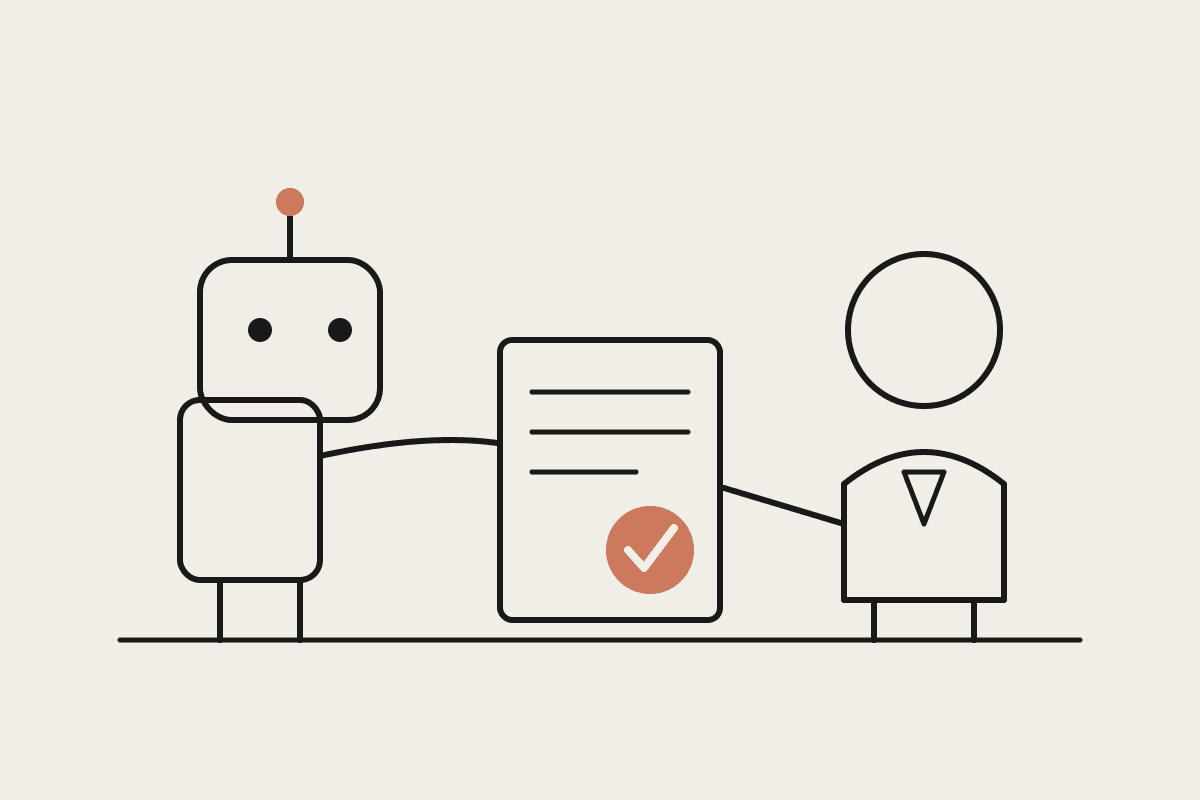
Thomson Reuters has spent more than 175 years building products that lawyers, accountants and tax professionals rely on to make decisions that hold up under scrutiny. In a recent write-up on Anthropic's blog, the company's CTO, Joel Hron, explained why he treats Claude Fable 5 as a genuine step change for that kind of work, and what he still wants from the next generation of models. His answer is a useful checklist for any Australian professional services firm currently deciding how far to trust AI with client-facing work.
The question Thomson Reuters actually asks
Hron's team does not start with a benchmark leaderboard. They start with a narrower test: would the output survive the level of scrutiny a lawyer applies before putting their name on it? That bar rules out a lot of flashy demo behaviour and rewards models that reason carefully, cite sources, and know when to stop and bring a human back into the loop rather than just one-shotting an answer. Thomson Reuters builds tools such as Westlaw, Practical Law and CoCounsel Legal around that discipline, pairing frontier models with curated legal content and expert review rather than betting on the model alone.
Authoritative content: decades of curated case law, tax rulings and practice guidance that a general-purpose model was never trained specifically to hold.
Deep domain expertise: thousands of specialist reviewers annotating and correcting outputs before they reach a client-facing product.
Workflow integration: the AI sits inside the software professionals already use, with sign-off steps built in rather than bolted on afterwards.
The lesson for Australian legal, tax and accounting firms
The temptation in Australia is to judge an AI rollout purely on speed: how many hours of drafting or research it saves this month. Thomson Reuters' approach points to a better question. Whose name goes on the finished document, and what would it take for that person to sign it with confidence? For a Sydney law firm, that means Claude sits inside a workflow connected to the firm's own precedents and matter files, with a partner or senior associate reviewing anything before it leaves the building. For an accounting practice preparing advice that touches the Privacy Act or APRA-regulated clients, the same logic applies: the model drafts, a qualified person checks, and the firm's own control environment, not the model's training data, is what the client is actually trusting.
Run the numbers on a mid-sized advisory firm and the case for that discipline gets concrete. A partner reworking a defective client memo can burn half a day of billable time, and at a $450-an-hour rate that single redo costs the practice close to $1,800 before anyone counts the reputational cost of a client noticing the mistake. Firms that build a proper review gate into the rollout from day one rarely see that bill. The ones that skip it usually pay for it within the first quarter, and often more than once. Scale that across a 40-partner practice and a habit of skipping review is easily a $150,000-a-year problem in redone work alone, well before anyone tallies the cost of a client walking.
Where this fits in a real workflow
None of this requires an in-house AI team. It requires a rollout that treats Claude as one component of a controlled workflow rather than a magic answer machine, which is a much more achievable project for a firm with 15 to 60 staff than it sounds. Most of the work is deciding what the model is allowed to touch unsupervised, and what always needs a human signature before it goes anywhere near a client.
Ground the model in the firm's own documents (matter files, engagement letters, prior advice) rather than open-web knowledge alone.
Route sensitive outputs through a mandatory human review step before anything reaches a client, especially advice touching APRA, ASIC or Privacy Act obligations.
Log what the model was given and what it produced, so a partner can reconstruct the reasoning if a client or regulator asks later.
Start with lower-stakes drafting, such as internal memos or first-pass research, before extending into anything that goes out under the firm's letterhead.
None of this is unique to law and accounting. Any Melbourne or Brisbane practice handling client money or regulated advice, financial planning, insurance broking, migration, is really running the same playbook: authoritative source material, a specialist reviewing the output, and a workflow that makes the review step impossible to skip under deadline pressure.
Thomson Reuters' bet is that the winning AI strategy in professional services is not the model with the best score on a public benchmark. It is the one that fits inside a workflow built for accountability. That is exactly the kind of rollout Automata AI designs for Australian legal, tax and accounting practices: Claude wired into the firm's own systems, with the review gates a regulator or a cautious client would expect to see. If you want a second opinion on how a Claude rollout would look inside your practice, book a short call, and we will map it against your existing review process.