A registered surveyor's billable work is fieldwork and plan preparation. The unbilled hours collect somewhere else: chasing council conditions, formatting lodgement paperwork for the land registry, and answering the same 'where is my plan up to' question for the tenth time. For a small Australian survey practice, that admin can quietly cost a day a week per surveyor. Claude, used with clear guardrails, can take a fair share of it off your desk without touching the parts that need a licensed hand.
Where the admin hours actually go
Before deciding what to hand to an agent, it helps to name the work. In most practices across Sydney, Newcastle and regional New South Wales, the recurring admin falls into a handful of buckets:
Lodgement packaging: assembling the deposited plan, the surveyor's report and supporting documents into the format NSW Land Registry Services expects, then checking nothing is missing before it goes in.
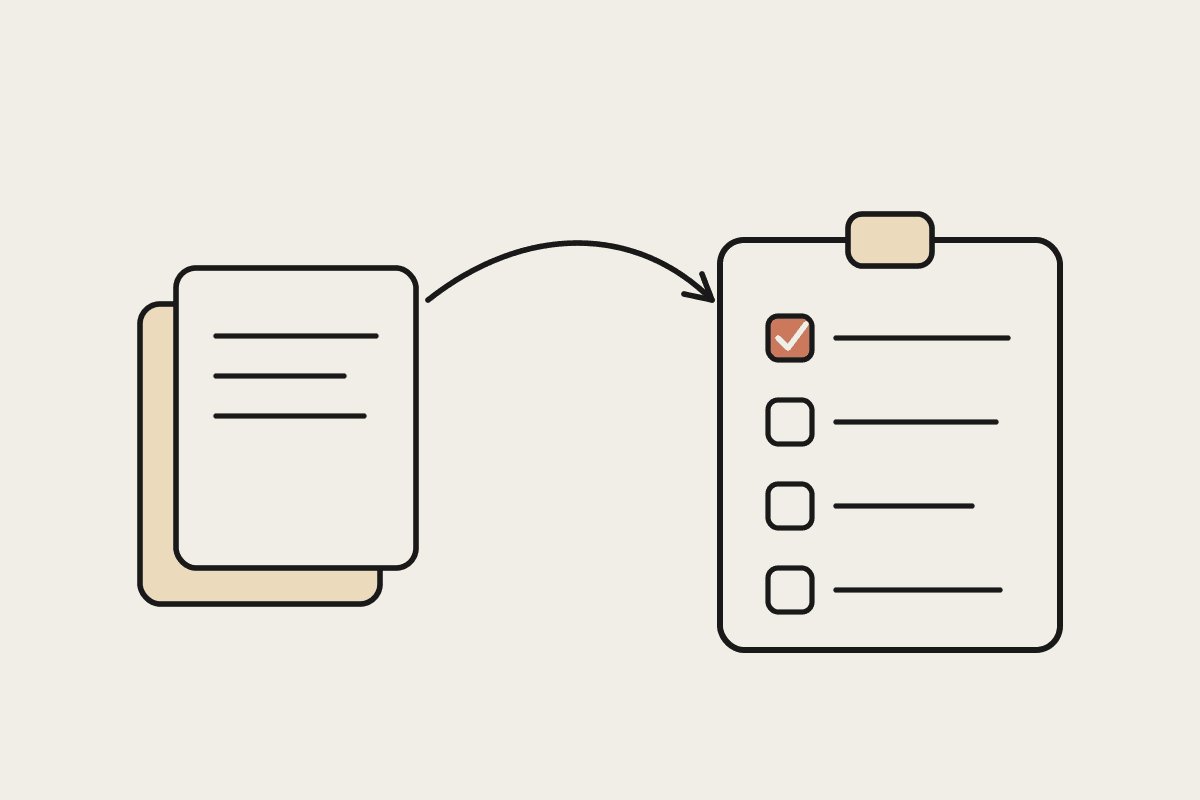
Consent and referral conditions: reading a development consent, pulling out every condition that touches the survey, and turning it into a plain checklist.
Client updates: status emails to developers, conveyancers and builders who all want to know the same three things.
Fee proposals: turning a scope conversation into a written quote that matches your rate card.
Records and correspondence: filing field notes, plans and emails so the next person can find them in a year.
What Claude can draft for a survey practice
Claude is strong at the reading, sorting and drafting that sits on top of the survey itself. Point it at the registry's requirements and a specific job, and it can produce a first-pass lodgement checklist tailored to that plan type. Give it a development consent and it can extract the conditions that mention survey, setback, level or boundary, and lay them out as tasks with the clause numbers attached. Hand it your rate card and a short scope note, and it can draft a fee proposal in your house style for a surveyor to check and send.
The saving is in the hours you never bill. If a surveyor on a $180 an hour charge-out rate spends six hours a week on this kind of admin, that is close to $52,000 a year in unbilled time for one person. Recover half of it across a three-surveyor firm and you are looking at real money, or the same team taking on more jobs without more late nights, which for most owners is the actual goal.
A worked example: plan lodgement
Say a deposited plan is ready to go in. You give Claude the plan type, the council reference, and the registry's current checklist. It returns a document that lists each required item, flags the two you have not attached yet, and drafts the covering surveyor's report in the standard structure. A licensed surveyor reads it, corrects anything wrong, and lodges. The agent did the assembly and the proofreading pass; the human kept the judgment and the signature. On a busy week that is the difference between a plan going in on Thursday and slipping to the following Monday.
Client updates without the ping-pong
Status chasing is the quiet tax on a survey job. A developer wants to know if the plan has been lodged, a conveyancer wants the registered plan number, and the builder wants to know when they can set out. Claude can turn a one-line internal note, such as 'DP lodged Tuesday, registration expected in about two weeks', into three tailored, professional updates, each pitched to what that reader needs. You approve and send. A practice that spends a few hours a week on these emails can save on the order of $1,500 a month in coordinator time, and clients hear from you before they have to ask.
The same pattern works at the front end. When an enquiry comes in from a Melbourne or Brisbane builder, Claude can draft the acknowledgement, note the information you still need, and prepare the fee proposal, so nothing sits unanswered for three days while the whole team is in the field.
Keeping it safe and inside the rules
Two boundaries matter. First, cadastral accuracy and professional judgment are not Claude's job. It does not measure, it does not certify, and it never signs or lodges. A registered surveyor reviews everything client-facing before it leaves the office, exactly as they would a graduate's draft. Second, survey jobs carry personal information, so client data handling sits under the Privacy Act 1988, and you should agree what may be shared with an AI tool before you start.
The Board of Surveying and Spatial Information sets the standard your name is signed against, and an agent that drafts admin does not change who is accountable for the survey. Used this way, Claude is closer to a fast, tireless graduate than a replacement for the licensed work. Write the guardrails down once, and the day-to-day use becomes routine rather than a risk.
If you run an Australian survey practice and want to map which admin is safe to hand to Claude first, book a brainstorm and we will work through it with you.