At WWDC 2026 Apple did something it had never done before. It opened Apple Intelligence to outside models and let people choose which one runs behind the features built into their iPhone. Claude, ChatGPT and Gemini are all selectable, each with a distinct voice so you can tell which model is answering. Gemini holds the paid default slot, with Google reportedly paying Apple around US$1 billion a year for the privilege. Claude and GPT sit right beside it as first-class options.
For Australian business owners the headline is not the Siri rebuild everyone expected. It is the quieter Extensions system underneath it. For the first time, three frontier labs sit inside the same consumer device at scale, running inside the operating system rather than through a browser tab. That changes the maths for anyone already building on Claude, and it nudges model choice from a procurement footnote into something your staff and customers will notice every day.
What Apple actually changed
Apple Intelligence used to mean one set of models, chosen by Apple, baked into the operating system. The new model picker turns that into a consumer-level decision. A person can open Settings, select Claude, and have it power the on-device features they use every day. Apple kept its own engineering focus on private cloud infrastructure and licensed the frontier models from the labs that build them, rather than training one of its own.
Users pick the model behind Apple Intelligence: Claude, ChatGPT or Gemini, each with its own voice.
Gemini is the default because Google paid for the slot, not because it tested as the strongest model.
Claude is a first-class opt-in, available on roughly 1.5 billion active iPhones worldwide.
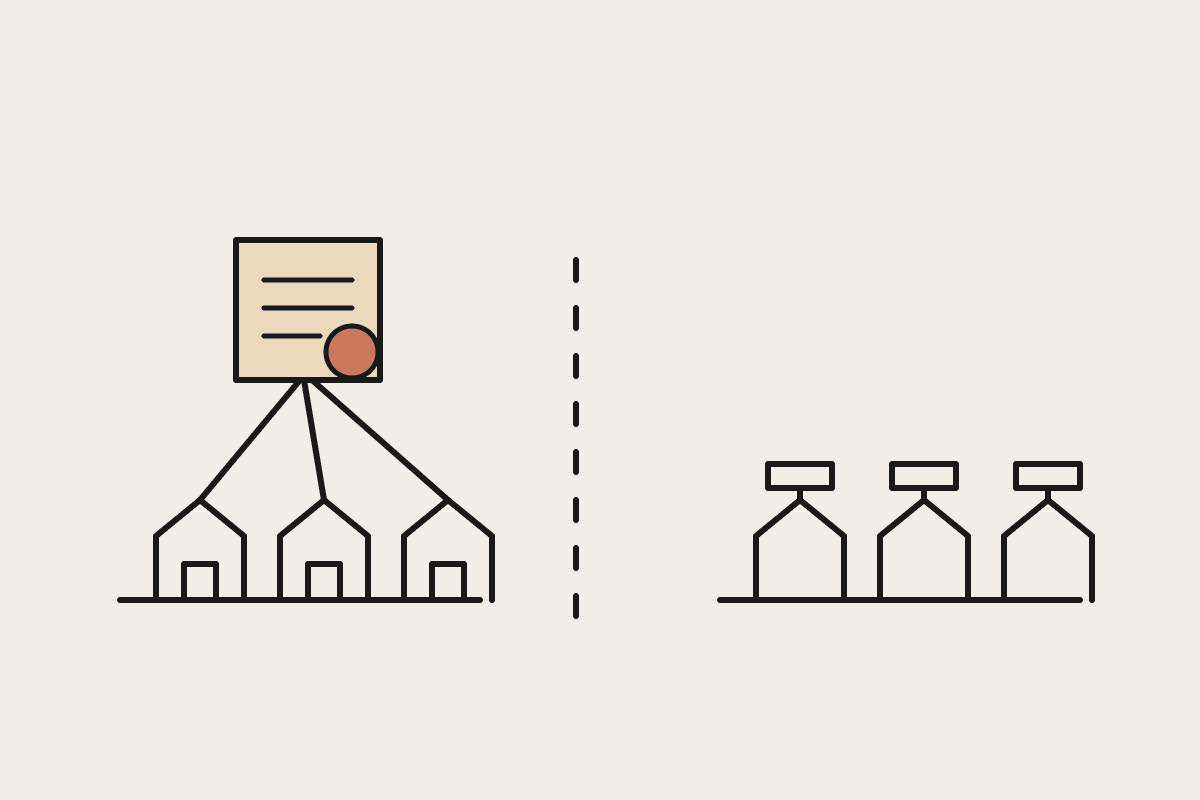
Apple built none of the frontier models itself; it integrated all three and kept its focus on private cloud infrastructure.
Why this matters for Australian businesses
If your customers and staff can swap the model on their own phones, model preference becomes a real consumer behaviour rather than a back-office choice nobody sees. People will form opinions about how Claude writes, reasons and handles their data, and they will carry those preferences into work. An Australian business that has standardised on Claude internally now has a consistent experience from the boardroom laptop to the phone in someone's pocket, with the same tone and the same judgement on both.
There is a practical distribution angle too. If you build a customer-facing tool on the Claude API, the model your customers already chose on their iPhone can be the same one answering inside your product. That consistency carries real weight in regulated Australian sectors, where teams working under APRA prudential standards or the Privacy Act care a great deal about which model touches their data and how predictably it behaves. A Sydney financial services firm that has done the work to trust Claude does not want a different model showing up the moment a customer opens an app on their phone.
Distribution is decoupling from capability
The most telling detail is that Gemini won the default slot by writing the biggest cheque, not by winning a head-to-head on quality. That tells you where the industry is heading. Being the best model and being the default model are now two separate contests. For Australian companies the lesson is simple: choose your model on merit and on the strength of your own build, not on whichever option happens to be pre-selected on a device when it ships. It also means a default can change the next time a contract is renegotiated, so building your business around a model you have chosen deliberately is the more durable position. Treat the picker as a reminder to make that choice on purpose.
What to do now if you are building on Claude
None of this requires a large engineering team. A focused Claude build for a small Australian business, whether an inbox assistant, a pre-call research tool, or a document summariser, typically runs $25,000 to $60,000 depending on scope, and a tightly scoped pilot can land well under $15,000. The cost of waiting, in lost hours and slower decisions, is usually higher than the cost of starting. The teams that move first also build the internal know-how that makes the second and third project faster and cheaper.
Decide where Claude already fits your workflows: drafting, research, summarisation and internal questions.
Standardise on Claude across desktop and mobile so staff get one consistent model voice.
Build customer-facing tools on the Claude API so the experience matches what users now choose on their phones.
Keep your data handling mapped to the Australian Privacy Act and any sector rules before you ship.
Apple just made model choice a mainstream decision. If you want help working out where Claude belongs in your business and what a first build looks like, book a free brainstorm with Automata AI.