Somewhere in your business there is a procedure that took years to get right. The way your team quotes a job, reviews a contract, or closes the books. When you encode that procedure as a Claude skill, it becomes a file you can copy, version, and share. Which raises a question Australian businesses have not had to ask before: do you publish that file, or lock it away?
The question is live because Claude now has a distribution layer. Skills can be bundled into plugins, and plugins can be grouped into marketplaces, which are ordinary git repositories that anyone can host and anyone can install from. Anthropic maintains an open catalogue of example skills on GitHub, and community marketplaces have grown up around it. Publishing is no longer a technical challenge. It is a strategy decision, and right now most firms are making it by accident.
What you are actually deciding to share
A skill is a folder. At minimum it holds a SKILL.md file with instructions Claude reads when a task matches, plus optional scripts, templates, and reference documents. The format is deliberately plain: markdown a human can review in five minutes. That plainness is the point, and also the risk. Anyone who installs your skill can read every line of it. There is no compiled binary hiding your logic, no server keeping your prompts secret. Publishing a skill is publishing your procedure.
That matters because the value in a good skill is rarely the code. It is the judgment: the order of checks a senior estimator runs, the clauses a construction lawyer flags first, the thresholds a bookkeeper applies before escalating to a partner. Skills are the first format that makes this kind of operational knowledge portable, which is exactly why the publish decision deserves more than a shrug.
The case for publishing
For consultancies, software vendors, and any business that sells expertise, a public skill is a working sample of your thinking. A prospect who installs it gets value from you before they ever send an email. The practical arguments in favour:
Distribution without a sales call. A skill listed in a public marketplace travels through git installs and word of mouth, reaching buyers your outbound never will.
Proof of competence. A published skill that runs well is harder to fake than a case-study page, and technical buyers know it.
Feedback you cannot buy. Outside users hit edge cases your team never will, and the issues surface while the stakes are low.
Search and AI visibility. Public repositories get indexed, cited, and recommended by the same AI assistants your buyers now ask for shortlists.
The commercial logic mirrors open-source software. A Sydney consultancy that publishes a useful compliance-checking skill is running the same play as a developer-tools company giving away its core library: the free layer builds trust, the paid layer sells implementation, customisation, and support. Done well, one popular skill can outperform $30,000 a year of content marketing.
The case for keeping skills private
None of that applies when the skill is the business. The arguments for privacy are just as concrete:
Competitive IP. If your margin depends on a process your rivals have not worked out, publishing it as readable markdown hands them a year of learning for free.
Client confidentiality and the Privacy Act. Skills built around client work often carry schemas, thresholds, or examples drawn from real engagements. Scrubbing them properly is real work, and missing one detail is a breach conversation with the OAIC.
Security surface. Instructions that reference internal tools and file paths reveal more about your systems than you may want mapped by strangers.
Maintenance expectations. A public artefact with your name on it needs updating as Claude's capabilities move. An abandoned repository signals worse than no repository.
A four-test decision framework
Before any skill leaves the building, run four tests. Each is a question a director can answer without reading a line of markdown.
1. The competitor test. If your closest rival installed this skill tomorrow, would anything change in your next three competitive bids? If yes, keep it private. In our experience most skills fail this test less often than founders expect; the procedure is usually less unique than pride suggests.
2. The client fingerprint test. Could any client, supplier, or staff member recognise themselves in the skill's examples, thresholds, or file structures? If a scrub is needed, cost it honestly: at $180 an hour of senior review time, a deep clean of a complex skill is not a rounding error.
3. The support test. Who owns issues, updates, and the readme in twelve months? If the answer is nobody, either publish under a clearly labelled snapshot licence with no support promised, or do not publish at all.
4. The pipeline test. Is there a believable path from a stranger installing this skill to revenue for you? For a consultancy the answer is usually yes: the skill demonstrates the service. For a wholesaler whose skill prices copper pipe runs, it is probably no, and privacy costs nothing.
The hybrid most firms land on
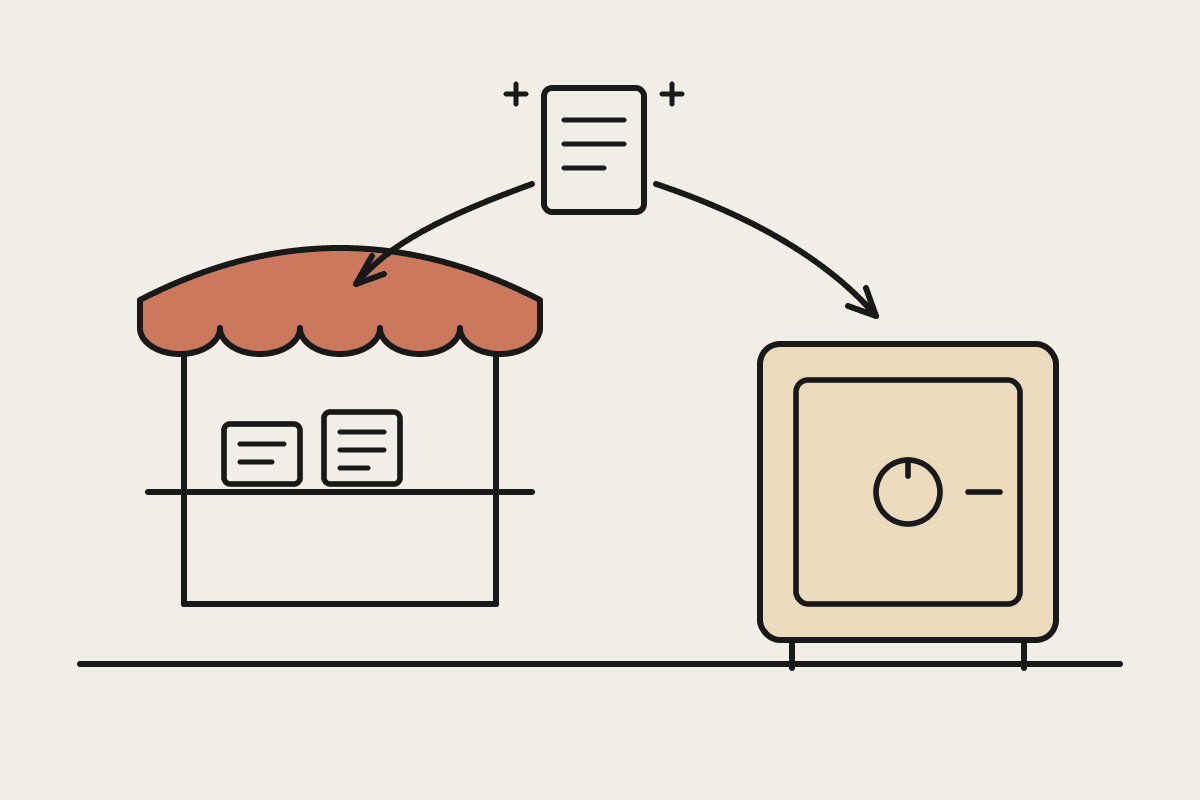
In practice the strong answer is rarely all-public or all-private. The pattern we set up most often is a two-tier library. A public repository carries scaffolding: generic skills that show your standards, formatting conventions, and quality bar. A private repository, installed the same way but access-controlled, carries the skills that encode your actual edge. Staff get both in one install path; the public only ever sees tier one.
Governance stays light but real. Every skill headed for the public tier gets a review pass for client fingerprints, credentials, and internal URLs, a licence file, and a named owner. For a mid-sized firm that is a two-hour gate per skill, not a committee. Australian businesses handling personal information should treat published examples with the same care as any other disclosure under the Privacy Act.
What it costs and what it returns
A typical engagement to stand this up runs $6,000 to $12,000: audit the existing skills, split public from private, set up the repositories and install paths, and write the review checklist your team follows without us. Firms sitting on 20 or more internal skills should budget closer to $15,000 once scrubbing time is counted. Against that, a single client won through a public skill usually covers the project several times over, and the private tier keeps compounding quietly as staff add procedures every month.
If your team has started building skills and nobody has decided what happens when someone asks to share one, that decision is worth an hour before it makes itself. We help Australian businesses draw the line between showcase and secret. Book a short call and we will map your skill library against the four tests together.