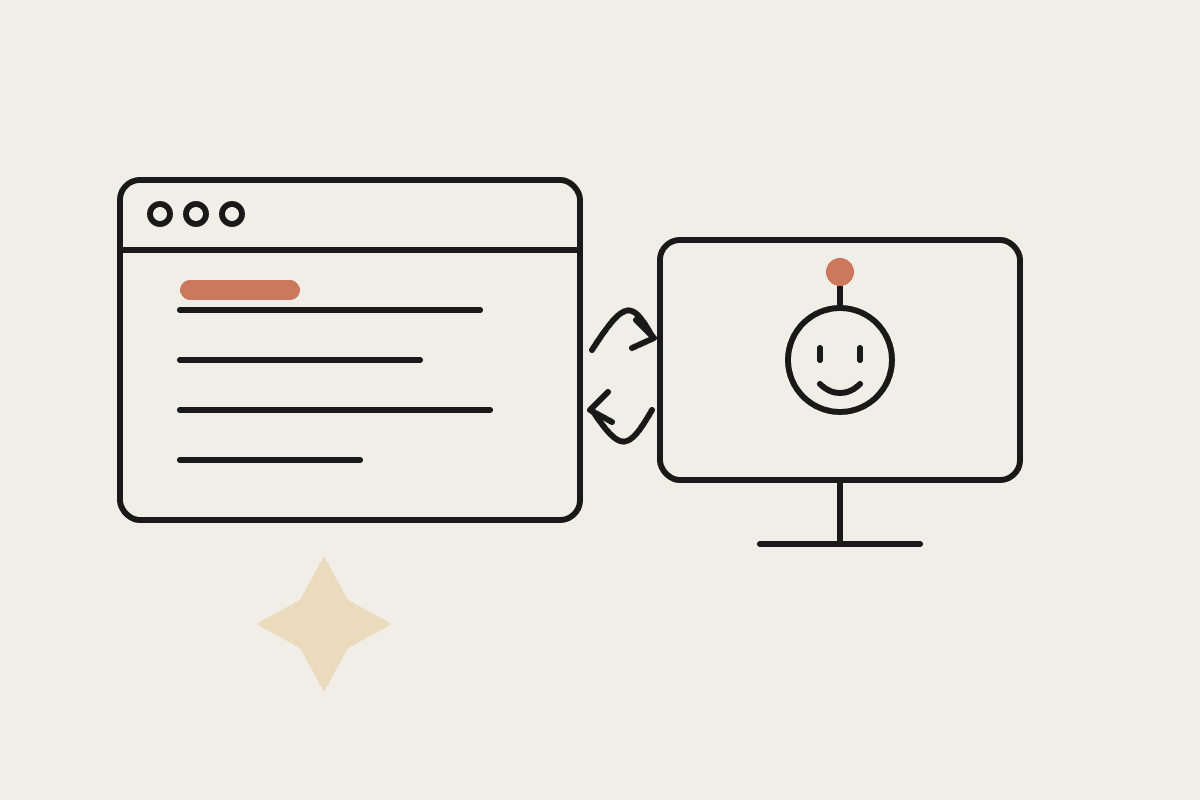
A community post doing the rounds this week describes someone using a new AI voice mode to learn a colleague's automation workflow. They loaded a documented process into the assistant, switched on voice, and asked it to walk through the steps from the top, stopping to ask questions whenever something didn't make sense. Five minutes later they understood a process that would normally take an afternoon of reading. The interesting part isn't the voice interface. It's that an AI agent became a tutor for a documented process, on demand, at the pace of the person asking. That's a gap most Australian businesses still have: standard operating procedures get written once, saved to a folder, and reopened only when something breaks.
The problem with reading a 40-page SOP
Most small and mid-sized businesses have some version of this problem. A bookkeeping practice has a 12-step month-end close checklist nobody follows exactly the same way twice. A trades business has a quoting process that lives in one estimator's head. A Sydney law firm has a client intake procedure spread across three different Word documents, none of which quite match what the team actually does. Writing it all down helps, but only a little. A new starter still has to read the whole thing, guess which parts still apply, and interrupt a senior colleague to check the bits that don't make sense. That interruption is the expensive part.
Claude Skills already do this, in text
Claude Skills solve the same problem without a live microphone. Package a workflow, a client onboarding checklist, a pricing calculation, a compliance step, as a Skill, and any team member working in Claude Code or Claude Cowork can ask it to explain the process, apply it to a real scenario, or flag what happens next. The Skill is the single source of truth. Claude reads it fresh every time, so the explanation never drifts from what the business actually does, and it never gets tired of the same question from the fifth new hire this year.
A new starter can ask what happens after the intake form is submitted and get the next three steps back, grounded in the actual Skill rather than a guess
A manager can run a Skill through an edge case, a client who doesn't fit the usual pattern, before it goes near a real client
The Skill updates once and every future answer updates with it, so training material never quietly goes out of date
What a documented Skill actually looks like
A Skill isn't a chatbot script. It's a folder of plain instructions, checklists, and examples that Claude reads before it answers, the same way a new employee would read a manual, except it reads the whole thing every time and never skims. A client onboarding Skill for a Sydney accounting firm might set out exactly which documents to request, how to verify identity to meet the firm's anti-money-laundering obligations, which fields go into the practice management system, and what to say if a client pushes back on the engagement letter. None of that requires custom software. It requires someone sitting down once with a specialist and writing the process down properly.
The actual steps in order, written the way the business really does them, not the way the manual says it should be done
The judgement calls: what to do when a document is missing, a client is late, or an exception comes up
A handful of worked examples so Claude, and the new hire, can see the process applied rather than just described
Why this matters more than the voice gimmick
For a Sydney services business, the value isn't a novelty feature, it's fewer $150-an-hour hours spent re-explaining the same process to every new starter, and fewer costly mistakes from someone half-remembering a step. Take a 12-person firm that onboards four new staff a year. If each hire needs even six hours of one-on-one process training from a senior team member billing out at $150 an hour, that's $3,600 a year in senior time spent on repetition alone, before counting the mistakes made in the gap between being told once and actually understanding. A documented Skill library built once with a specialist, at a cost closer to $4,000 to $6,000 for a firm that size, usually pays for itself inside the first year on reduced senior time alone, before counting the errors it prevents.
Write the SOP once as a Claude Skill instead of a document nobody reopens
Let Claude Code or Cowork answer team questions against it any time, without booking a senior person's calendar
Update the Skill when the process changes and every future answer updates instantly, with no re-training round required
Voice mode is a genuinely useful interface for some tasks. But the thing that actually saves a business money is one documented, always-current Skill that anyone can question, not a new way to have a document read aloud. If your SOPs are still living in a Google Doc nobody opens, that's the gap Claude Skills are built to close.
Where this fits into a broader Cowork setup
Businesses already using Claude Cowork for scheduled reporting or client work can add training Skills to the same setup with no new subscription. The same access controls that keep client data inside the business also apply to onboarding Skills, which matters if a checklist touches personal information covered by the Privacy Act, client financial records, or anything else that shouldn't leave the business. A documented Skill library, built once with a specialist, keeps paying for itself long after the onboarding session ends, and it scales the same way whether the next hire starts in a month or in three years.
If your team's process knowledge still lives in one person's head or a folder nobody reopens, that's usually a half-day conversation to fix. Book a short call and we'll scope what a first Skill library would look like for your business.