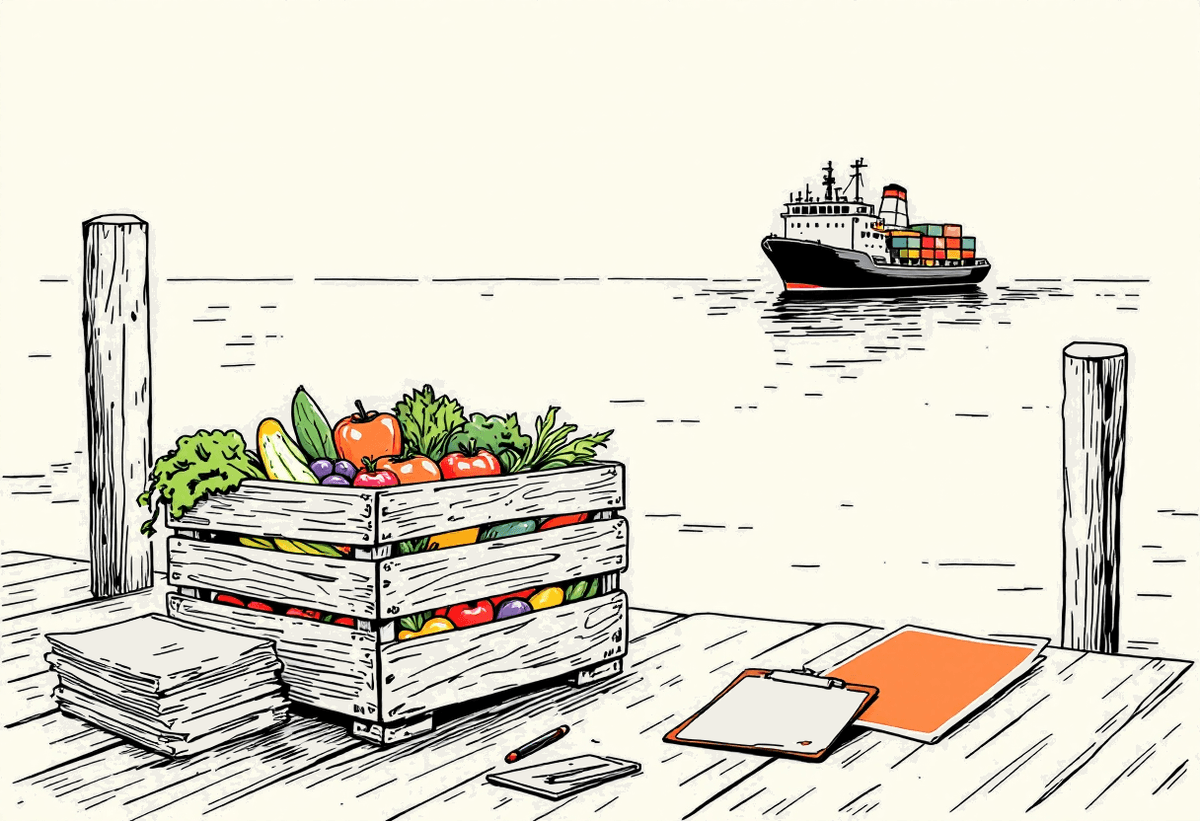
Tasmanian producers sell into some of the most documentation-heavy markets in the world. A pallet of cherries bound for China, a side of grass-fed beef headed to Japan, or a case of cool-climate wine going to the European Union each carries a paper trail that has to be exact. Claude, the AI assistant from Anthropic, is now doing real work inside that paper trail for Australian growers and processors who would rather spend their hours in the paddock than in a spreadsheet.
Why Tasmanian agriculture carries a heavier documentation load
Tasmania's clean, cool-climate reputation is a commercial asset, and it comes with obligations. Biosecurity Tasmania enforces some of the strictest entry and movement controls in the country, and exporters answer to the federal Department of Agriculture, Fisheries and Forestry on top of the requirements set by each destination market. A salmon processor, a dairy operation, and a horticulture exporter all face different forms, different certificates, and different deadlines.
For an Australian business turning over between $5M and $50M, this work usually lands on a handful of people who already wear several hats. The cost is rarely a single line item. It shows up as late nights before a shipment, as rejected consignments when a certificate field is wrong, and as the opportunity cost of an operations manager transcribing data instead of improving the operation itself.
Three places Claude earns its keep on a Tasmanian farm
Export documentation and market access
Export paperwork is repetitive, rule-bound, and unforgiving of small errors, which makes it a strong fit for an AI assistant. Claude can read a destination market's import requirements, compare them against a draft health certificate or phytosanitary document, and flag the fields that do not match before the consignment ever leaves the packing shed. A human still signs every document, but the checking happens in seconds rather than hours.
Drafting export health certificates and packing declarations from your existing consignment data, ready for a person to review and approve.
Checking a document set against the current rules for a specific market, such as residue limits or labelling language, and listing what is missing.
Translating product and handling information into the language a destination customs authority expects.
Keeping a plain-language record of which document version went with which shipment, so an audit becomes a short task rather than a multi-day scramble.
Biosecurity and compliance record-keeping
Biosecurity Tasmania and national schemes such as the Livestock Production Assurance program expect records that are complete and retrievable. Claude can turn a shoebox of chemical-use notes, treatment dates, and movement records into a structured register, then answer questions about it in plain English. Asking which paddocks had a withholding period active in March becomes a single question rather than an afternoon of cross-referencing.
Yield forecasting from weather and soil data
Tasmanian growers already sit on years of weather, soil moisture, and harvest data. Claude can help interpret that history alongside Bureau of Meteorology forecasts to produce a working yield estimate, sense-check it against past seasons, and explain the assumptions in language a grower can challenge. The point is not a black-box number. It is a forecast you can interrogate and adjust as the season changes.
What it costs, and what it returns
The honest answer is that the technology is now the cheap part. A team licence for Claude sits in the low hundreds of dollars per user each month, so a five-person operations team might spend around $12,000 a year on tools. The larger investment is the few weeks of setup time to connect Claude to your existing records and agree on how it should be used.
Set that against the cost of the problem. A single rejected export consignment can write off $45,000 or more in product, freight, and re-inspection once you count the lost sale. An operations manager spending one day a week on documentation is roughly $30,000 of salaried time a year pointed at data entry. For a mid-sized Australian exporter, recovering even half of that pays for the tooling several times over.
Tooling: typically $10,000 to $20,000 a year for a small team, scaling with headcount.
Setup: two to six weeks to connect data sources and document the workflow.
Payback: most operations find the documentation time saved covers the cost inside the first quarter.
Getting started without betting the farm
The right first project is narrow and measurable. Pick one export market and one product line, and use Claude to draft and check the documentation for the next season's shipments while your team keeps doing it the old way in parallel. Compare the error rate and the hours spent. That gives you evidence before you commit, and it keeps a person firmly in control of every certificate that gets signed.
Automata AI is a Sydney-based consultancy that helps Australian businesses put Claude to work safely. If you run a Tasmanian growing, processing, or export operation and want to see where AI fits, book a brainstorm with our team.