Google just gave the clearest look yet at where consumer AI agents are heading, and it isn't really about Southeast Asia. Its first Gemini Southeast Asia Report leads with regional adoption numbers, but the detail worth sitting with is Gemini Spark, an agent Google describes as working around the clock across Gmail, Docs, and Slides, even while the device is locked. That's a deliberate shift in framing: from AI that answers when you ask, to AI that acts while you're not looking. For a business owner, that framing deserves a second look before it earns applause.
Google's pitch: an agent that works while your phone is locked
The appeal is easy to understand. Nobody wants to babysit software. If an agent can triage an inbox, draft replies, and keep documents current without anyone opening a laptop, that's hours back every week for a busy owner or operator. Gemini Spark is Google's bet that invisible and constant is what people actually want from an assistant, and for a lot of personal, low-stakes use cases, that bet is probably right.
Running a business changes the maths. Once real customer data, real invoices, and real deadlines are involved, on Australian soil and under Australian privacy obligations, invisible stops being a feature and starts being a liability. An agent that works while nobody's watching is also an agent that can go wrong while nobody's watching, and the business owner is the one who has to explain it afterwards, not Google.
Claude ships the guardrails first
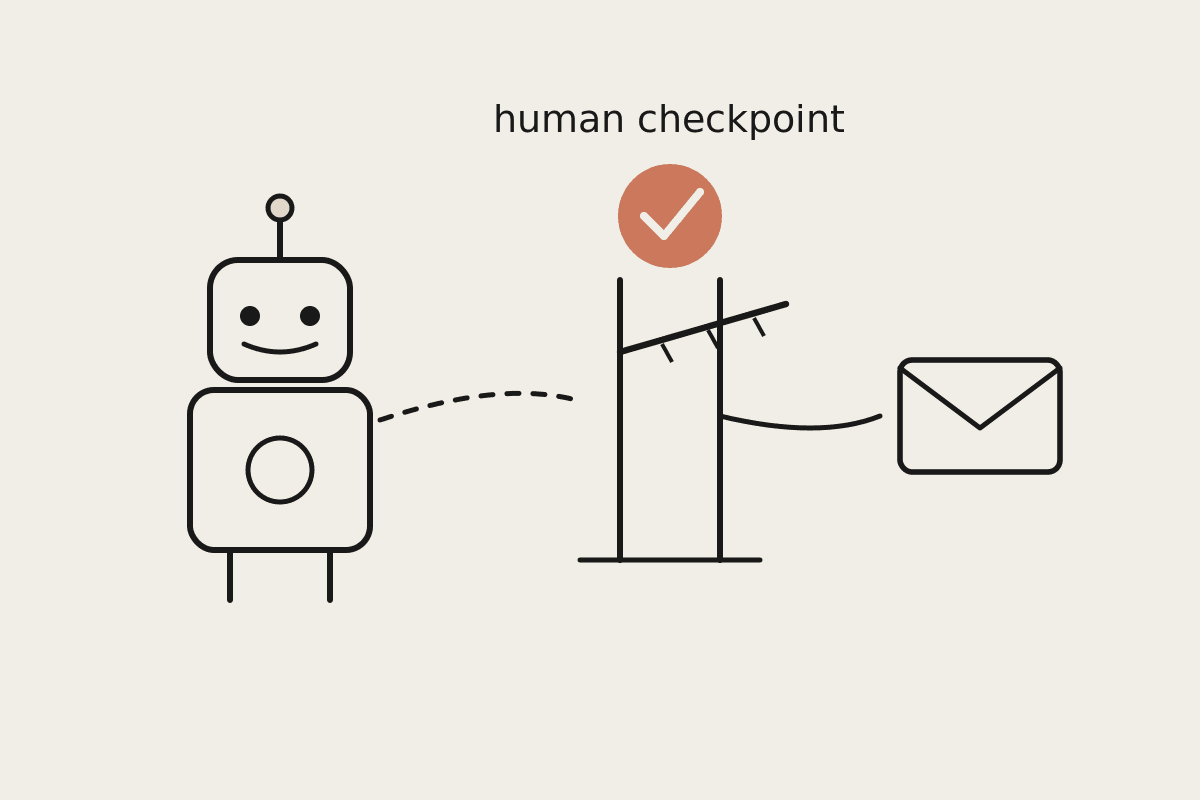
Claude's version of always-on automation looks different by design. Inside Claude Cowork, scheduled tasks run on a timer the same way Gemini Spark does, but the default behaviour is built around one rule: show the work before you automate the trust. A scheduled Cowork task produces a plain-English report every time it runs, and anything that touches a customer directly, an email, a CRM record, a published page, a payment, sits as a draft waiting for a person to approve it before anything actually goes out.
That isn't a safety feature bolted on after the fact. It's the operating model Claude is built around, and it's why Automata AI configures every Cowork setup for an Australian client the same way:
Every autonomous run leaves a plain-English audit trail, not a black box you have to reverse-engineer after something breaks
Claude's sandboxing and permission model constrain what a background agent can touch, not just what it's been asked to do, so one bad prompt doesn't become one bad afternoon
Always-on is only worth having if a person can see what the agent did and undo it inside thirty seconds, not after a customer rings to ask why they got three invoices
What 'always-on' actually costs when it breaks
It helps to picture the failure modes rather than the demo reel. An agent with standing access to a mailbox sends a draft that was never meant to go out. One with write access to a CRM merges two customer records incorrectly and nobody notices until the next invoice run. One that acts on its own publishes a page or a social post with the wrong price, at 2am on a Friday, hours before a single person is awake to catch it.
None of that requires malice, or even a bad model. It only requires an agent built for invisibility being handed a task it slightly misjudges, and an owner who finds out after the fact rather than before. Under the Privacy Act, and the general expectation that any Australian business can explain what happened to a customer's data on request, the agent did it overnight while I was asleep is not an answer regulators, or customers, find reassuring.
What to ask before turning any agent loose
Before wiring any AI agent into email, a CRM, or a publishing workflow, it's worth working through a short list of questions:
Can I see a plain-English log of every action this agent took this week, not a summary it wrote about itself
Does anything customer-facing, an email, a payment, a public post, require a human tick before it actually sends
What happens if the agent gets something wrong at 2am while nobody's watching, and how long before a person would notice
Can I switch it off in a single step, and does switching it off actually stop everything it was midway through doing
Building the guardrails-first setup
None of this requires a large project. For most small and mid-sized Australian businesses, it's a focused setup: map which actions are safe to fully automate, like internal reports, draft generation, and data pulls, against which ones need a human checkpoint, which is anything that leaves the business or touches money, then configure the agent's permissions to match. That typically runs $2,500 to $4,000 as a one-off setup, considerably cheaper than the cost of one bad autonomous action reaching a real customer or landing in front of an auditor.
Google is racing to make its agents feel invisible, and for plenty of consumer use cases that's the right race to win. For a Sydney business handling real customer data and real money, invisible isn't the goal. Accountable is. That's the model Claude and Cowork are built around, and it's what Automata AI configures for Australian businesses bringing agentic AI into the business for the first time. If you're weighing up where the approval gates should sit, book a brainstorm and we'll map it out together.