Data sovereignty is one of the strongest arguments for open source AI in Australia. Run the model on infrastructure you control and your data never leaves the country, never trains someone else's system, and never crosses a border you cannot see. The benefit is real. So is the work required to actually claim it, and the second part is the one most Australian businesses underestimate.
This guide covers what sovereignty actually demands in practice, what it costs an Australian company to do it properly, and how to decide whether self-hosting an open model is the right way to get there.
What data sovereignty actually means
Sovereignty is often used loosely to mean the model runs here. The working definition is stricter: every place your data can land, including prompts, outputs, logs, caches, and backups, sits inside Australian jurisdiction and under controls you can demonstrate. The Privacy Act already pushes in this direction. APP 8 makes a business accountable for personal information it sends offshore, so knowing exactly where data flows is not optional housekeeping, it is a compliance obligation.
That distinction matters because a model downloaded from an overseas lab and run in an Australian cloud region can be perfectly sovereign, while a locally built tool that quietly ships telemetry offshore is not. The label on the model tells you very little. The architecture around it tells you everything.
What sovereignty actually requires
Hosting an open model yourself is necessary but not sufficient for genuine data control. Sovereignty is a property of the whole system, not just the model weights.
Compute located in an Australian region, not just billed to an Australian account
Clear rules on where logs, caches, and backups physically live
Access controls that match the Privacy Act and your own internal policies
A documented trail you can show if a regulator, auditor, or enterprise client asks
Miss any of these and the sovereignty claim is weaker than it looks on the architecture diagram. Enterprise procurement teams and APRA-regulated clients increasingly ask for the evidence, not the assertion.
The trade you are making
Keeping everything local shifts a large amount of effort onto your own team, and the shift is permanent. The day the model goes live, your business owns a new production system with all the obligations that carries.
You own patching, scaling, and incident response, including the 2am variety
You own the audit trail and the evidence behind every control
You own the cost of idle capacity overnight, on weekends, and over the holidays
You own the security of an additional attack surface that did not exist last quarter
The real cost for an Australian company
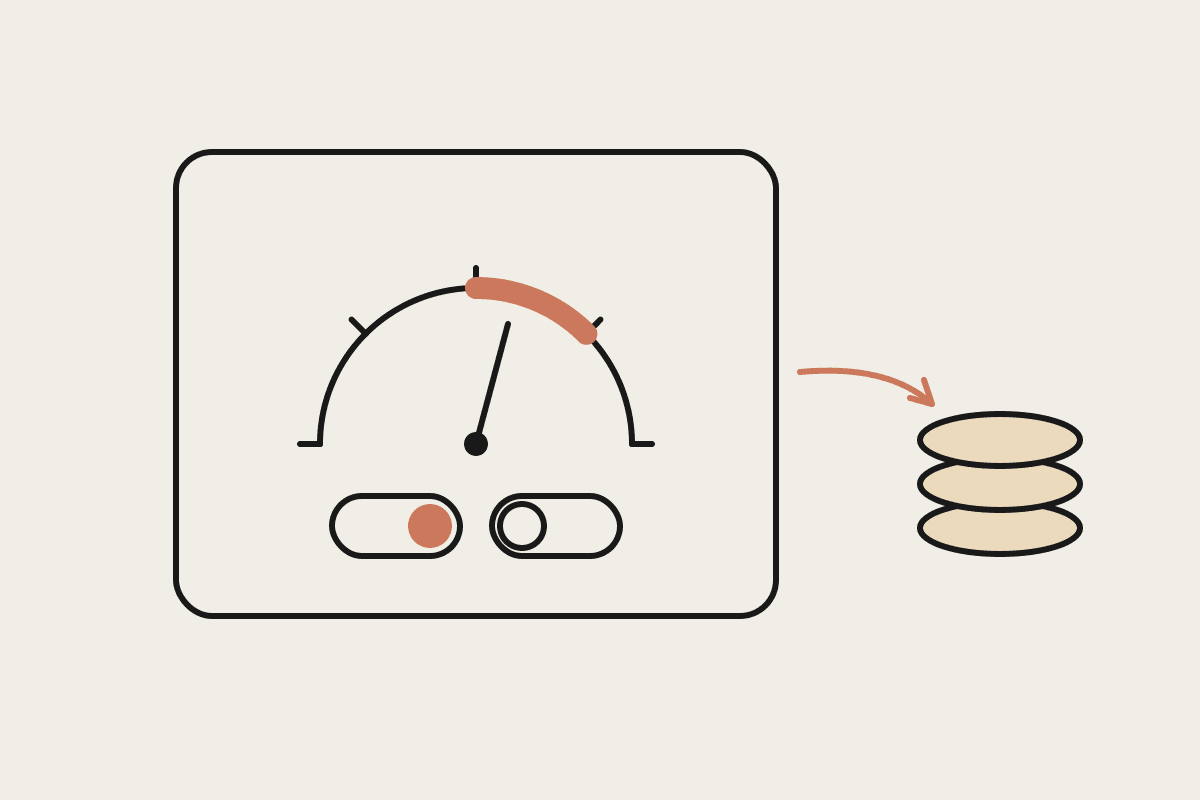
A genuinely compliant self-hosted deployment for a mid-size Australian business often starts near $70,000 a year once compute, security hardening, monitoring, and people are counted honestly. A production GPU node alone can run $40,000 a year before any application code is written. Add a Sydney engineer with real inference and security experience and the fully loaded figure climbs past $220,000.
None of that is an argument against sovereignty. It is an argument for pricing it accurately. A sovereignty requirement that exists because one client asked a question in a tender deserves a different answer than one driven by a hard regulatory obligation.
Weighing it against a managed deployment
For many Australian firms, a managed Claude deployment with the right data-handling controls meets the same underlying need at lower cost and far less effort. Commercial API traffic is not used for training, retention windows can be controlled, and the contractual and technical evidence is already written down, which is most of what an auditor wants to see. Sensitive data stays tightly governed without your team running a GPU fleet.
Define what sovereignty actually buys your business, in concrete terms
Compare that against the full cost of achieving it yourself
Choose controls that match the real risk, not the fear
Open source still earns its place where the requirement is absolute. A defence-adjacent workload or a dataset that must never touch a third party is a clean case for self-hosting, and the spend is justified. Most Australian SMB workloads are not that case.
Documenting the decision
Whichever way you go, write the reasoning down. Sovereignty claims that live only in someone's head do not survive an audit, a tender, or a staff departure.
Record where data and logs physically sit, by system and by region
Note the controls that enforce residency and who owns each one
Keep the cost comparison that justified the choice
That short record is what turns a sensible decision into a defensible one when a client or regulator asks how their data is handled.
Key takeaways
Sovereignty is a property of the whole system: compute, logs, backups, and access, not just the model
Doing it properly starts near $70,000 a year for a mid-size Australian business
A managed Claude deployment with documented controls often meets the same need for less
Whatever you choose, document the reasoning so it stands up later
Talk to a Claude specialist
Automata AI is a Sydney based consultancy that helps Australian businesses weigh sovereignty against practicality and document the decision so it stands up later. Book a short brainstorm and we will map the cheaper, safer path for your data.