Google I/O 2026 arrived with close to 100 announcements, from Gemini 3.5 Flash to Spark, Omni and Antigravity. The dust has settled enough to judge them honestly. Plenty of Australian owners are now asking what, if anything, they should change. This guide keeps it practical for Australian teams, with the trade-offs that actually affect the decision rather than the marketing.
The headline releases
A handful of announcements matter for most businesses. The rest are interesting but not urgent. If you only read about three things from I/O 2026, read about these.
Gemini 3.5 Flash as the new default model, pitched at flagship-level reasoning at a fast, cheaper tier.
Gemini Spark, a 24/7 agent that can take on standing tasks rather than one-off prompts.
Omni and Antigravity, Google's video-generation model and its coding harness for multi-step developer work.
What actually matters for Australian SMBs
For a smaller team in Sydney, Brisbane or anywhere else in Australia, the practical story is agents and the Workspace features, not the frontier demos. The question is never whether a model is impressive. It is whether it removes hours of work you currently pay people to do, and whether the data handling is acceptable for your industry.
Agents that handle real, repeatable work such as triaging email, drafting first-pass replies and updating records.
Gemini across Gmail, Docs and Slides for teams already living inside Google Workspace.
Lower-cost models for high-volume tasks where a top-tier model would be overkill and overpriced.
What can wait
Several launches are built for large enterprises or developers, not for your Tuesday. There is no penalty for ignoring them until they prove a clear return for a business your size.
Heavy enterprise agent platforms aimed at organisations with dedicated AI teams.
Frontier video generation, unless content production is a core part of what you sell.
Specialised developer tooling that needs an engineering team to get value from it.
Where Claude still fits the picture
Most of the I/O 2026 coverage framed the week as a Google story. For an Australian business choosing a foundation to build on, the more useful framing is which model you standardise on for serious agentic work. That is where Claude continues to earn its place. Claude Code has more than a year of production use behind it, a deep skills ecosystem, and connectors that now span the major Australian SaaS tools through the Model Context Protocol.
Gemini 3.5 Flash and Antigravity are a credible alternative, not a leapfrog. For regulated Australian industries, the dimensions that decide the call are production maturity, the connector ecosystem, and how predictable the model is on long-running tasks. On those, Claude holds up well. The honest position is to use the best tool for each job: Claude as the reasoning core for workflows and internal tools, with a Gemini step downstream where video generation is genuinely in scope.
How to make the decision well
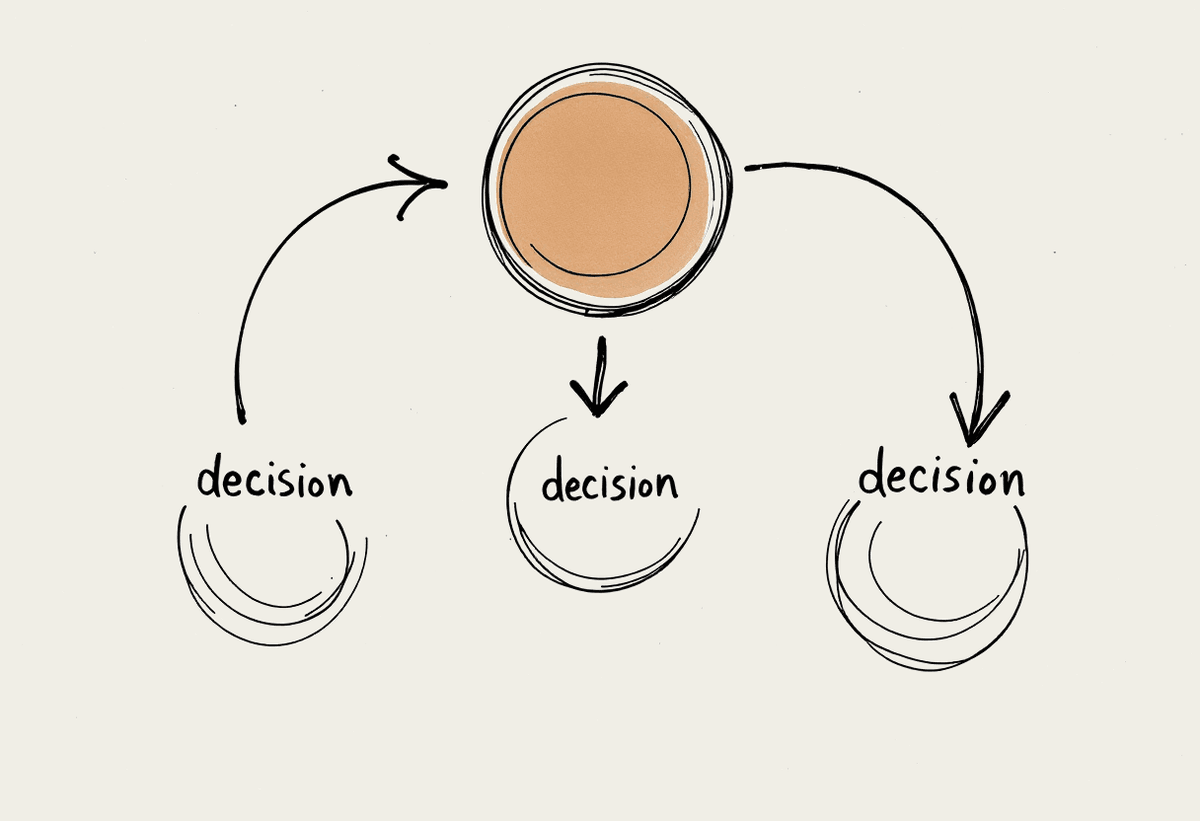
Strategy questions go wrong when they are settled by a demo or a headline rather than your own evidence. A short, structured trial on real work removes most of the guesswork and gives you something you can defend to a board or a business partner later.
Write down the decision and who owns it before you start testing.
Test on real tasks from your own operation, not vendor demos.
Set a review date so the call is not treated as permanent.
Keep a short record of why you chose what you chose.
Common mistakes to avoid
The biggest errors here are strategic, not technical. Teams pick a tool because a competitor did, or because a launch looked impressive, and discover months later that it never fit the work. Chasing every announcement can quietly burn a quarter and $40,000 of effort with nothing shipped. A little discipline up front avoids most of that pain.
Choosing on hype or a single polished demo.
Standardising on a model before testing it on real tasks.
Ignoring where your data is processed and stored, which matters under the Privacy Act.
Treating the choice as permanent and never reviewing it as models change.
Skipping a written rule, so staff each do their own thing.
Key takeaways
If you remember nothing else about Google I/O 2026 for your Australian business, hold on to these points.
The releases that matter for most teams are Gemini 3.5 Flash, Spark and the Workspace features.
Match the tool to the task, keep a human on high-stakes work, and review the choice as models change.
For serious agentic builds in regulated Australian industries, Claude remains the sensible default.
Talk to a Claude specialist
Automata AI helps Australian teams design, build and govern AI workflows with Claude as the core. Book a brainstorm and we will pressure-test your plan against the trade-offs covered above.