In June 2026, Z.ai released GLM-5.2, a 753-billion-parameter open-weight model under a permissive MIT licence. It now sits at the top of the open-weight field on the independent Artificial Analysis Intelligence Index, and on several long-horizon coding benchmarks it beats strong closed models at roughly one-sixth of their API price. The headline is real. For a Sydney or Melbourne small business deciding where to put its AI budget, the buying decision is more subtle than the leaderboard suggests.
What GLM-5.2 actually changes
A free, downloadable model that scores near the frontier removes an old objection, that open weights were always a generation behind the best closed systems. GLM-5.2 closes most of that gap. It uses a mixture-of-experts design, so although the full model is 753 billion parameters, only about 40 billion activate on any given request, which keeps inference lighter than the raw size implies. It ships with a one-million-token context window, and the weights are yours to download, run and keep. For a team with heavy, repetitive workloads and an engineer who genuinely enjoys infrastructure, that combination is worth a serious look.
What it does not change is the work around the model. A leaderboard score is not a support contract, a safety record, or a deployment your accountant can audit. Those are the things that decide whether an AI project survives contact with a real Australian business. A model that wins a benchmark in March can still cost you a fortnight of unplanned engineering in April, when a dependency breaks or a GPU node falls over the night before a client deadline.
Where Claude still wins for most SMBs
We build on Claude first, and the reasons have little to do with raw benchmark points. They are about total cost and risk across a year, not the price printed on a single token.
No infrastructure to run. A self-hosted open model needs a GPU server, monitoring, patching, and someone on call when it stops responding at the wrong moment. That is a job, not a download.
Predictable safety behaviour. Claude is tuned to refuse and hedge in ways that protect a small brand that has no legal team standing behind it.
A managed roadmap. Security fixes, model updates and new features arrive without a migration project each time, so your people keep shipping work instead of maintaining a stack.
Accountable support. When something breaks at 4pm on a Friday, a managed provider is on the hook. Your own server answers to nobody but you.
For a typical 10 to 50 person firm spending $200 to $2,000 a month on AI, the managed path is usually cheaper once you count the staff time that self-hosting quietly consumes. A capable infrastructure engineer in Australia costs well north of $150,000 a year. If keeping an open model healthy takes even one day a week of their time, that is around $30,000 a year in salary alone, before the GPU bill arrives. Very few small firms move enough volume to claw that back through a lower per-token price.
A simple test before you switch
Open weights earn their place in two situations: very high volume, or data rules that a managed API cannot meet. Before you move a workload off Claude, ask three honest questions.
Volume. Are we processing tens of millions of tokens a day, every day, not just in a one-off batch? Self-hosting only pays back at sustained scale.
Data rules. Do we have a real reason the data cannot touch a managed API, such as a contractual data residency clause or a sector rule that names on-premise processing?
Ownership. Do we have someone who can own a GPU deployment for the next two years, including the dull parts like patching, monitoring and capacity planning?
If the answer to all three is yes, GLM-5.2 deserves a trial, and we will gladly help you scope one. If the answer to any of them is no, the honest move is to stay on Claude and spend the saved effort on the actual business problem. Most firms we talk to in Sydney and Brisbane land in the second group, even the ones who arrived sure they wanted to self-host.
The hybrid option most people miss
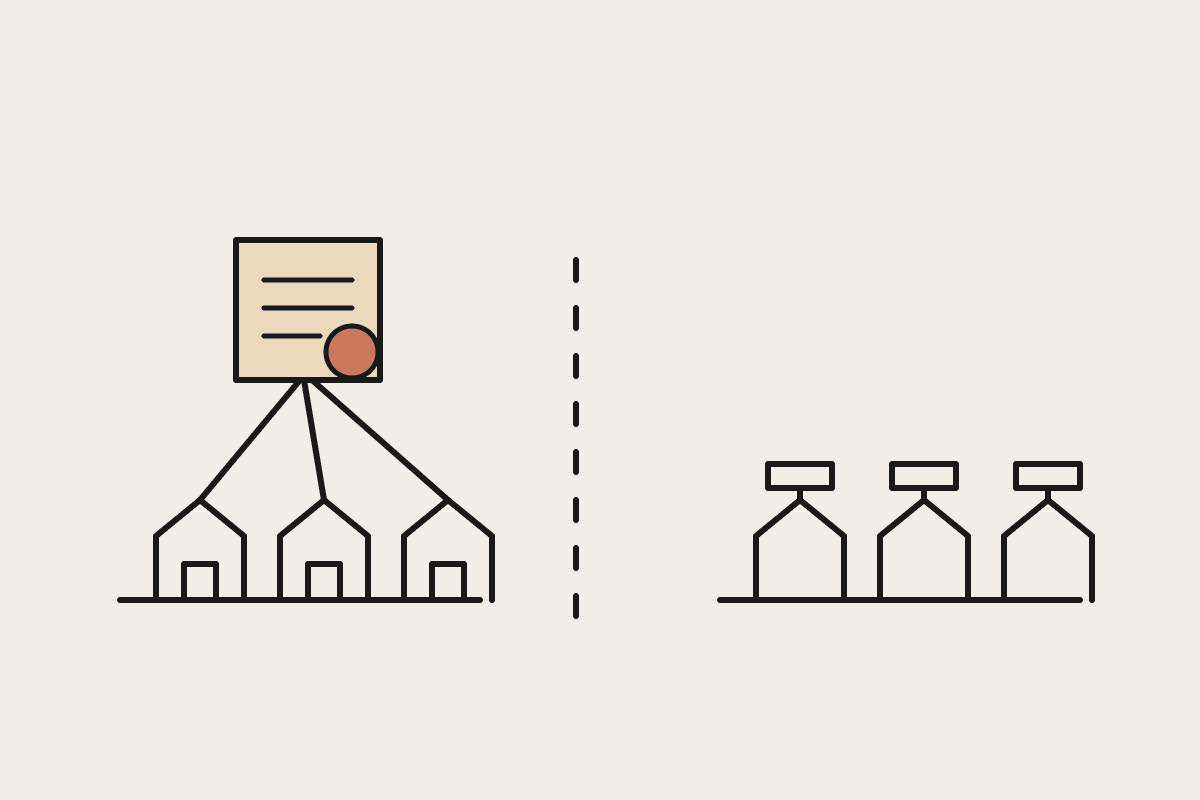
The choice is rarely all or nothing. A practical pattern is to keep Claude for the work that touches customers, handles money, or carries brand and compliance risk, and route the high-volume, low-stakes work, such as bulk classification or first-pass drafting, to a cheaper open model. You then pay frontier prices only where judgement matters, and commodity prices everywhere else. Designing that split well is usually worth more than the model choice itself, and it is the kind of thing a short engagement can map out in about a week.
In practice the saving is real but smaller than the per-token gap suggests. The win comes from spending less senior attention on plumbing, not from shaving cents. We have seen teams chase a cheaper model for months and end up spending more, because the cost simply moved from an invoice they could see to engineering hours they could not.
The Automata AI view
GLM-5.2 is a real milestone for open weights, and we track it closely so our clients do not have to. For most Australian SMBs, though, the cheapest route to working AI is still a managed model plus good process design, not a server humming in a cupboard. The model is the easy part. The process around it is where the money is made or lost.
Want a second opinion on whether open weights fit your workload? Book a free brainstorm and we will give you a straight answer.