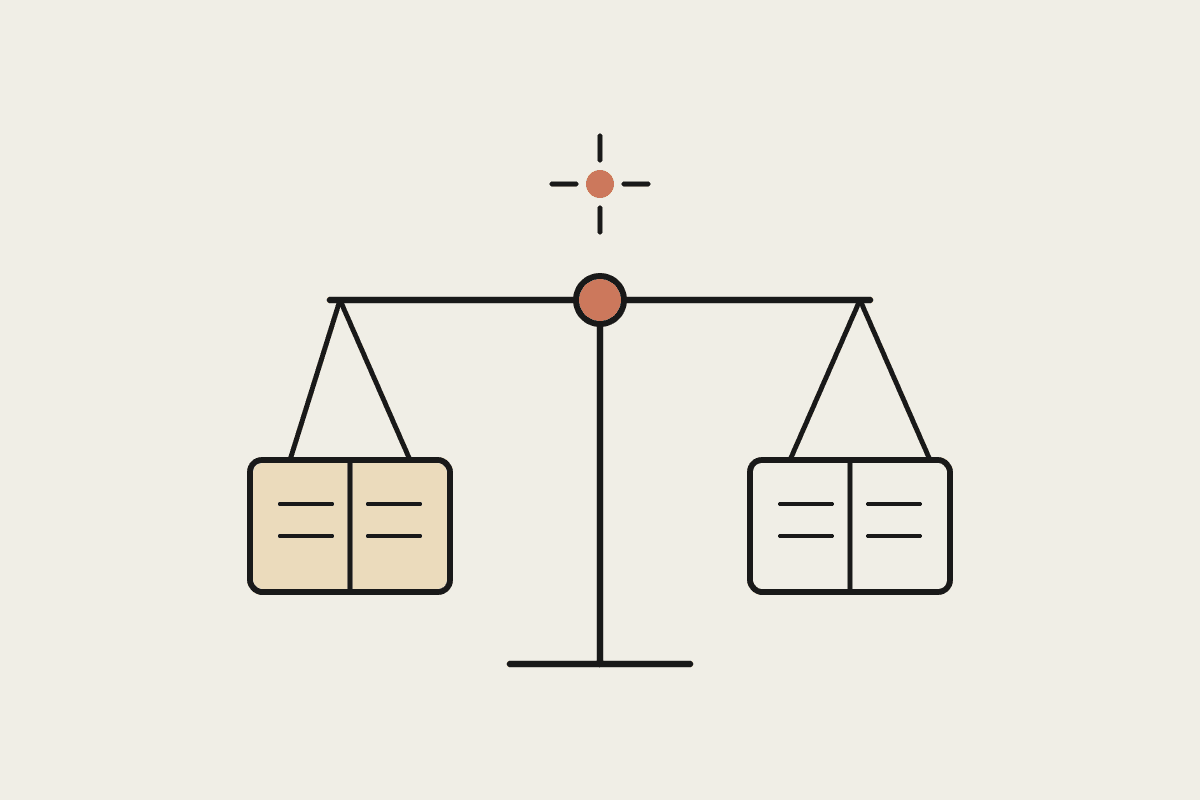
Most Australian small businesses have already picked a side. MYOB and Xero between them run the bookkeeping for the bulk of the country's SMBs, and switching from one to the other is rarely worth the disruption to your accounts, your bookkeeper, and your reporting history. The more useful question in 2026 is which of the two gives you a better base to add AI-assisted bookkeeping on top, and where Claude fits regardless of the ledger underneath.
We work with Sydney and Melbourne businesses on exactly this decision. The short version: both platforms are capable, both have their own AI features, and the real difference for an AI workflow is how open each one is to the tools you connect to it. Here is how they compare, and what actually changes once Claude is in the picture.
Where MYOB and Xero actually differ
For day-to-day bookkeeping the two are closer than the marketing suggests. Both handle GST, BAS preparation, bank feeds, payroll with STP Phase 2 reporting, and invoicing to a standard that suits most small businesses. The gaps that matter show up at the edges, not in the core ledger.
Ecosystem and integrations: Xero has the larger third-party app marketplace, which matters when you want to connect bookkeeping to other systems. MYOB has closed much of that gap and tends to suit businesses already running MYOB payroll or inventory.
Pricing: both sit in a similar band for a small business, roughly $30 to $80 per month depending on the plan and payroll headcount. Neither is a clear winner on cost alone.
Complexity: MYOB leans toward businesses with inventory, job costing, or more involved payroll. Xero is often faster to run for a services business that mostly invoices and reconciles.
Data access: this is the one that matters most for AI. Xero's API is broad and well documented. MYOB's API exists but is more restrictive, which shapes what an AI assistant can read from your books and act on.
What AI-assisted means on each platform
Both MYOB and Xero ship their own AI features now, mostly around transaction coding, invoice capture, and cash flow prediction. These are useful and worth turning on. They are also narrow by design: they do the specific jobs the vendor built them for, and not much beyond that. If your question is why did our margin drop in the March quarter, or draft a plain-English summary of these numbers for the board, the built-in features stop short of a real answer.
That is the gap Claude fills. Rather than replacing your ledger, Claude sits on top of the data it produces and does the reasoning, writing, and analysis that the accounting platform was never built to handle. You keep your books where they are, and add a layer that reads and explains them.
How Claude works with either ledger
Claude does not care whether the numbers came from MYOB or Xero. What it needs is access to the data, and this is where the platform choice starts to matter. With Xero's open API, we can connect Claude to read transactions, invoices, and reports directly, which means less copy-paste and more automation. With MYOB, the tighter API often means working from exports, which still works well but adds a step in the process.
In practice, a Claude-assisted bookkeeping setup for an Australian SMB tends to cover the same handful of jobs:
Month-end narratives: turning a profit-and-loss export into a clear explanation of what moved and why, ready for an owner or board to read in minutes.
Anomaly checks: flagging transactions that look miscoded, duplicated, or out of pattern before they reach your accountant.
BAS and GST sense-checks: reviewing the quarter's figures for obvious errors ahead of lodging with the ATO, without replacing your bookkeeper's judgement.
Ad-hoc analysis: answering questions like which clients are slowest to pay or where costs crept up, in minutes rather than an afternoon lost in spreadsheets.
For a business spending, say, $45,000 a year on bookkeeping and finance admin across software, a bookkeeper, and the owner's own time, shaving even a few hours a week off the manual work adds up quickly. The savings are rarely in the software licence, which is a small line by comparison. They are in the hours spent reconciling, chasing, and explaining, and those are the hours Claude is best placed to give back.
A practical way to choose
If you are starting fresh and expect to build AI into your finance workflow, Xero's more open data access gives you a slightly easier path, particularly for direct, automated connections. If you are already on MYOB and it fits your payroll and inventory needs, there is no need to switch. Claude works well either way, and the cost of migrating your history rarely justifies the marginal gain.
The decision that matters is not really MYOB versus Xero. It is whether you treat your accounting platform as the end of the process or the start of it. The ledger records what happened. The value comes from what you do with that record, and that is the part worth building around.
If you want to work through what an AI-assisted bookkeeping setup looks like for your business, whether you are on MYOB, Xero, or something else, book a short brainstorm with us and we will map it out.