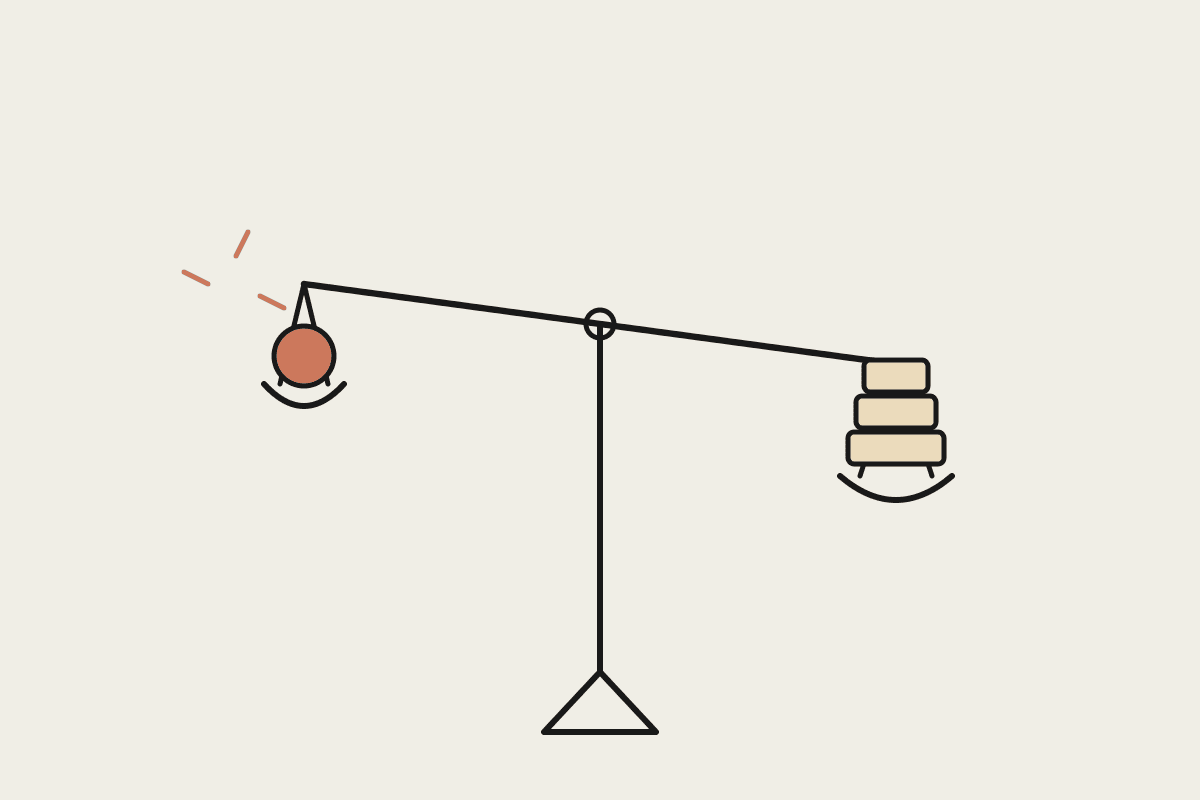
A Sydney logistics operator asked us to price an AI quoting assistant last quarter. They already had two proposals on the table: one for $3,500 and one for $52,000. Both vendors were describing something real. The problem was that nobody had told the owner they were describing different products. The $3,500 figure buys a setup: Claude configured on the tools the business already pays for, connected to the inbox, the files and the CRM, with the team trained to use it. The $52,000 figure buys a build: custom software with the workflow coded into it, hosted, secured and maintained.
Neither number is wrong. Australian businesses waste money in both directions: paying for custom development when configuration would have solved the problem, or buying a light setup and expecting it to behave like engineered software. Matching the spend to the shape of the problem is the whole decision, and it is one you can make yourself before you sign anything.
What a $3,500 setup actually buys
A setup engagement configures Claude around the way your business already works. No code is written and nothing new is hosted. A consultant maps your highest-friction workflows, connects Claude to the systems you already use, writes the instructions and guardrails, and trains your team to run it. At Automata AI we deliver these as fixed-fee engagements at $3,500, and the pattern of results is consistent across Australian businesses from accounting practices to trade services.
Email triage and drafting that hands back roughly an hour a day per person, with replies written in your voice for a human to approve.
Document work: proposals, reports and client letters drafted from your own templates and past examples rather than from scratch.
Meeting and file admin: summaries, follow-up actions and filing handled inside the tools you already run, such as Xero, Gmail or Microsoft 365.
A trained team who can extend the setup themselves, which is where most of the long-term return actually sits.
The honest limit is that a setup runs on general-purpose tools with a human in the loop. If your process needs to run unattended overnight, push data between systems with nobody checking each step, or put an interface in front of customers, configuration alone will not get you there. A setup is a productivity decision. A build is an infrastructure decision.
When the $50,000 build is the right call
Custom builds earn their price when the workflow itself has to become software. The signals are usually visible before any vendor walks in the door:
Volume. The task runs hundreds or thousands of times a day, so per-run reliability matters more than flexibility.
Integration depth. Data has to move between systems automatically, with validation instead of a person eyeballing each record.
Customer exposure. The output goes straight to a client, a portal or an invoice without internal review.
Compliance. You need audit trails, access controls and data handling that satisfy the Privacy Act or your industry regulator, designed in rather than bolted on.
Real builds in the Australian market rarely land at a tidy $50,000 either. A tightly scoped internal tool might come in at $45,000. A customer-facing system with proper security review, hosting and support can pass $120K in year one. Budget a further 15 to 25 per cent of the build cost annually for maintenance, because software you stop maintaining is software that quietly stops working.
Three questions that sort the problem
Before you accept either quote, sit with these three questions. They separate configuration problems from engineering problems more reliably than any vendor demo.
How often does the task run, and who is present when it runs? Daily with a person nearby points to a setup. Continuous and unattended points to a build.
What breaks if the output is wrong one time in fifty? If a staff member catches it, configure. If a customer or a regulator catches it, engineer.
Has anyone in the business used AI on this task for 30 days? If not, you are guessing at requirements, and guessed requirements are how $50,000 builds become $90,000 builds.
The sequence that protects your budget is setup first, build second. Run the $3,500 configuration, let your team live with it for a quarter, and let the real requirements surface. Some businesses discover the setup was the whole answer. The ones that do go on to commission custom work write a far sharper brief, because they are specifying from evidence rather than a sales deck, and they typically spend less for a better system.
If you are weighing quotes right now and cannot tell which product you are being sold, that is a 30-minute conversation, not a procurement project. Book a brainstorming call and we will help you work out which side of the line your problem sits on. Sometimes the most useful advice is that you do not need the expensive option yet.