Fireworks AI closed a $1.5 billion Series D at a $17.5 billion valuation this week. Baseten and Together AI have separately raised close to $4 billion combined in the same few weeks. All three are chasing the same bet: that managed hosting for open-weight models is about to become a far bigger business than running the models yourself.
That is a meaningful signal for any Australian business currently weighing whether to self-host an open-weight model or pay a managed provider to do it. Venture capital does not move $4 billion into a category on a hunch. It moves because the unit economics of managed inference just became attractive enough to bet on at scale, and that shift changes the maths for everyone downstream, including a 15-person Sydney logistics firm deciding whether to stand up its own GPU box.
The funding wave, in numbers
Three separate raises, all within a matter of weeks, all pointed at the same thesis:
Fireworks AI raised $1.5 billion at a $17.5 billion valuation, one of the largest AI infrastructure rounds of the year.
Together AI and Baseten raised close to $2.5 billion combined across their most recent rounds, both explicitly earmarked for scaling managed open-weight inference capacity.
All three now offer per-token pricing on open models like Llama, Qwen and DeepSeek that undercuts what most small teams can achieve running their own hardware.
Put a number on it and the case gets sharper. A single A100-class GPU box, once you count hardware amortisation, power, and a fraction of an engineer's time to keep it patched and monitored, commonly runs a small Australian team A$60,000 to A$90,000 a year for a workload that a managed endpoint can now serve for a few thousand dollars in API spend. That gap is what closed so quickly once Fireworks, Baseten and Together AI had the capital to compete hard on price.
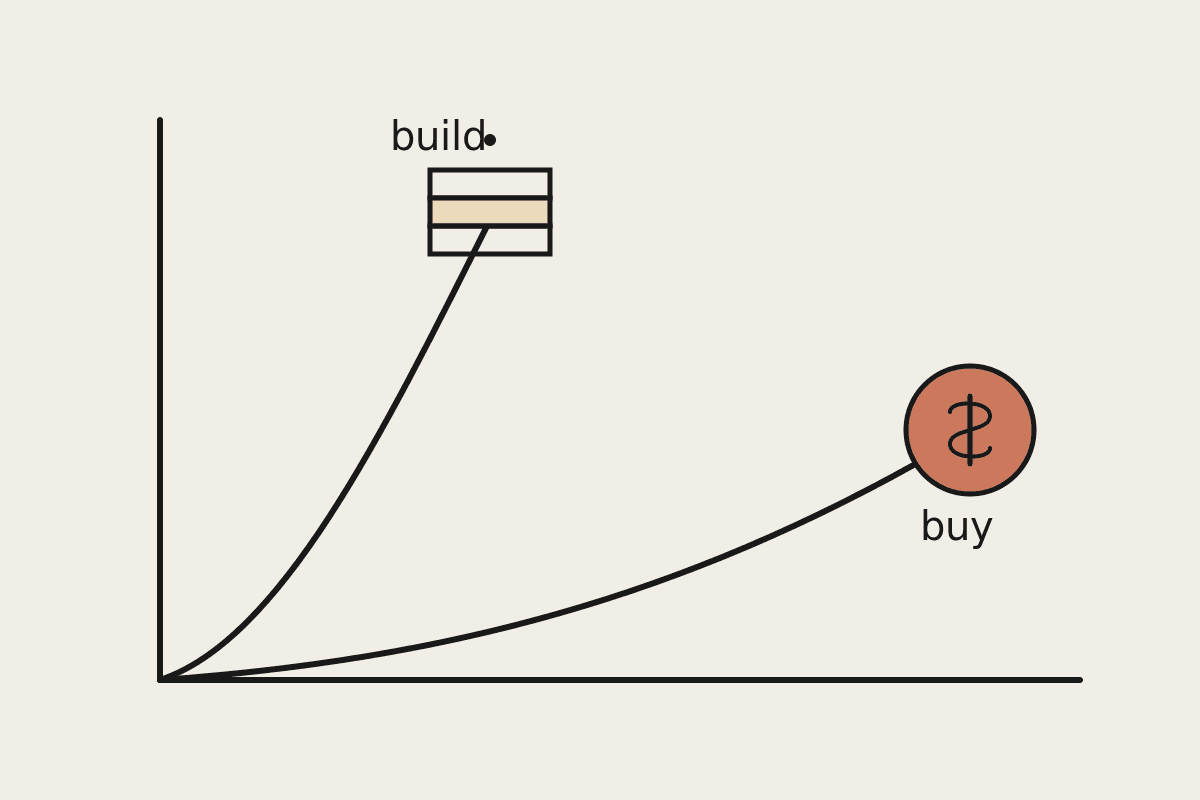
Why this changes the build-vs-buy maths
Twelve months ago, self-hosting an open model to save money was a reasonable pitch for a technically capable Australian business. That pitch is weakening fast, for a specific reason: managed inference providers are now well capitalised enough to undercut the true cost of DIY hosting while carrying the operational burden themselves.
A managed open-weight endpoint from a provider like Fireworks or Together AI now often costs less per million tokens than the fully loaded cost of running your own GPU cluster, once staff time and uptime risk are counted.
Well-funded hosting providers can afford redundancy, security certification and round-the-clock support that a two-person Melbourne engineering team hosting its own Llama or Qwen deployment simply cannot match.
This narrows self-hosting to a specific use case: data that legally cannot leave a jurisdiction, rather than a general cost-saving strategy.
What Australian buyers should do differently
The practical implication is that the build-vs-buy decision has quietly become a three-way choice: self-host, buy managed open-weight hosting, or use Claude. It is no longer a straight fight between DIY infrastructure and a proprietary API.
Reprice any existing self-hosting business case against current managed open-weight rates before renewing GPU contracts. Numbers that justified DIY a year ago may no longer hold up.
Reserve true self-hosting for workloads with a hard data residency requirement, roughly the only scenario where the extra A$45,000 to A$75,000 a year in operational overhead still pays for itself.
For everything else, compare managed open-weight hosting against Claude on total cost and governance, not just headline token price. A cheaper token rate can still lose to Claude once you count the engineering hours spent on prompt tuning, evaluation and model-swap risk.
None of this changes the vendor risk conversation, it just moves where the risk sits. A managed open-weight provider can raise prices, change terms, or get acquired, so any contract worth six figures a year should still go through the same procurement scrutiny you would apply to a core software vendor, not a quick sign-up on a credit card.
Where self-hosting still earns its place
This is not an argument that open-weight hosting is a bad idea across the board. Businesses in regulated sectors, think APRA-supervised lenders or health providers bound by the Privacy Act, sometimes have a genuine legal requirement to keep inference inside Australian borders or a specific private environment. In that narrow case, the calculus is about compliance, not cost, and self-hosting or a sovereign managed option remains the right call regardless of what Fireworks charges per token.
For most Brisbane, Sydney and Melbourne SMBs without that constraint, the newly funded managed providers are worth a second look, purely on price and reliability grounds.
Automata AI's view
We still default Australian clients to Claude for anything customer-facing or compliance-sensitive, since it gives us a single accountable vendor and a consistent governance story for boards and auditors. But this funding wave is a genuine reason to stop building your own inference stack for lower-stakes internal tools. Buying rather than building is now the right call in more places than it was six months ago, and a A$4 billion bet from some of the sharpest infrastructure investors in the market is a useful data point when you are making that case internally.
If you are weighing a self-hosting decision this quarter, book a second opinion before you sign the next GPU contract.