Nvidia has agreed to guarantee up to US$105 billion in financing for a new AI data centre in Pike County, Ohio, with OpenAI as the anchor tenant on a 20-year lease. The site, built and managed by SoftBank subsidiary SB Energy, starts at 4.25 gigawatts of compute with an option to scale toward 8 gigawatts, backed by 10 gigawatts of SoftBank and SB Energy power commitments and a separate US$1.5 billion Nvidia equity stake directly in SB Energy. It's due online in 2028.
That's a genuinely large number, and it pays to read past the headline to what it actually signals. OpenAI is locking a huge share of its future compute into a single financing structure, with a single chip supplier, on a single 20-year commitment. If your business runs any meaningful workload on an AI vendor's platform, that vendor's compute strategy isn't background noise. It shapes pricing stability, availability during demand spikes, and how much room you have to negotiate if terms change.
Why compute concentration is a real business risk, not a finance story
A vendor whose capacity sits inside one enormous, long-dated deal has less room to renegotiate or diversify if that arrangement runs into trouble. That inflexibility eventually shows up somewhere: in what customers pay, in how reliably they can access capacity during a surge, or in how much bargaining power the vendor has left when a contract needs revisiting.
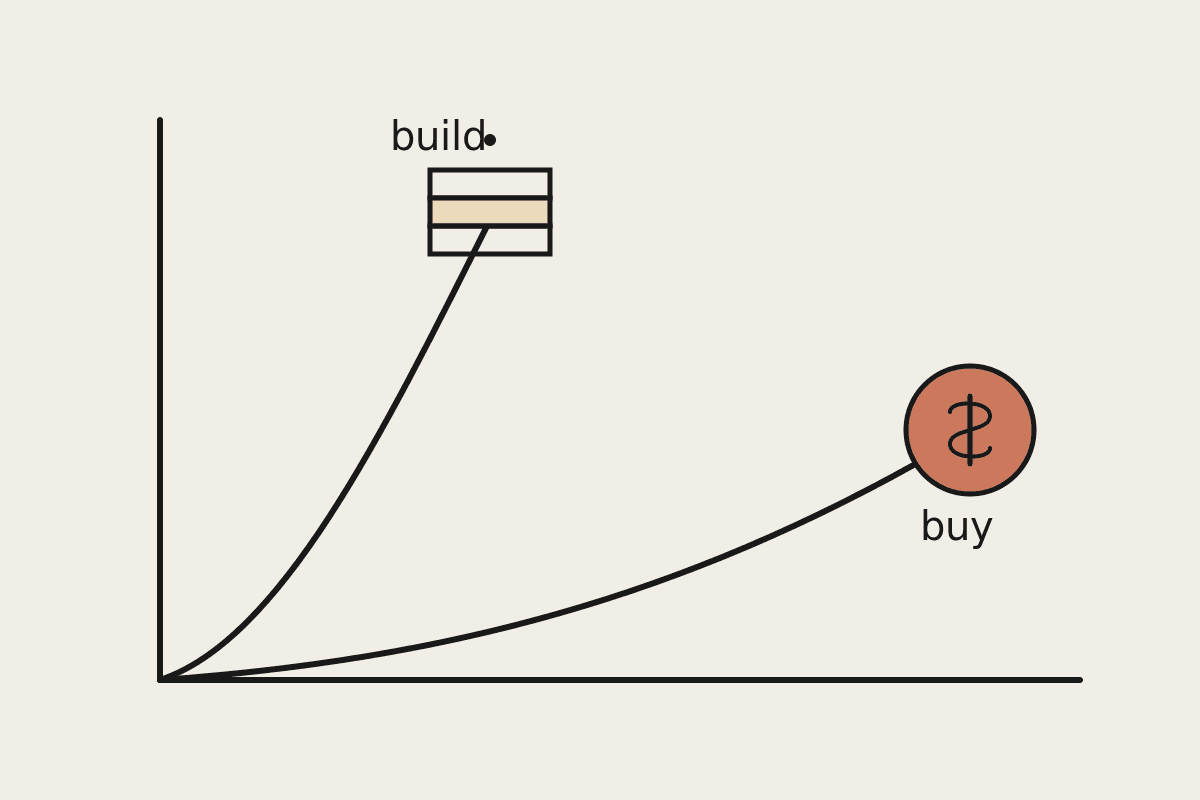
Anthropic has taken a visibly different approach, running separate compute partnerships across Amazon and Google rather than one mega-deal with a single financing partner. That isn't automatically the safer structure in every scenario, but it is a genuinely different risk profile. For an Australian business comparing AI vendors, it's a fair question to ask directly rather than something to assume is equivalent across providers.
What this means if you're running AI in a regulated Australian industry
For most businesses running a chatbot or a drafting tool, vendor concentration sits fairly low on the list of things to worry about day to day. It matters more if you sit in a regulated sector. APRA-regulated financial services firms, healthcare providers handling patient data under the Privacy Act, and any business promising clients a specific uptime or data-handling standard all inherit their AI vendor's infrastructure risk as their own. If a vendor's compute is concentrated in one facility, one financing structure and one chip supplier, that concentration becomes part of your own operational risk profile the moment you build a workflow on top of it.
This is also a data residency question. Where your vendor's compute physically sits, and who has visibility into that infrastructure, feeds directly into how you answer a client's or regulator's questions about where their data goes and who could disrupt access to it.
Questions worth asking before you standardise on a single AI vendor
Where does this vendor's compute actually run, and is it concentrated with one supplier or spread across several?
What happens to your pricing and availability if that vendor's primary compute partner has a disruption?
Are you locked into contract terms that assume the vendor's current compute economics hold for years, when a single deal at this scale can shift quickly?
Who can see or access the infrastructure your data runs on, and does that match what you've told your own clients or regulator?
A practical way to pressure-test your AI vendor stack
You don't need to become an infrastructure analyst to do this properly. A structured review covers three things: where the vendor's compute actually sits today, what contractual protections you have if that changes, and what your fallback looks like if access or pricing shifts with little notice.
Picture a Melbourne-based professional services firm that has standardised every client-facing drafting and summary tool on a single AI vendor over the past year. If that vendor's compute arrangement changes, pricing moves, or access degrades during a demand spike, the firm has no fallback and no room to move in the conversation. A firm that has asked these questions upfront, and kept at least one credible alternative path evaluated, negotiates from a position of choice instead of dependency.
That's the point of a vendor and architecture review: not to predict which company has made the better long-term bet, but to make sure your own business isn't the one left exposed if a bet goes wrong. A review like this typically runs A$6,000 to A$15,000 depending on how many systems and integrations are in scope, and it's cheap insurance measured against the cost of re-platforming a client-facing workflow under pressure.
More compute capacity is, on balance, good news
None of this means bigger data centres are bad news. More global compute capacity is broadly good for AI adoption, and over time it should mean more availability and better pricing as supply catches up with demand. The point isn't to treat scale as a warning sign. It's to notice that how a vendor structures that scale, spread across partners or concentrated in one deal, is a genuine difference between providers, and one worth checking rather than assuming away.
If you're not sure how concentrated your own AI vendor stack actually is, that's a straightforward thing to check before it turns into a problem. Book a session and we'll walk through what your current setup actually depends on.