DeepSeek's V4 Flash is worth a close read for Australian teams sizing AI workloads, and not because of the headline specs. It is a mixture-of-experts model reported at roughly 284 billion total parameters, but only about 13 billion of them fire on any given token. Add a 1 million token context window, an MIT licence, and API pricing near US$0.14 per million input tokens, and the figure that actually matters is the ratio: close-to-frontier capability at something near small-model serving cost. That ratio is what changes the maths on a real project, so it pays to understand what each number does before you build anything around it.
What the headline numbers mean
A mixture-of-experts model splits its parameters into many specialised sub-networks and routes each token to only a few of them. The total count tells you how big the model is on disk and in memory. The active count tells you how much compute each token actually costs. The two numbers pull in opposite directions, and treating them as one is where most capacity plans quietly go wrong.
Total parameters, about 284 billion, set your memory floor. Every expert has to be loaded and ready, so you provision VRAM for the whole model even though most of it sits idle on any given step.
Active parameters, about 13 billion, set your compute and your speed. A 13B-active model generates at roughly small-model pace, which is why Flash-class models feel quick despite their size.
The 1 million token context window is a second, separate memory tax. The key-value cache grows with how much context you actually use, and a full window can consume more memory than the weights themselves.
What it costs to run in Australia
Those characteristics point to specific hardware. A model like this runs sensibly on a multi-GPU node or a well-quantised deployment, not on a single workstation card. In Australian cloud regions, that class of instance rents for roughly $8 to $25 an hour depending on GPU type, memory and how much capacity you commit to up front.
An always-on self-hosted deployment starts around $6,000 a month in raw compute, before any engineering time, monitoring or redundancy is counted.
A batch deployment that spins up only for scheduled jobs can cut that figure by half or more, at the cost of cold-start latency on the first request.
Managed API access at roughly US$0.14 per million input tokens is often cheaper than self-hosting until volume is very high or data-residency rules force the workload onshore.
The break-even point between renting an API and running your own instance usually sits higher than people expect. For most Sydney and Melbourne SMBs, self-hosting only pays off once a workload is both high-volume and steady, or once a compliance requirement leaves no other option. Working that number out honestly, with engineering time included, is the difference between a deployment that saves money and one that just moves the cost somewhere less visible.
Where Flash-class models earn their keep
The economics push these models toward one clear role: high-volume, structured, latency-sensitive work where per-token cost dominates every other consideration.
Classification, routing and triage across large ticket, email or document flows
Extraction from long documents, where the million-token window genuinely earns its cost
First-pass summarisation that feeds a stronger model downstream
Bulk transformation jobs measured in millions of tokens a day rather than thousands
Where they still fall short
What a Flash-class model is not, yet, is a replacement for a frontier model on the work that carries real risk. Vendor benchmarks look strong; independent replication is thinner, and the gap between a clean demo and a production system that behaves under load remains real. Three kinds of work still belong on a stronger model.
Multi-step reasoning, where one wrong turn compounds across a chain of decisions
Client-facing writing that has to land in a specific voice and cannot be lightly wrong
Long agentic sessions where the model must hold a plan and self-correct over many steps
The pairing pattern we deploy
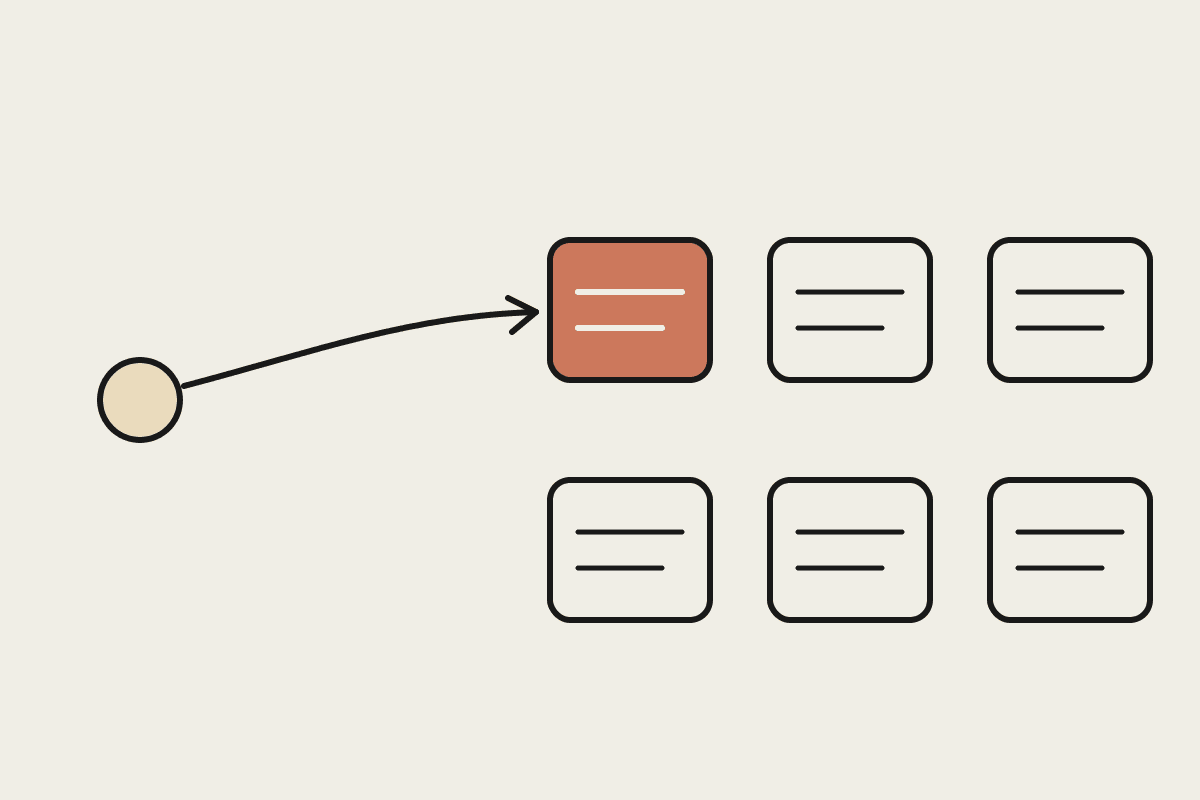
The architecture we set up most often for Australian businesses does not pick a single model. It pairs tiers. A cheap high-volume model, open-weight like V4 Flash or a small managed one, handles the flood of routine tokens. Claude handles the judgement calls: the client-facing output, the reasoning that has to be right, and the steps where a mistake is expensive. A router between the two, usually a few hundred lines of code, decides which requests go where.
In practice that split cuts total inference spend by half or more without touching quality where quality matters, because the expensive model only runs on the fraction of work that needs it. The engineering effort sits in the routing rules and the fallbacks, not in the models themselves. Get those right and the system stays cheap as volume grows, because new load lands mostly on the cheap tier.
Data residency and the Privacy Act
One reason Australian teams look at open-weight models at all is control over where data goes. If you are handling personal information, the Privacy Act's obligations around disclosure and cross-border data flows make an onshore, self-hosted model attractive for sensitive workloads, even when a managed API would be cheaper per token. That is a legitimate reason to self-host, but it is a compliance decision rather than a cost one, and the two should be costed separately so the real trade-off stays visible to whoever signs off.
If you are sizing a high-volume workload and want the tiering, hosting and fallback design done properly the first time, we can help you scope it. Book a free brainstorm and we will map the split before you spend on hardware.