Australian insurance underwriters in 2026 face submission volumes that have grown faster than headcount. A typical AU general insurance team of 25 underwriters at $180,000 all-in per head represents $4.5M of annual capacity, and the question on every chief underwriting officer's desk is the same: how much of that capacity can be recovered without breaking APRA CPS 230 operational risk obligations or the Privacy Act controls on customer data? Claude, used with the right controls, recovers a meaningful share.
The submission load that is breaking AU underwriting teams
The volume problem is not new, but the shape of it has shifted. Broker-channel submissions arrive in inconsistent formats: emails with PDF attachments, structured forms from broker platforms, spreadsheets with bespoke schemas, and the occasional scanned binder. Each one needs reading, classifying, and routing before any underwriting judgement happens. For a Sydney-based MGA placing $80M of GWP, the intake step alone consumes 35 to 45 percent of underwriter time, which is the highest-cost activity in the chain doing the lowest-value work. The same MGA, after a Claude-assisted intake redesign, recovered 11 to 14 hours per underwriter per week. That is the gap most chief underwriting offices are now trying to close.
Submission intake from inconsistent broker formats consumes 35 to 45 percent of underwriter time on activities that produce no risk judgement.
Renewal cycles run on a calendar the team cannot move, with placement windows that bunch quarterly and push overtime spend.
Risk scoring narratives are written from scratch each time, even when 70 percent of the language repeats across similar exposures.
Compliance review of underwriting decisions sits at the end of the workflow where rework is most expensive to absorb.
Training new underwriters takes 18 to 24 months because so much of the institutional knowledge sits in heads, not in retrievable documents.
Where Claude fits in the underwriter's day
The pattern that works in AU insurance is narrow Claude use embedded inside the existing workflow, not a chat window the underwriter is expected to open. Three workflows have repeatable payoff in production: submission triage and intake parsing, risk scoring narrative drafting, and renewal communication drafting. Each one has a clear human-in-the-loop control point, which matters when the audit committee asks what the model did and what the human signed.
Submission triage and intake
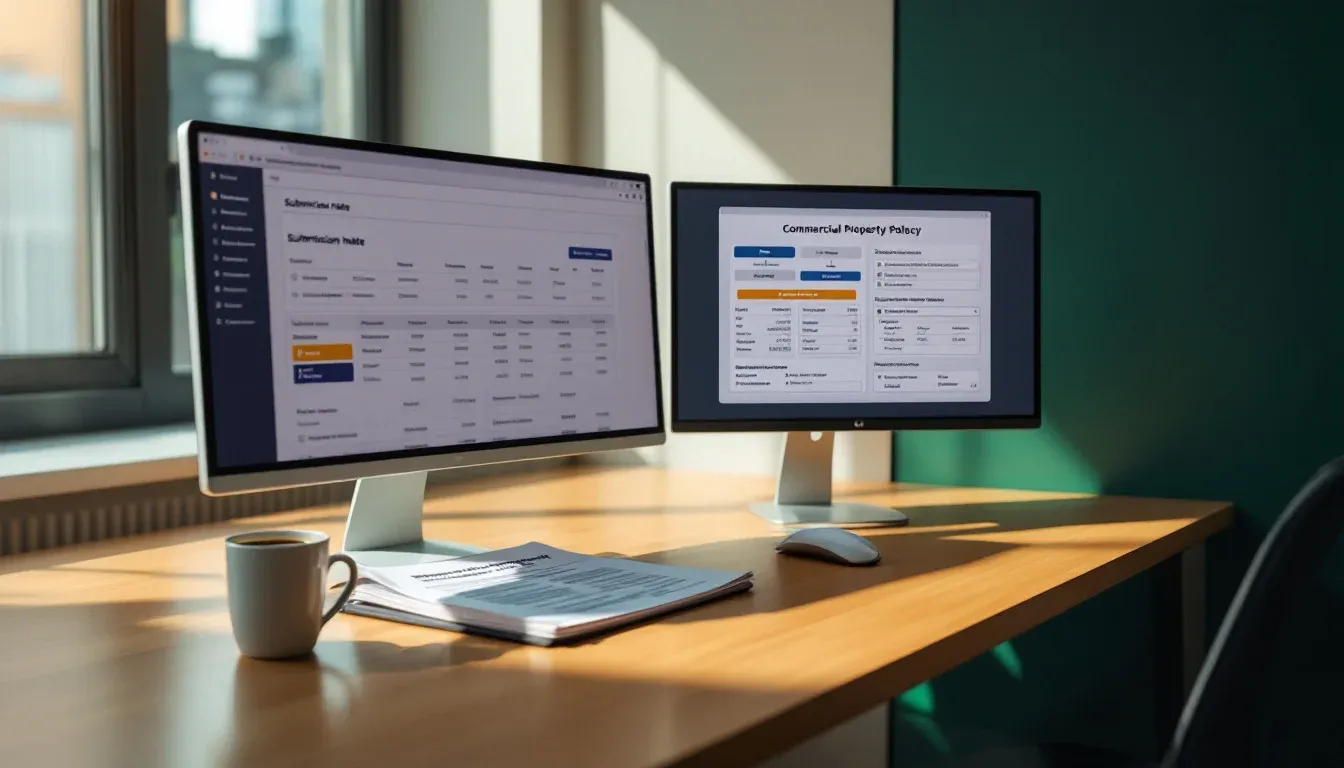
A Claude-backed intake service reads the incoming submission (email body, attached PDFs, broker spreadsheet), extracts the structured fields the underwriting system requires (insured name, ABN, occupation code, sum insured, loss history flags), and classifies the submission against the team's appetite. The underwriter receives a structured intake card with confidence scores and any flagged ambiguities. The job that used to take 25 minutes per submission drops to 4 to 6 minutes of review. A Brisbane commercial lines team running this pattern across 220 submissions a week reports the intake step now sits at 12 percent of underwriter time, down from 38 percent, with no degradation in data quality.
Risk scoring narratives
The risk scoring narrative is the document that explains why an underwriter rated and priced a risk the way they did. Claude does not make the pricing decision. Claude drafts the narrative from the underwriter's notes, the policy data, the loss history, and the team's prior narratives on similar risks. The underwriter reviews, edits, and signs. The narrative quality improves because the model surfaces comparable risks and prior reasoning the underwriter might have missed. A Melbourne-based specialty insurer using this pattern reports narrative drafting time dropped from 22 minutes to 5 minutes per risk, with peer review acceptance rates rising from 73 percent to 89 percent over the first two quarters.
Renewal communications
Renewals are where AU underwriting teams burn the most disposable hours on the most repetitive prose. Claude drafts the renewal letter, the broker communication, and the customer-facing summary from the renewing policy, the loss history, the changes since binding, and the team's house communication style. The underwriter reviews and personalises the final paragraph. For a Sydney-based life insurance back-book team running 1,400 renewals a quarter, the team reported a $620,000 annual reduction in overtime and contractor spend after rolling this pattern through the renewal cycle, with broker NPS rising 8 points because turnaround dropped from 9 days to 3.
APRA CPS 230, CPS 220, and the General Insurance Code of Practice
CPS 230 (operational risk management) and CPS 220 (risk management framework) do not prohibit AI use in underwriting. They require that AI use sits inside the same controls the rest of the operation sits inside: documented material service providers, tested business continuity, monitored operational risk, and clear accountability for the decisions the AI contributes to. The General Insurance Code of Practice (GICOP) adds customer-facing obligations around clear communication and timely decisions. None of these block the three workflows above. They do require the right control evidence be in place from the first day Claude touches a real submission.
Material service provider register entry for Anthropic or the deployment partner, with the documented assessment that supports the materiality classification.
Documented data flow showing what customer data leaves the AU environment, where it is processed, and how it returns, including any sub-processors.
Privacy Act consent and notification mapped against the renewal and intake workflows so APP 1, APP 5, and APP 6 obligations are explicit.
Operational risk register entries for model behaviour drift, data exfiltration, and prompt injection, with named owners and current control state.
Business continuity test that proves the underwriting team can run without Claude for at least 5 business days without missing GICOP timeliness obligations.
Audit log of every Claude interaction retained per the team's record-keeping schedule, with access controls aligned to underwriting role separation.
The economics for a typical AU general insurance team
The numbers stack up when the team picks the right three workflows and commits to the controls. For a 25-underwriter AU general insurance team at $4.5M of annual underwriting payroll, the three patterns above typically recover 22 to 32 percent of underwriter time on operational work. That is $990,000 to $1.44M of capacity per year, which translates to either additional GWP placed without new hires or measurable overtime and contractor reduction. The cost side runs $180,000 to $360,000 in implementation and $90,000 to $220,000 a year in operating cost (Claude API usage, internal platform team time, and the additional compliance review the controls require). Payback typically lands at 4 to 7 months. A Brisbane MGA we worked with last quarter reported a $1.2M run-rate capacity recovery after 16 weeks.
A 90-day path that respects the regulator
The mistake teams make is treating this as a single 12-month program. The pattern that works in AU insurance under APRA scrutiny is three 30-day phases, each ending with a control evidence checkpoint the audit and risk function signs off before the next phase starts. Anything faster invites a CPS 230 finding. Anything slower lets the capacity gap widen another quarter.
Days 1 to 30: pick one workflow (submission triage is the right starter), document the current process, build the Claude-backed alternative, and run it parallel to the existing flow for 4 weeks while collecting accuracy and risk-event data.
Days 31 to 60: complete the CPS 230 material service provider assessment, the Privacy Act mapping, and the operational risk register entries; have internal audit review the control package before any expansion.
Days 61 to 90: extend to the second workflow (risk scoring narrative drafting), retain the parallel-run discipline, and present the recovered capacity and risk control evidence to the audit committee or board risk committee before any third-workflow expansion.
Where to start this quarter
The chief underwriting officer who acts in the next 90 days has the early-mover advantage on a multi-year capacity unlock. The CU office that waits for a vendor pitch in 2027 will compete against teams that have already paid back their investment and built their second and third workflows. If your team is sizing this for an AU underwriting context under APRA, book a 30-minute scoping session with Automata AI.
Not sure which of these applies to your business? The free AI readiness assessment takes seven questions and about three minutes, and returns a shortlist of the processes worth automating first. Take the AI readiness assessment.