Most Australian businesses still onboard the same way they did a decade ago. A new hire gets a laptop, a folder of logins, a pile of policy PDFs and a buddy who is too busy to help. Then everyone acts surprised when it takes six weeks before the person is genuinely useful. Giving new employees supervised access to an AI agent such as Claude on their first morning changes that timeline, and the change is measurable.
The real cost of a slow start
Ramp time is expensive, and most of the cost is invisible because it sits inside salaries you already pay. A mid-level hire on $95,000 costs closer to $120,000 once you add superannuation, payroll tax, software and desk space. That works out to roughly $10,000 a month in fully loaded cost. If it takes six weeks before that person contributes at full pace, you have spent about $15,000 on a slow start for a single hire. Multiply that across a Sydney team that adds ten people a year and the number stops being a rounding error.
The frustrating part is that most of the delay has nothing to do with the actual job. It comes from small friction that nobody owns:
Hunting for the right document, template or example instead of asking someone.
Waiting a day for an answer to a question a colleague could have handled in a sentence.
Re-learning internal jargon, acronyms and the way things are done here, one awkward conversation at a time.
Redoing first drafts because the new hire never saw a good example of what finished looks like.
What day-one agent access actually means
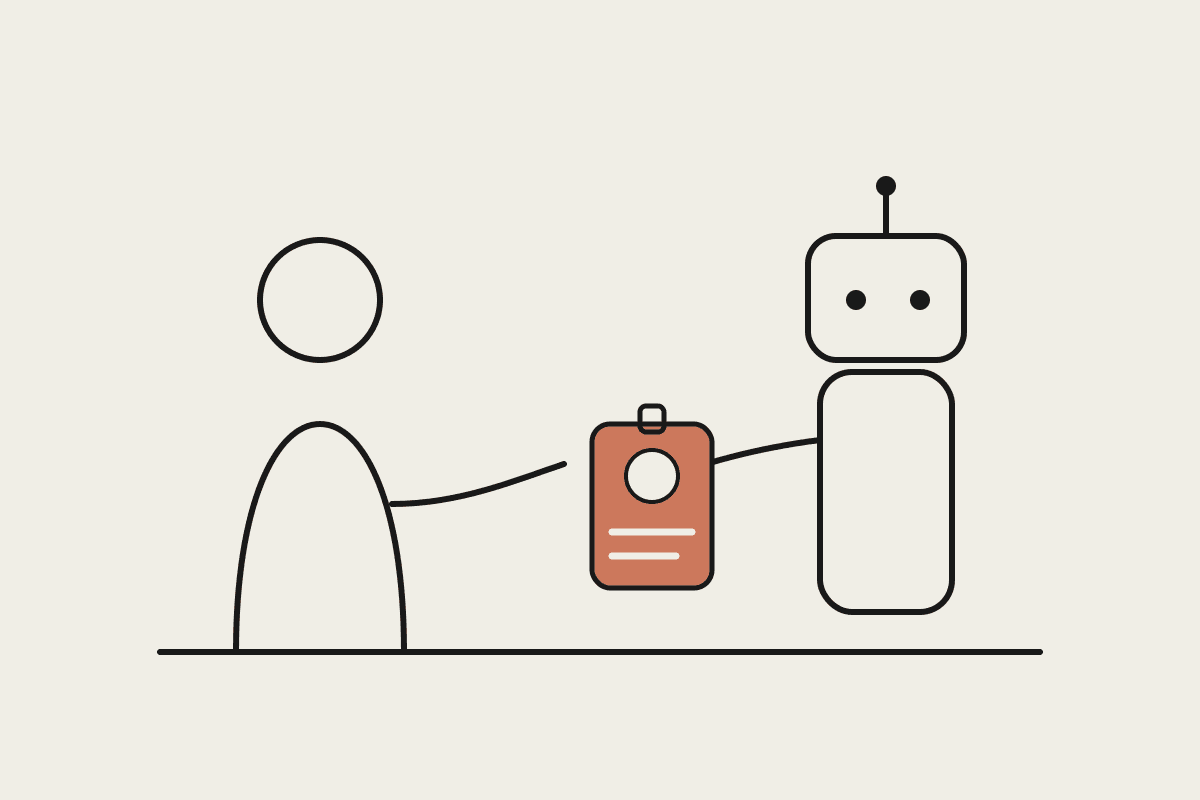
Day-one agent access does not mean handing someone an unsupervised bot and hoping for the best. It means the new hire opens a Claude workspace that has already been set up with your context: your templates, your tone, your product facts and your standard procedures. From the first hour they can ask questions in plain English and get answers grounded in how your business actually operates.
A well-prepared agent lets a new starter do things in week one that used to take a month of osmosis:
Draft a client email in the house style and have it checked before it goes out.
Ask what a term means, why a process exists, or who owns a decision, without feeling like a burden.
Turn a rough set of notes into a first draft a manager can react to rather than write from scratch.
Find the current version of a policy or template instead of an out-of-date copy on a shared drive.
Setting it up without a governance headache
The reason many Australian firms hesitate is governance, and that caution is reasonable. A new hire with broad access to an AI tool is a genuine question under the Privacy Act, especially if your business handles customer records, health information or financial data. The answer is not to ban the tool. It is to scope it properly before the person arrives.
A sensible setup rests on a few decisions made once and reused for every new starter:
Decide what data the agent may see. Role-based access means a new sales hire and a new finance hire start from different, appropriate contexts.
Write the boundaries in plain language: what the agent drafts freely, what a human must approve, and what it must never touch.
Keep customer personal information out of prompts unless you have a lawful basis and a clear reason, in line with the Privacy Act and your own policy.
Log activity so you can review how the tool is used, the same way you would for any other business system.
None of this is exotic. It is the same access-control thinking your business already applies to email, your CRM and your accounting file. The only difference is that you do it before the new hire's first login rather than after an incident.
A simple first-week plan
You do not need a formal programme to get value. A small, deliberate sequence works better than a big rollout:
Day one: the new hire logs into a prepared agent workspace and uses it to answer their own setup questions, from expense policy to who to contact for IT.
Day two: they draft their first real piece of work with the agent and compare it against a strong example you provide.
Day three to five: they build the habit of asking the agent first, then checking with a human, which frees their manager from repetitive questions.
End of week one: a quick review of what worked and what the agent got wrong, feeding improvements back into its shared context.
What it costs and what you get back
The direct cost is small next to the salary you already pay. A Claude seat runs in the order of $30 to $45 per user each month, and the shared setup work is a one-off that every future hire inherits. Against a $15,000 slow-start cost per person, cutting even two weeks off ramp time pays for years of licences. For a growing Australian business, the bigger return is consistency: every new hire starts from the same well-prepared baseline instead of depending on who happened to train them.
If you want a hand scoping day-one agent access for your own team, including the access rules and the first-week plan, we can help you design it before your next hire starts. Book a short call and we will map it to how your business actually works.