Most Australian businesses already run a few Zapier automations. A form fills a spreadsheet, a payment posts to Slack, a fresh lead lands in the CRM. Those work because the task never changes. The trouble starts when the work carries judgement in it, and that is where a reasoning agent like Claude does something Zapier was never built to do.
Rules versus reasoning
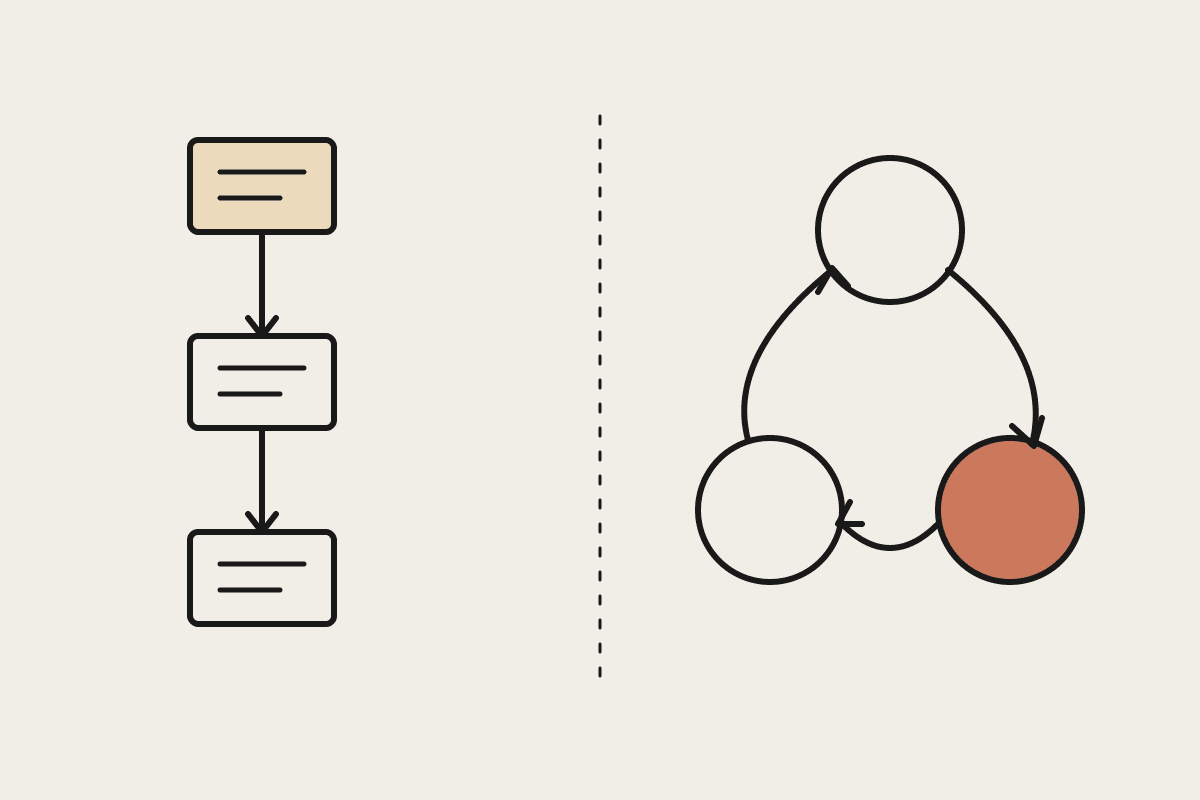
Zapier is a rules engine. You define a trigger and a chain of actions, and it runs that exact path every time. If the input looks the way you expected, the outcome is fast, cheap and predictable. If the input is odd, a rules engine either does the wrong thing or stops and waits for a human.
Claude works differently. Instead of following a fixed path, it reads the situation, decides what matters, and takes the appropriate action. Ask it to sort a messy inbox, draft a reply that matches a customer's tone, or pull the three numbers that actually belong in a report, and it reasons through the ambiguity rather than falling over on it.
That distinction sounds academic until a process breaks at 4pm on a Friday. A rules engine that meets an input it was not designed for simply halts, and someone has to notice, diagnose the broken step, and write a new rule. An agent that meets something unexpected can usually still make a sensible call and flag it for review, which keeps the work moving while a person catches up.
Where Zapier still wins
Rules are not obsolete. For high-volume, low-variation plumbing, a rules engine is often the right call.
Moving structured data between apps, such as Xero to a Google Sheet, where the fields never change.
Simple notifications, like a Slack ping when a Sydney client books a call.
Scheduled jobs that must run identically every time with zero interpretation.
Cases where you need a deterministic audit trail and cannot accept any variation in the output.
For these jobs, paying for a reasoning model on every run is wasted money. A Zapier plan at roughly $70 a month will happily move ten thousand records without thinking about any of them, which is exactly what you want.
Where Claude changes the maths
The interesting cases are the ones businesses quietly gave up on automating because the rules got too complicated. A common one is invoice and email triage. Building a Zapier flow that correctly routes every supplier email needs dozens of branching rules, and it still breaks the first time a supplier rewords a subject line. Claude handles the same job by reading each message the way a person would, then deciding where it goes.
The cost picture is usually what changes an owner's mind. One Australian services firm we worked with had a staff member spending about twelve hours a week reconciling and routing inbound documents. At a loaded cost near $45 an hour, that is close to $28,000 a year on one repetitive task. A Claude-based workflow that does the reading and routing runs at a few hundred dollars a month in model usage, and it does not take annual leave.
Claude tends to earn its keep when the task has one or more of these traits:
The input is unstructured: free-text email, PDFs, chat messages, or handwritten notes.
The task needs judgement, such as classifying, summarising, or matching a tone of voice.
The edge cases are the point, not the exception, so writing a rule for each one is impractical.
You want the automation to explain its reasoning, which matters for anything touching the Privacy Act or AUSTRAC obligations.
It is rarely one or the other
The strongest setups we build use both. Zapier does the deterministic movement of data, and Claude sits in the middle where a decision is needed. A document arrives through a Zapier trigger, Claude reads and classifies it, and Zapier files the result and notifies the right person. You get the reliability of rules and the judgement of an agent, and you only pay the model for the step that actually needs thinking.
This hybrid pattern also keeps model spend low. Because Claude runs only on the one step that needs interpretation, a workflow handling a few thousand documents a month often costs less than a single casual shift, while removing a job nobody enjoyed doing.
A quick test to decide
Before you build anything, ask one question about the task: could you write down every rule a new employee would need, on a single page, and be confident it covers every case? If the answer is yes, Zapier is probably cheaper and simpler. If the honest answer is that a new hire would have to use their judgement, no rules engine will cover it, and that is Claude's job.
If you are not sure which side of that line your process sits on, that hour of mapping is usually the most useful one to spend before committing to a build. We help Australian businesses sort which tasks belong to rules and which belong to a reasoning agent, then cost both honestly. You can book a short brainstorm and we will work through your top three automations together.