Most AI return-on-investment claims for accounting firms are either vendor arithmetic or vibes. This is neither: it is one transparent model with every input on the table, built conservatively enough that you can defend it in a partner meeting, and simple enough to rerun with your own book in ten minutes. Australian rates and Australian season assumed throughout.
The inputs
Preparation hours by job type: quarterly BAS 1.5 hours; SME year-end compliance file 4 to 6 hours of workpaper and assembly time; document chasing about 20 minutes per active job per week
Charge-out rates: $160 to $220 per hour depending on who is actually doing the assembly work
AI share of preparation once skills are tuned: 50 to 70 per cent, taken from timed side-by-side runs, not brochures
Review overhead that does not go away: 15 to 25 minutes per prepared file, priced honestly at senior rates
A three-partner firm
Take 200 quarterly BAS, 150 year-end compliance jobs and a season of chasing. BAS preparation is 300 hours a quarter; at the conservative 50 per cent AI share, 150 hours return each quarter, or 600 a year. Year-end assembly at five hours a job is 750 hours; half of that is 375 back. Chasing across 150 active winter jobs releases roughly 200 admin and junior hours. Deduct review overhead of about 220 hours across all of it, and the net is roughly 950 hours a year. At a blended $170, that is around $160,000 of capacity, against costs of a $3,500 setup, Claude seats for eight staff, and perhaps twenty senior hours of tuning.
A five-partner firm
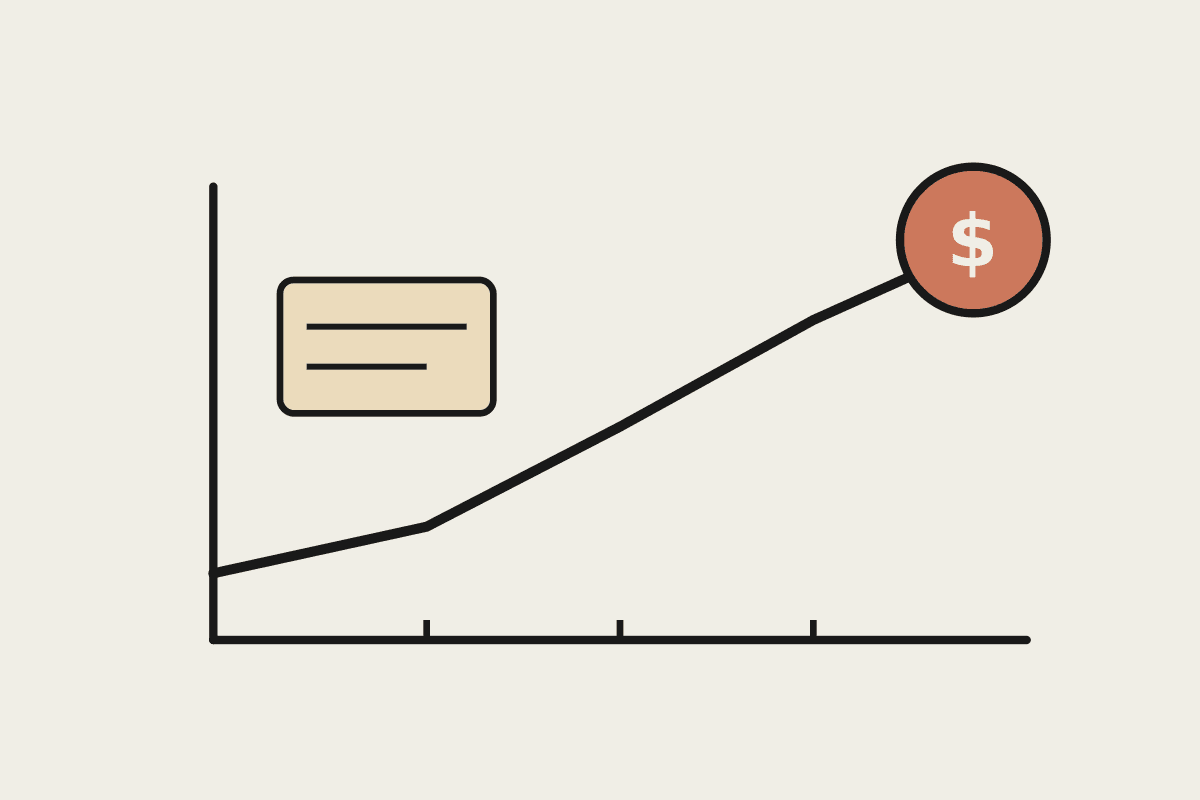
Scale to 400 BAS, 300 compliance jobs and 15 staff, and the same conservative arithmetic lands between $280,000 and $340,000 of recovered capacity per year. The range is wide on purpose: firms with clean templates and disciplined review capture the top of it, firms that skip the tuning capture the bottom, and firms that skip the benchmarks never find out which they are.
Where the hours actually come from
It is worth being precise about what the AI share means, because it is not the machine doing accounting. The 50 to 70 per cent is the assembly fraction of preparation: exporting and reading reports, extracting figures from PDFs, matching balances to statements, building the schedule shells, drafting the commentary and the chase emails. The judgment fraction, deciding what a variance means, choosing treatments, talking to the client, stays human and always will. Timed runs across firms consistently show assembly is the majority of preparation time on standard compliance work, which is why the recovered-hours numbers are as large as they are. It is also why the model holds up across firm sizes: the ratio of assembly to judgment in a BAS or an SME year-end file is remarkably stable whether the practice has three partners or fifteen.
Payback timing
The cash-flow shape matters to a small partnership. Costs are front-loaded but tiny: the setup fee, the first month of seats, the tuning hours. Recovery starts inside the first fortnight with the document chase, reaches the BAS book in the first full quarter, and hits the deep year-end savings in the first season after deployment. Practically, a firm deploying in one quarter is cash-positive on the exercise inside that quarter, and the first full season delivers the headline number. There are few investments available to a suburban practice with that profile, which is precisely why the honest arithmetic matters more than enthusiasm.
What the model deliberately excludes
Advisory upside: recovered senior hours redeployed to planning work at higher realisation
Staff retention: the seniors who do not resign after another 60-hour July
Client turnaround: jobs finishing weeks earlier, and what that does to referrals and fee conversations
Avoided amendments: each gap caught early saves $400 to $900 of unrecoverable rework
Each excluded line is real money; leaving them out keeps the headline number one you can defend to your most sceptical partner. If the conservative case clears the bar without them, the decision does not need them.
Rerun it with your own book
Pull three numbers from your practice management system: jobs by type last season, average preparation hours per type, and your blended charge-out. Apply a 50 per cent AI share, deduct 20 minutes of review per file, and you have your own version of this model before the next partner meeting. Then test the one assumption that matters, the AI share, by running ten live files side by side. Your timesheets, not our claims, should close the argument.
The honest caveats
The model fails where discipline fails. If skills are never tuned to your templates, the AI share drops and rework eats the margin. If review slips, you save more hours and eventually pay for it in quality. And the recovered capacity only becomes money if the firm points it somewhere: advisory, growth, or simply ending the overtime that was burning people out. A fixed-fee Claude Cowork setup at $3,500 includes the benchmark design, and a brainstorm call is enough to run this model against your actual job mix. Bring the timesheet export; it is the only sales document either of us needs.
This article is part of AI for Accountants in Australia, the complete guide from Automata AI, a Sydney-based Claude consultancy and the automation partner accounting firms across Australia and New Zealand use to put Claude Cowork into production. The approach in every guide is the same: Claude does the preparation, your people keep the judgment.