Sydney financial planning practices operate under one of the most tightly regulated advice frameworks anywhere. Best Interest Duty, the Financial Adviser Standards obligations, the AFSL licensing regime, and ASIC's current enforcement priorities all apply the moment AI touches advice work. An automation that cuts a compliance corner creates exposure that costs far more than any productivity saving, so the design question for planners is never what AI can do. It is what AI can do without touching the advice obligation.
The capacity prize is real. For a 12-planner Sydney practice with $14M of FUM-based revenue, planner time is the binding constraint on growth. A compliance-first AI design that returns 5 to 8 hours per planner per week represents more than $900,000 of recovered annual capacity, deployable against client growth, review cadence, and referral work rather than document assembly.
This guide covers where Claude-based automation fits inside an AFSL practice, the boundaries it must never cross, and what a working build costs in 2026.
Where AI helps planners safely
The right scope is workflow support, not advice generation. Claude works well as the drafting and assembly layer that sits behind the planner:
Meeting brief preparation pulled from the client's portfolio, recent transactions, and file history, ready before every review meeting
Statement of Advice content drafting as a structured starting point that the planner edits and owns
File note write-ups for every client interaction, produced from the planner's dot points or a call recording
Compliance documentation assembly aligned to the practice's existing advice process and checklists
Proactive outreach identification when client life events or portfolio drift suggest a review is due
The planner reviews everything, signs everything, and owns the advice. AI removes the typing and the document assembly, not the judgement.
Where AI must not go
Australian financial services regulation is clear that advice is the licensee's responsibility. Four boundaries are non-negotiable in any design worth shipping:
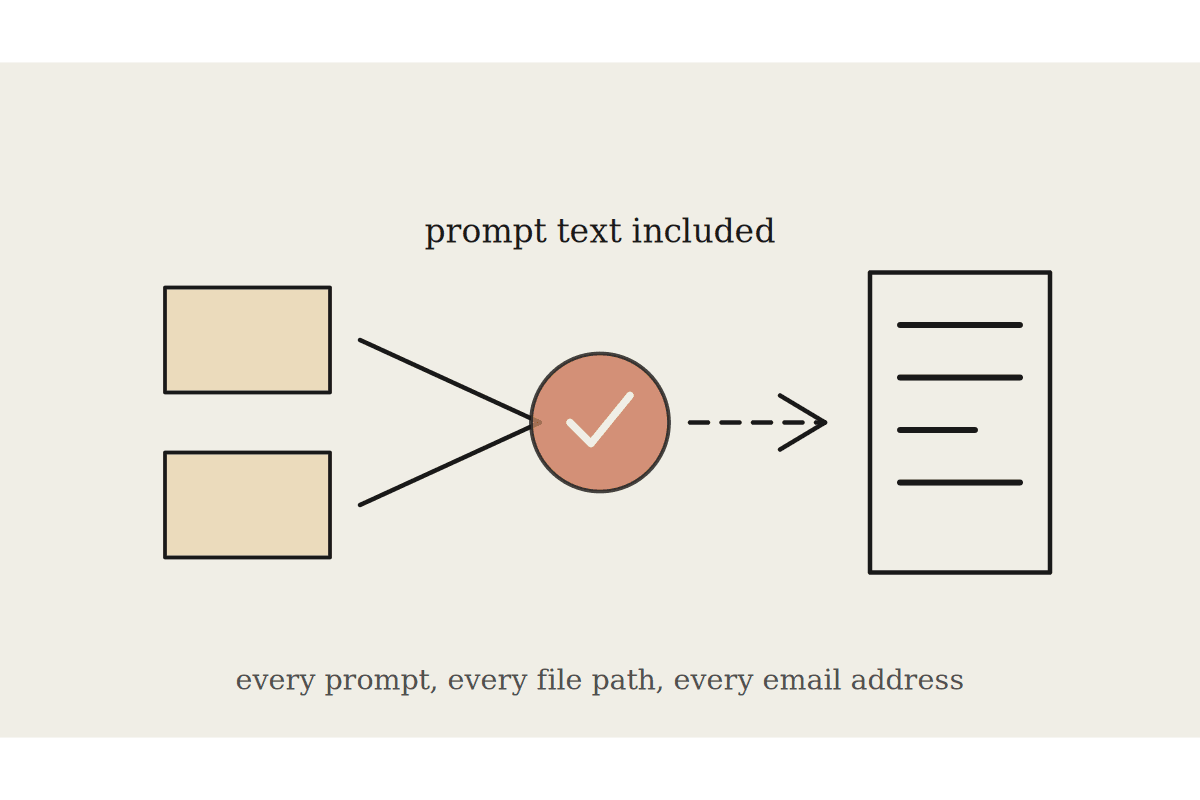
No final Statement of Advice content reaches a client without licensee review and sign-off
No recommendations are made directly to clients in any channel, in any form
No trade or instruction is executed without the planner's explicit, recorded approval
No direct client communication that could be construed as personal advice
These rules are cheap to enforce at the architecture stage and ruinously expensive to retrofit after an ASIC inquiry. They go in on day one, not after the pilot.
Designing for Best Interest Duty
Best Interest Duty requires the planner to act in the client's interest and to be able to demonstrate it afterwards. AI has to support the planner's reasoning rather than substitute for it. Four design choices make that demonstrable:
The system surfaces options with trade-offs rather than single recommendations
It flags every situation where its source data is incomplete or stale
It records inputs and reasoning so the planner can defend the advice file months or years later
It never optimises for fees, product placement, or any metric that conflicts with the client's interest
That last point matters most where the approved product list is involved. The system can assemble APL comparisons with written rationale, but ranking logic stays visible, documented, and owned by the practice, never buried inside a model prompt.
Statement of Advice quality
SoA production is where AI returns the most planner time. A well-tuned Claude workflow drafts the SoA structure in the practice's standard format, pulls product comparisons from the APL with written rationale, calibrates risk language to the client's documented profile, and identifies conflicts of interest for disclosure. The planner reviews and signs. The compliance manager reviews and signs. The client receives a more thorough document in a fraction of the planner hours.
Practices we have scoped typically cut SoA drafting from 6 to 8 hours down to about 2, with the recovered time going into review quality and client conversations rather than out the door. At typical Sydney planner charge-out rates of $250 to $400 an hour, that difference alone is worth $60,000 to $120,000 a year per planner who produces advice documents weekly.
Privacy, cyber, and data residency
Client financial data sits among the most sensitive categories under the Privacy Act, and ASIC's cyber resilience expectations now extend to advice practices of every size. An AI workflow for a Sydney practice has to:
Comply with the Australian Privacy Principles on collection, use, and disclosure of client information
Meet cyber security standards consistent with ASIC's published expectations for licensees
Be transparent about where data is processed and stored, including any offshore inference
Keep audit trails aligned to the practice's documentation and record-keeping requirements
Claude's commercial terms support this posture: customer data is not used for model training, and enterprise deployment options give the practice control over data flows. A proper build documents the full data path so the compliance manager can answer the question of where client data goes in a single page.
What it costs and how long it takes
A working compliance-safe AI workflow for a 12-planner Sydney practice typically costs $80,000 to $250,000 AUD to design and build, plus $25,000 to $80,000 a year to operate, depending on how many of the workflows above are in scope and how clean the practice's data is. Setup runs 8 to 14 weeks: discovery and compliance mapping first, then a supervised pilot with two or three planners, then practice-wide rollout once the compliance manager signs off on the audit trail.
The practices that get this right start small. One workflow, measured honestly, with compliance involved from week one rather than consulted at the end. The ones that struggle bought a tool first and asked the compliance question second.
If your practice is sizing a compliance-safe AI build, book a planner pilot conversation.