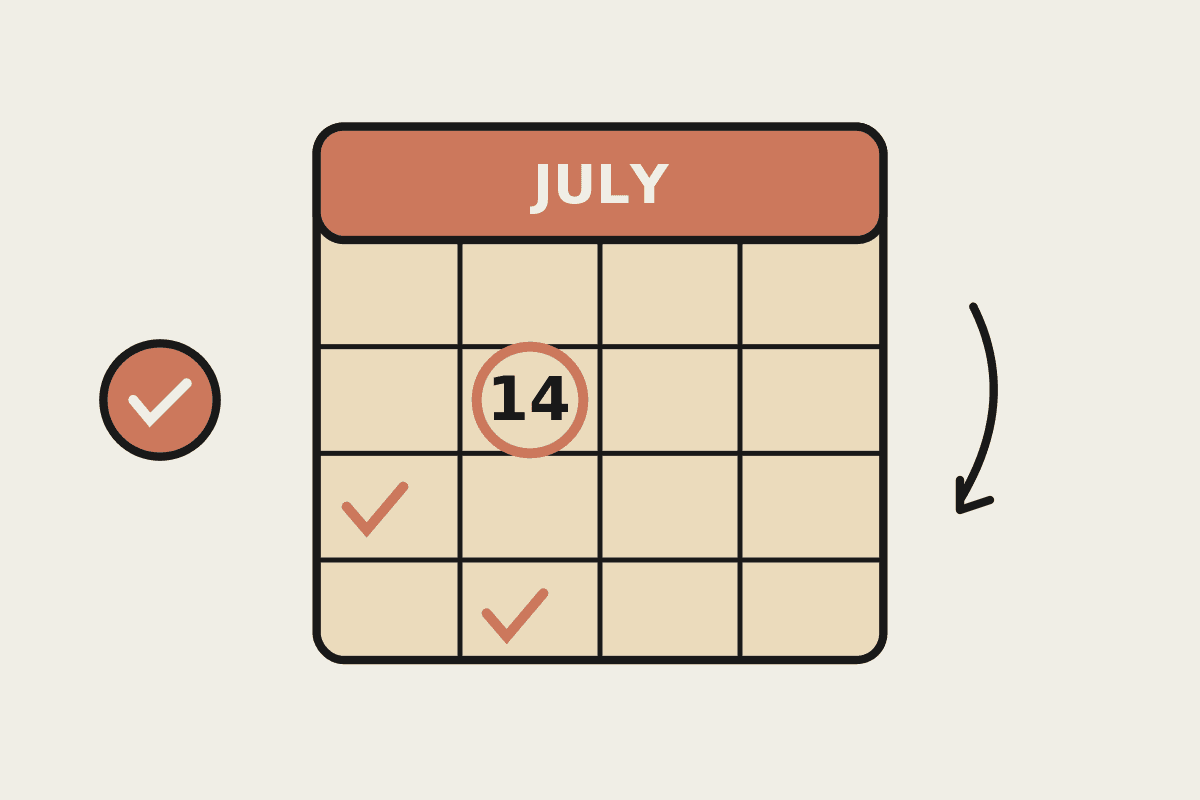
Every Australian employer must finalise their Single Touch Payroll data by 14 July, and for accounting firms that deadline arrives as dozens or hundreds of payroll files needing reconciliation in the first two weeks of the new financial year. The work lands while EOFY jobs are still open, staff are taking school-holiday leave, and the Q4 BAS pile is already forming behind it.
It is short-deadline, low-margin work, and it punishes small errors. A finalisation declaration made on unreconciled data turns into amendments, employee queries and rework in August, exactly when the firm has moved on to the next deadline.
What finalisation actually involves
Before a declaration can be made, someone has to confirm the year of payroll data is right: gross wages, PAYG withholding, allowances, superannuation and reportable fringe benefits amounts, reconciled against the general ledger and the activity statements lodged through the year. Employees see the finalised figures in myGov as tax-ready income statements, and their tax agents prepare returns from them, so an error rarely stays hidden for long.
Where it goes wrong
The same failure points show up in almost every firm, almost every July:
W1 and W2 totals on lodged activity statements do not match the payroll reports, and nobody looks until deadline week
Terminated employees are missed or double-counted in the finalisation event
Allowances are coded to the wrong STP category, which surfaces later as employee queries and amendment requests
Reportable fringe benefits amounts are forgotten because FBT lives in a different file, often with a different person
Cleaning up after the event typically costs a firm $400 to $900 per affected client in unrecoverable staff time. The harder cost to measure is trust: employees see wrong numbers in their tax returns, and the client hears about it before you do.
A Claude-assisted finalisation run
With access to the client folder and the Xero connector, Claude Cowork prepares the reconciliation layer for every payroll client before your team opens a single file. In practice that means:
Payroll activity summaries pulled and compared to the general ledger and lodged activity statements, with W1 and W2 variances flagged client by client
A checklist of terminated employees, allowance categories and reportable fringe benefits items that need a human decision
Drafted client emails requesting whatever is missing, ready for staff to review and send
One exceptions report across the whole payroll book, so seniors spend their time on the ten problem files rather than skimming a hundred clean ones
Staff start the fortnight reviewing prepared reconciliations instead of building them. The deadline stops being a data-entry sprint and becomes a review queue.
Guardrails that keep it defensible
The finalisation declaration is a legal statement, and it stays with the registered agent. Claude prepares, compares and flags; your people decide and declare. Every draft email sits unsent until a human approves it, and nothing is lodged by the system at all. That split keeps the efficiency gain inside the Tax Agent Services Act obligations rather than in tension with them, and it is the arrangement professional indemnity insurers are comfortable hearing about.
The capacity maths for a mid-sized firm
Take a firm with 80 employer clients. At an average of one hour of preparation each, finalisation season consumes two full staff weeks. If AI preparation cuts the human share to a 15-minute review, the same book takes 20 hours, and at a $160 charge-out rate the difference is worth roughly $9,600 in freed capacity in a single fortnight. That capacity does not disappear; it moves straight into the Q4 BAS pile due two weeks later.
What the first run teaches you
Most firms discover their payroll hygiene problem on the first automated pass. Allowance categories used inconsistently across clients, super rates updated late, directors paid through journals that never touched the payroll system. The exceptions report reads like an audit of habits, and fixing those habits is worth as much as the time saved, because every one of them was a future amendment waiting to happen. Run the first pass a week early, on last year's data if you must, and the real deadline fortnight becomes almost boring. Boring is exactly what you want in payroll week.
After 14 July
The deadline passes but the pattern keeps paying. Late finalisations, amendments and mid-year payroll onboardings follow the same reconciliation logic, and the checklist built for this July becomes the template for next year. The same setup rolls straight into Q4 BAS on 28 July and the taxable payments annual report on 28 August.
A fixed-fee Claude Cowork setup for accounting firms is $3,500, runs on your own machines with the Xero subscriptions you already pay for, and is typically live within a week. Book a brainstorm call and we will scope your payroll client list first.
This article is part of AI for Accountants in Australia, the complete guide from Automata AI, a Sydney-based Claude consultancy and the automation partner accounting firms across Australia and New Zealand use to put Claude Cowork into production. The approach in every guide is the same: Claude does the preparation, your people keep the judgment.