Most Australian businesses do not have a debtor problem so much as a follow-up problem. The money is right there in Xero, sitting in the Aged Receivables report, but the reminders go out late, in an inconsistent tone, or not at all. A client pays 47 days after invoice instead of 14, and nobody chased them on day 15 because the person who would have sent the reminder was busy quoting the next job.
This guide sets out a follow-up cadence you can actually keep, and shows where Claude handles the repetitive drafting so a human only has to review and send. It is built for the way small teams really work in Sydney and everywhere else in Australia: no dedicated credit controller, a founder or bookkeeper wearing four hats, and a strong reluctance to sound like a debt collector to a customer you want to keep.
Why debtor chasing breaks down
The failure is almost never laziness. It is that chasing money is emotionally awkward and operationally fiddly at the same time. You have to open Xero, work out who is genuinely overdue rather than on agreed terms, remember what you said last time, judge the relationship, and write something firm without being rude. Multiply that by twenty invoices and it quietly slips to next week.
No trigger: reminders depend on someone remembering, not on a due date passing.
One tone for everyone: the same blunt template goes to a ten-year client and a first-time buyer, or you rewrite each message from scratch.
No memory: you cannot easily recall whether this debtor was contacted three days ago or three weeks ago.
Escalation guesswork: nobody is sure when a friendly nudge should become a firm request for a payment date.
The cost is real and measurable. If you carry $85,000 in overdue receivables at any given time and your average debtor pays three weeks late, that is working capital you are lending to customers at no interest while you pay your own suppliers on time. For a business running on an overdraft, the interest on that gap alone can pass $4,000 a year, before you count the hours lost to ad hoc chasing.
What a follow-up cadence actually looks like
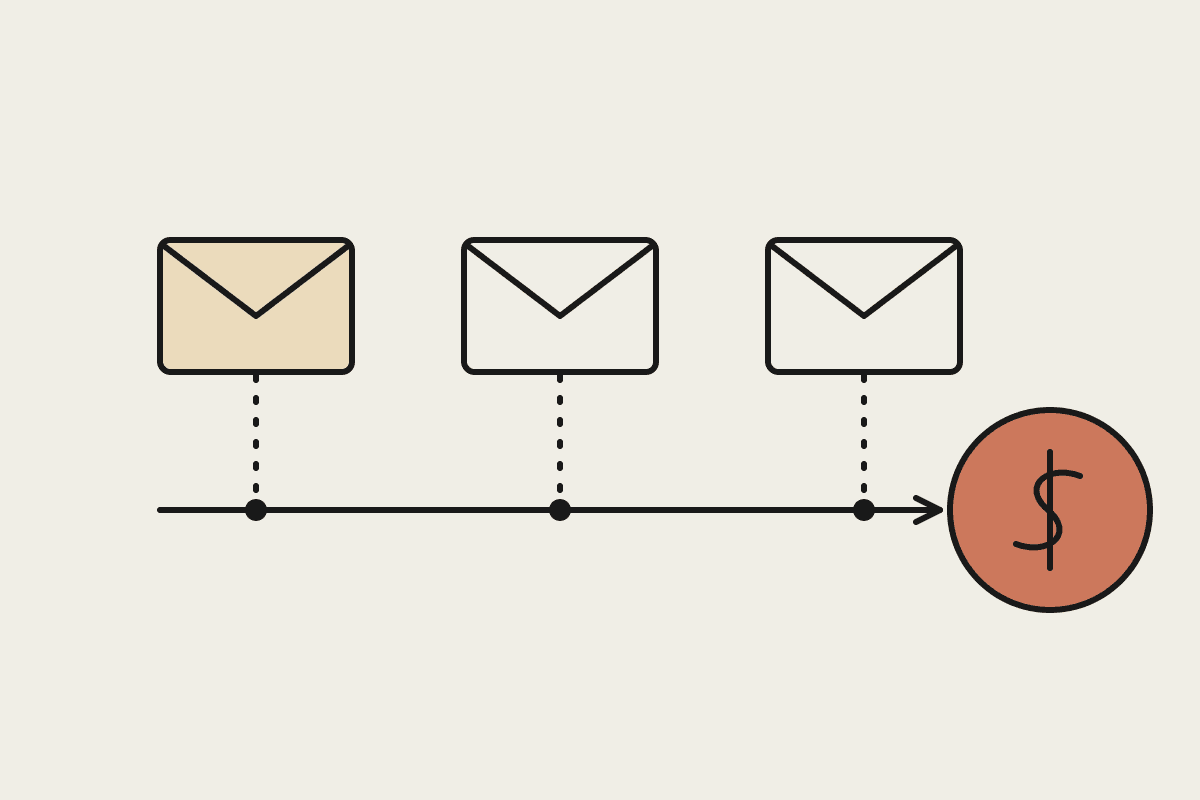
A cadence is simply a fixed schedule of contact tied to the invoice due date, with the tone escalating gently as the days pass. The value is that it runs the same way every time, so no single reminder feels personal or punitive. Here is a cadence that suits most Australian service and trade businesses:
Three days before due: a short, friendly heads-up that the invoice is coming due, with the payment link. This step alone prevents a large share of late payments.
On the due date: a plain confirmation that payment is due today.
Seven days overdue: a polite follow-up that assumes the best and asks whether there is any issue with the invoice.
Fourteen days overdue: a firmer note that references your agreed payment terms and asks for a specific payment date.
Thirty days overdue: a formal reminder that flags the next step and offers a phone call or a payment plan.
Two rules keep this humane. First, any reply from the customer pauses the schedule so a person handles the conversation. Second, a good customer with a genuine query never receives the day-30 letter by accident, because the cadence tracks exactly where each invoice sits.
Where Claude fits
Claude connects to your Xero data and reads the Aged Receivables the way you would, then drafts each reminder in the right tone for where the invoice sits and who the customer is. This is not a mail merge. Claude can recognise that a freight client who has paid on time for two years should get a warm day-7 note, while a first-time buyer already 14 days over gets something firmer that cites the terms they agreed to.
The workflow we set up for clients keeps a person in the loop at the point that matters:
Claude pulls the overdue list from Xero and groups invoices by how many days past due they are.
For each invoice it drafts a reminder matched to the cadence stage and the customer history.
It writes those drafts into a review queue, not straight to the customer inbox.
You skim the batch, edit anything that needs a human touch, and approve. Sending stays a deliberate action.
That last point is intentional. Chasing money is a relationship decision as much as an admin task, so the draft-and-approve pattern keeps judgment with the business owner while removing the part that eats the time: opening Xero, working out who is overdue, and writing twenty separate messages from a blank page.
Setting it up this week
You do not need a large project to start. A useful first version takes an afternoon:
Agree your cadence dates and the tone for each stage, and write down two or three sample messages you are happy with.
Connect Claude to your Xero data so it can read Aged Receivables. Read-only access is fine to begin with.
Have Claude produce a Monday batch of drafts for everything currently overdue, grouped by stage.
Review, approve, and send from your own email or from Xero. Note which wording lands and refine the samples.
Within a few weeks the drafts need almost no editing, because Claude has your preferred phrasing and your customer history to work from. The Monday debtor run drops from an hour of avoidance to about ten minutes of review.
Staying on the right side of the rules
Chasing debts in Australia is legitimate, but there are lines. The ACCC and ASIC publish a joint debt collection guideline that sets reasonable expectations around how often and at what hours you can contact a debtor, and the Privacy Act governs how you handle their personal information. A sensible cadence sits well inside these boundaries: contact is predictable, businesslike, and stops the moment a genuine dispute is raised.
Keep the frequency reasonable and the contact hours normal. A fixed cadence does this by design.
Keep records of what was sent and when. An approval queue gives you an automatic audit trail.
Never threaten action you will not take. Let the day-30 step lead to a real phone call or payment plan, not an empty warning.
Handle personal information carefully, in line with your Privacy Act obligations.
Used this way, a follow-up cadence is not about being harder on customers. It is about being consistent, so the reliable ones pay a fortnight sooner and the genuinely stuck ones get a conversation instead of silence.
If you want help wiring this into your own Xero and getting the tone right for your customers, book a short brainstorm with us and we will map a cadence to your business.