Most teams picking an agent framework in 2026 are really picking a default they will live with for a year. The Claude Agent SDK and the OpenAI Agents SDK both promise a tidy path from a single model call to a multi-step agent that can plan, call tools, and recover from its own mistakes. They land in very different places once you move past the demo. This is a builder's comparison written from production work rather than a feature grid.
What each SDK is actually for
The Claude Agent SDK is the same harness that runs Claude Code, exposed as a library. You get an agent loop, tool calling, automatic context management, subagents, and a permission model built for long-running work that touches files and shells. The OpenAI Agents SDK is a lighter orchestration layer: agents, handoffs between agents, input and output guardrails, and a hosted tracing dashboard. One grew out of a coding agent that had to survive hundreds of turns. The other grew out of chat completions that needed more structure.
That heritage shows up in the defaults you inherit before you write a line of your own logic:
Context handling: the Claude Agent SDK compacts and prunes context automatically across long runs, so a 200-turn task does not fall over when the window fills.
Tool model: both support function tools, but the Claude SDK ships file, shell, and subagent tools out of the box because it was built to do real work on a machine.
Handoffs: the OpenAI SDK makes agent-to-agent handoffs a first-class primitive, which suits routing a request between specialist agents.
Observability: the OpenAI SDK includes a hosted trace viewer, while the Claude SDK leans on your own logging and the run transcript.
Where the Claude Agent SDK pulls ahead
If your agent has to read a codebase, edit files, run a test suite, and try again when the tests fail, the Claude Agent SDK is closer to production on day one. The loop already knows how to keep going across many turns without you hand-rolling a state machine. Subagents let you spin off a focused worker for a search or a review and return only the conclusion to the main thread, which keeps the parent context clean. For long-horizon back-office automation, that is the difference between a prototype and something you can leave running.
The permission model matters more than it first looks. An agent that can run a shell command or delete a file needs a gate you can reason about, not a blanket yes. The Claude Agent SDK treats permissions as a real surface, so you can allow reads, hold writes for approval, and keep a clear audit trail. For any build that touches customer data under the Privacy Act, that control is not optional, and having it in the framework saves you from bolting on a weaker version later.
Where the OpenAI Agents SDK fits
The OpenAI Agents SDK is a genuinely good fit for a different shape of problem. If your system is a set of narrow agents that route requests between each other, its handoff primitive is cleaner than modelling the same thing by hand. The guardrails API gives you a tidy place to validate input and output. The hosted tracing view is useful when you want a shared dashboard without standing up your own logging stack. Teams already committed to the OpenAI model family and tooling will find it the path of least resistance, and it carries less conceptual weight than a full coding harness when your agents mostly answer questions rather than operate a machine.
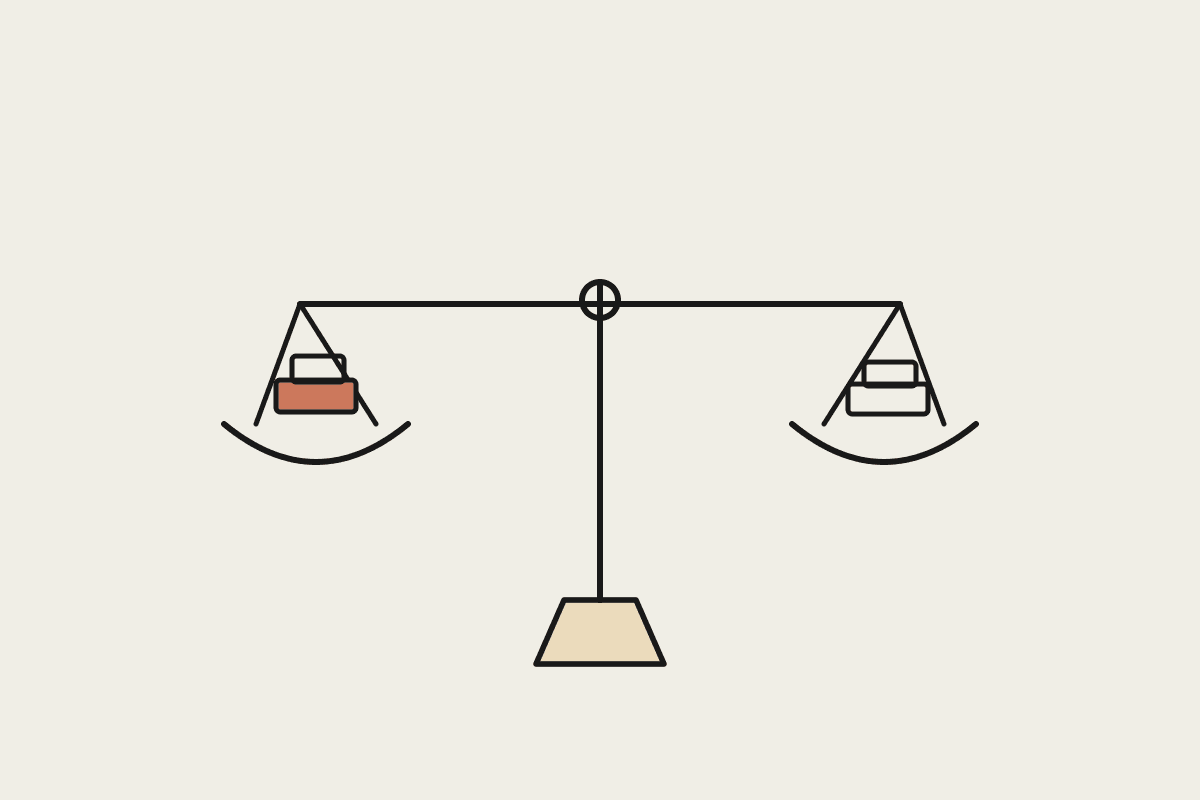
A fair reading is that the two tools optimise for different jobs. The Claude Agent SDK assumes the agent does work; the OpenAI Agents SDK assumes the agent coordinates. Neither assumption is wrong, and the right pick depends on which one describes your actual system.
How we choose for Australian builds
For a Sydney client rebuilding an internal support agent last quarter, the practical gap between the two SDKs came down to how much scaffolding the team would own. On the Claude Agent SDK the context management, retries, and permissions were already handled, so the estimate landed near $45,000 in engineering time over the first year. The equivalent build on a lighter framework carried roughly $70,000, because the team would have written and maintained the long-run context handling and the approval gates themselves. For an Australian business watching a fixed budget, that spread decides the project.
Our default for clients is to start from the job, not the brand. When the agent has to operate on files, run commands, or work autonomously for long stretches, we reach for the Claude Agent SDK first. When the system is a mesh of small routing agents with light tool use, the OpenAI Agents SDK is a reasonable and lower-ceremony choice. The questions we ask before writing any code are short:
Does the agent do work on a machine, or mostly coordinate other agents?
How many turns does a typical task run, and does context blow past the window?
What has to be gated for approval before it runs, given Privacy Act and internal risk rules?
Which model family is the rest of the stack already built around?
Answer those honestly and the SDK choice usually makes itself. If you want a second opinion on which framework fits a specific automation, we are happy to walk through it. Book a short call and bring the workflow you have in mind.