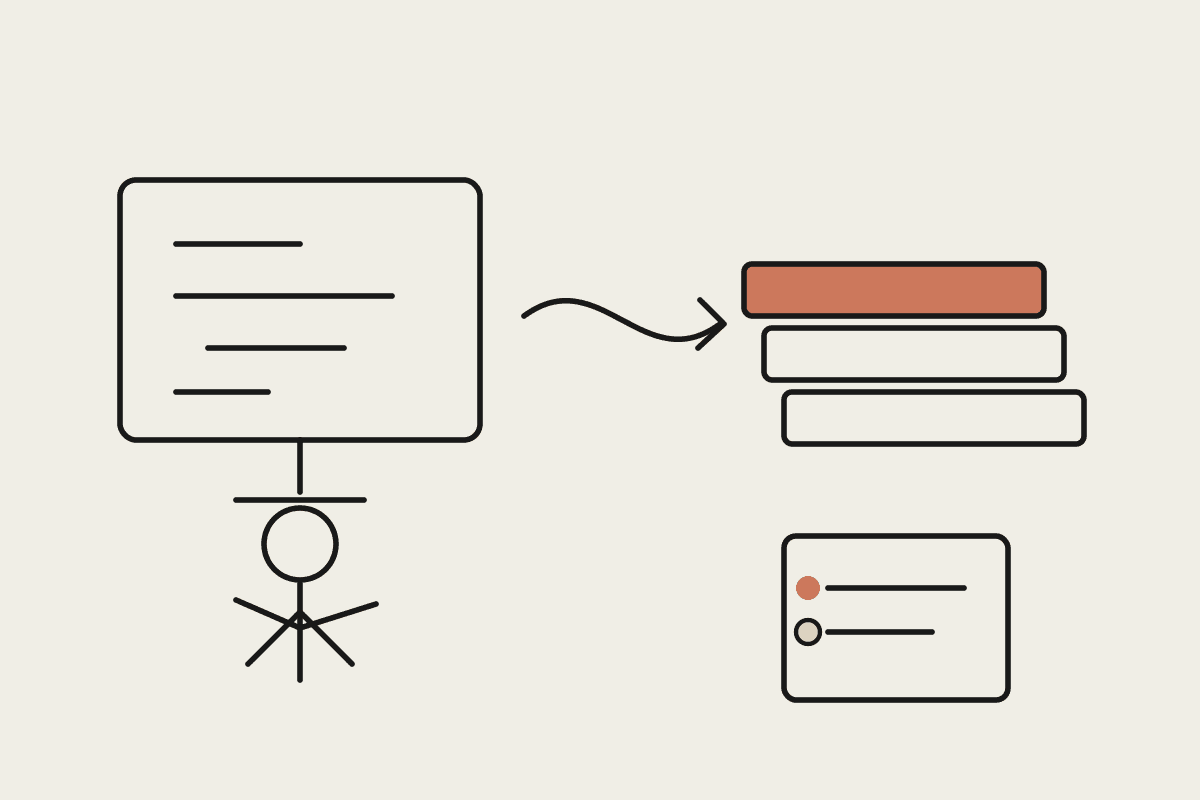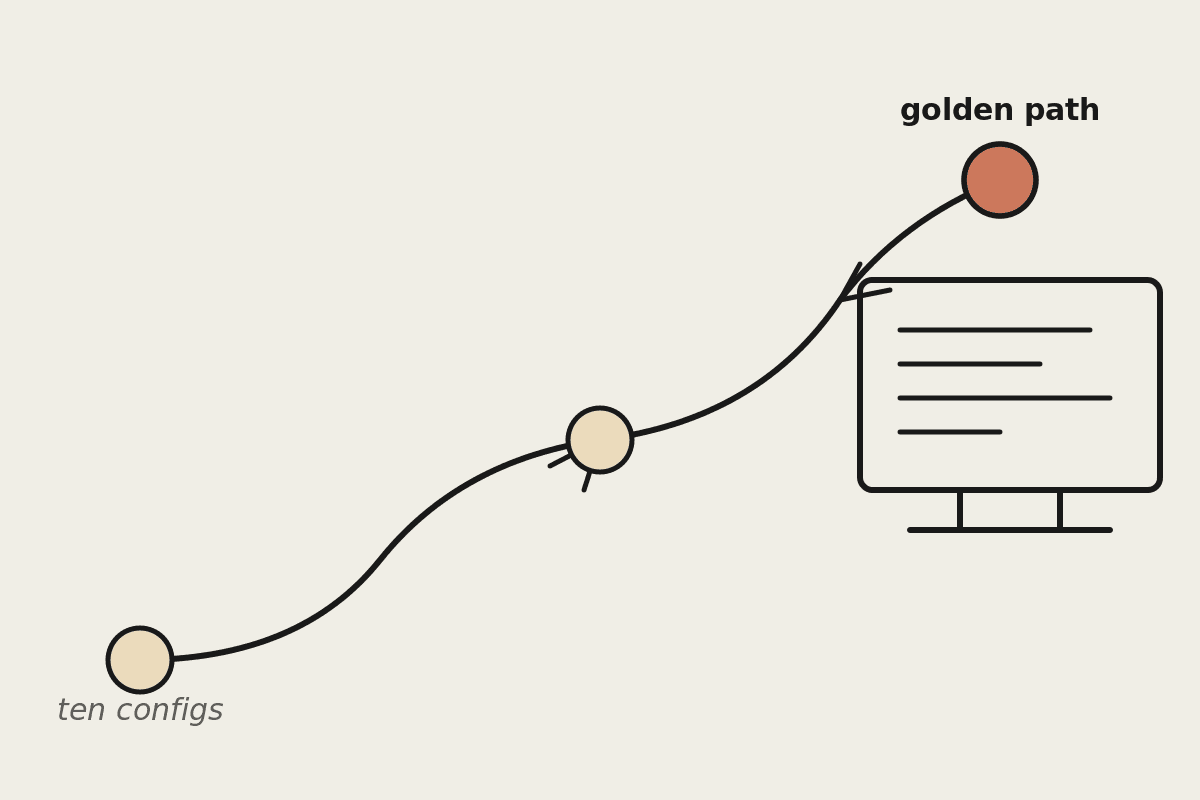
Claude Code adoption inside a growing engineering team rarely fails because the model is weak. It fails because ten engineers each configure their own version of it: different MCP servers, different permission modes, different assumptions about what the agent is allowed to touch in production. A platform team's job is to turn that scatter into one paved route that any engineer can follow without asking permission every time a new repository gets created. Platform engineering has a name for this: a golden path, an opinionated and supported default that is genuinely faster to use than the ad hoc alternative, not a mandate enforced by a policy document nobody reads. For Australian engineering teams running Claude Code across a dozen or more repositories, building that golden path is now a more urgent problem than choosing which coding agent to standardise on in the first place.
What a golden path for Claude Code actually includes
A golden path is not a wiki page and it is not a training session. It is a checked-in template plus a small number of defaults that ship with every new repository, so an engineer working from a Sydney office and a contractor working remotely from regional Victoria start from identical conditions on day one. Five things belong in that template, and none of them require exotic tooling to build.
A repo-level CLAUDE.md that encodes the team's actual conventions, test commands, and deploy gates, rather than a generic onboarding document copied from a blog post.
An approved MCP server allowlist, reviewed by the platform team, so the agent connects to the ticketing system and internal APIs the team has actually vetted, not whatever an engineer wired up on a Friday afternoon.
A default sandbox and permission profile that limits filesystem and network access to what the current task needs, with a documented escalation path for anything wider.
A CI check that applies the same validation a human reviewer would apply to an agent-authored pull request, so agent output is held to the same bar as human output rather than a lower one.
A lightweight usage log that tells the platform team which repositories are running the golden path and which are still on unmanaged, one-off configurations.
None of this needs to be heavy engineering. A mid-size Sydney software team of around 25 engineers can build a working first version in two to three weeks of dedicated platform-team time, not a quarter-long program. The cost of skipping it shows up quietly instead: engineers copying permission settings from a colleague's laptop, agents carrying standing access to production credentials nobody remembers granting, and a code review backlog because the team never agreed on what counts as an acceptable agent-authored pull request. One Melbourne-based client was spending close to $45,000 a year in senior-engineer review time re-litigating the same access questions on every new project before it wrote its first golden path template. Three weeks after codifying the defaults, that review overhead had dropped by more than half.
Building it in four steps
The order you build these pieces in matters more than which specific tool you pick for each one.
Start with the permission profile, not the MCP allowlist. Decide what an agent can read, write, and execute by default before deciding which external systems it is allowed to reach.
Write the CLAUDE.md template once, in the repository with the cleanest test suite, then copy it forward. Trying to write a universal template before it has been proven on one real codebase produces a document nobody actually trusts.
Wire in the CI gate before rolling the template out broadly. A golden path with no enforcement quietly degrades back into everyone's own configuration within a month.
Review adoption monthly against usage data, not against a compliance checklist. Teams that resist the golden path are usually pointing at a real gap in it, not something a policy memo will fix.
Where Australian governance requirements change the defaults
For teams operating under APRA prudential standards, or handling personal information covered by the Privacy Act, the golden path needs one more layer: an audit trail that records which MCP tools an agent actually called on a given task, not only which pull request it produced at the end. AUSTRAC-regulated fintechs asking about Claude Code deployments almost always raise this in the first conversation, and a golden path built without that logging layer means retrofitting it into every existing repository later, at a much higher cost than building it into the first template. A Brisbane-based fintech client added this audit layer to its default profile in a single sprint once the underlying permission model was already in place; bolted onto a working golden path, it was a small job rather than a standalone project.
Automata AI builds these golden path templates for Australian engineering teams adopting Claude Code at scale: permission profiles, MCP allowlists, CI gates, and the audit logging regulated teams need, tuned to how a specific team already works rather than shipped as a generic starter kit. If every engineer on your team is currently running their own version of Claude Code, that is a normal place to be in month one and worth fixing by month two. Book a session to talk through what a golden path looks like for your stack.