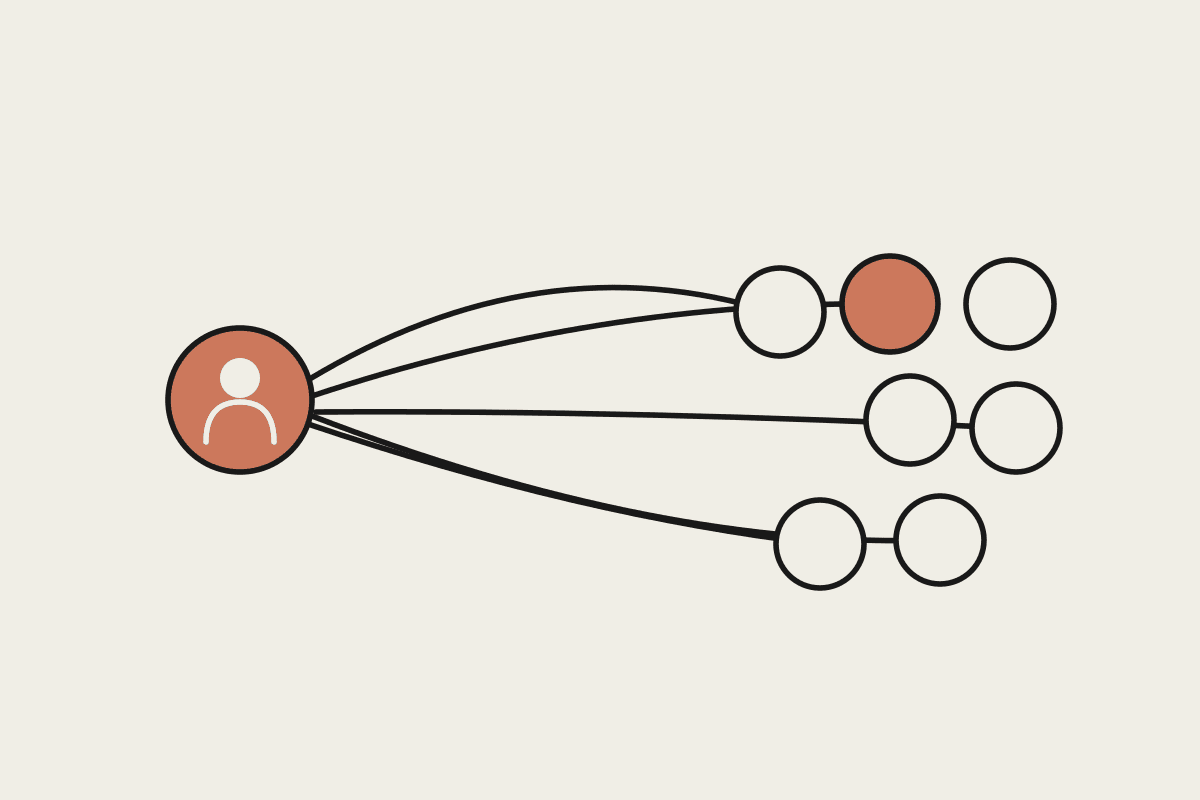
Most Claude Cowork rollouts start the same way. One person, usually a founder or an operations lead, buys a single licence, automates one annoying job, and quietly saves themselves a few hours a week. The hard part is not that first win. It is turning one person's private productivity into something the whole company runs on, without the wheels falling off the moment ten people are all asking Claude to touch real client data.
We help Australian SMBs make exactly that jump. The pattern below is what actually works in practice, drawn from rollouts across Sydney and Melbourne teams of five to fifty people. It is deliberately slow at the start and deliberately structured at the end.
Stage one: prove it with one real job
Do not roll Claude Cowork out to the whole company on day one. Pick one person and one recurring task that has a clear before-and-after. Month-end reconciliation, drafting client update emails, turning meeting notes into action lists, or chasing overdue invoices out of Xero. The job should be boring, frequent, and measurable in hours.
Give that person two weeks. If Claude saves them four hours a week on a task that used to eat a full morning, you have your business case. At an average loaded cost of A$65 an hour, four hours a week is roughly A$13,500 a year of freed capacity from a single seat. That number, not a vendor pitch, is what convinces the rest of the team to pay attention.
Stage two: expand to a small pod, not the whole org
The second stage is a pod of three to five people who share a workflow. This is where you learn the things that only show up once more than one person is involved: who needs which connectors, where the sensitive data actually lives, and which tasks Claude should draft but never send on its own.
Pick people who already trust each other, so early friction is about the work and not office politics.
Standardise one or two workflows across the pod so you can compare results, rather than everyone inventing their own approach.
Write down what Claude is allowed to do unsupervised and what always needs a person to press send. This becomes the first draft of your company AI policy.
Track hours saved per person. A pod of five saving three hours each a week is fifteen hours, or around A$50,000 a year in recovered time.
A pod also gives you a small group of internal advocates. When the wider rollout comes, these are the people who answer the how do I get Claude to do this questions, so the load never lands entirely on you.
Stage three: company-wide, with rails
Company-wide rollout is a governance exercise as much as a licensing one. By the time twenty or thirty people are working against live customer records, you need clear answers to a few questions before you scale, not after.
The rails that matter
Connector access: which staff can connect Claude to your CRM, accounting file, or shared drive, and who signs that access off.
Data boundaries: what customer information can go into a prompt, especially under the Privacy Act, and what has to stay out.
Draft versus send: a standing rule that anything client-facing, from emails to quotes to social posts, is drafted by Claude and approved by a person.
Shared skills and scheduled tasks: version-controlled procedures so the whole company runs the same trusted workflow instead of thirty private ones.
None of this needs a heavy policy document. A single page that says what Claude can touch, what it can send, and who to ask when in doubt is enough for most Australian small businesses to move with confidence.
What company-wide actually costs
Licensing is the small number. For a thirty-person business, Claude for Small Business seats land in the low thousands of dollars a year in total, which is trivial against the time recovered. The real investment is the rollout work: mapping tasks, writing skills, setting the policy, and training people to prompt well.
A guided rollout for a firm that size typically runs around A$2,500 to A$3,500 for the initial setup, plus internal time. Against fifteen to twenty people each saving a few hours a week, the payback usually lands inside the first quarter. We have seen mid-market teams recover well over A$120,000 a year in capacity once a rollout is properly bedded in.
A 90-day rollout arc
If you want a plan that fits on one page, this is the shape we use with clients:
Days 1 to 14: one person, one task, measure the hours saved.
Days 15 to 45: a pod of three to five people, standard workflows, and the first draft of your AI policy.
Days 46 to 75: widen access team by team, connect the tools each team actually needs, and train people as you go.
Days 76 to 90: lock in shared skills and scheduled tasks, review what Claude is trusted to do unsupervised, and set a quarterly check-in.
The businesses that get the most out of Claude are not the ones that move fastest. They are the ones that prove value on a single job, then widen access with clear rails around cost, quality, and compliance.
If you want help mapping your own rollout, from the first licence to company-wide, you can book a short session with our team on our contact page.
Where to go next
If you are setting Cowork up from scratch, start with our Claude Cowork setup guide. Two pieces that sit closest to this one: