Employment Hero runs the HR and payroll spine for a lot of Australian small and medium businesses. It holds your employee records, processes pay runs, files Single Touch Payroll, and tracks leave. What it does not do is write the twenty short documents and answers that sit around every HR task: the contract variation letter, the plain-English policy, the award question a manager asks at 4pm on a Friday. That gap is where Claude earns its place.
You do not replace Employment Hero with Claude, and you do not need to. You put Claude next to it and hand off the writing and reading work that used to eat your afternoons.
Where Claude fits around Employment Hero
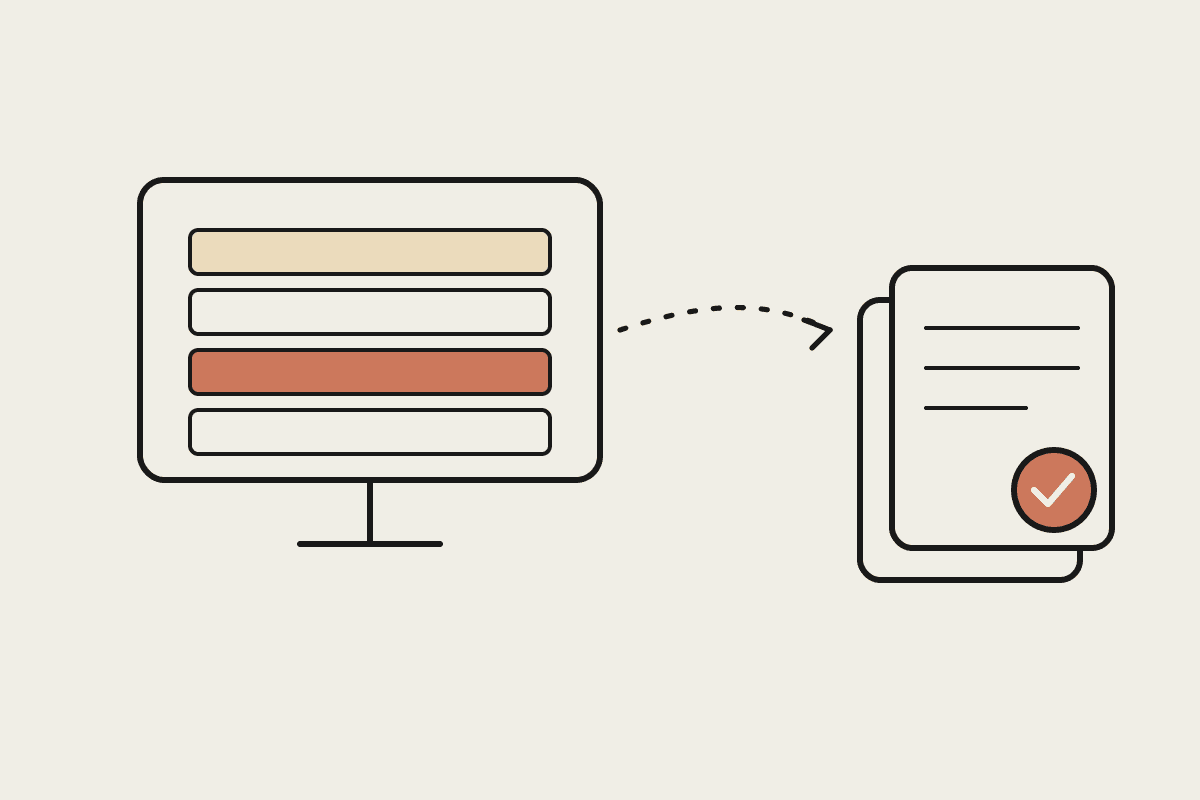
Employment Hero has no public agent connector, so Claude does not reach into your pay runs or change employee records. The working pattern is simpler and safer than that. You pull information out of Employment Hero, such as a leave report, an award classification, or a list of new starters, and hand it to Claude to turn into something usable. Claude drafts, you review, and you act inside Employment Hero. Nothing happens to your data behind your back.
The tasks worth handing over fall into a few clear buckets:
Drafting: employment contracts, contract variations, warning letters, and offer letters, built from your templates and the specifics you paste in.
Policy writing: a leave policy, a working-from-home policy, or a code of conduct, written in language your team will actually read.
Onboarding: a role-specific first-week checklist and a welcome note, built from a position description you already have.
Triage: turning a messy inbox of HR and payroll questions into a sorted list with draft answers for your review.
Summarising: reading a long modern award or an enterprise agreement clause and explaining, in a paragraph, what it means for one specific employee.
HR workflows worth handing to Claude
The highest-value use is document drafting. A Sydney agency with fifteen staff might spend two hours writing a single contract variation and its covering note. Claude produces the first draft in under a minute from the same inputs: the employee's name, the change, the effective date, and the clause that moves. You still read every line before it goes out, because you are the one signing it, but you start from ninety percent instead of a blank page.
Position descriptions are the same story. Give Claude the role, the reporting line, and the three outcomes you actually care about, and you get a clean draft you can edit rather than agonise over. For performance reviews, paste your notes and the review template, and Claude turns rough bullet points into fair, specific written feedback that still sounds like you.
Onboarding is where the time really adds up. Most businesses rebuild the same welcome pack for every new hire. Build the prompt once, with your tone, your policies, and your Employment Hero setup steps, and each new starter's pack becomes a two-minute job instead of an hour.
Payroll and award questions, with guardrails
Award interpretation is where Australian payroll gets hard, and it is where care matters most. Claude is a real help for reading a modern award, comparing two classifications, or explaining how a public holiday penalty is meant to work. It is not a substitute for the Fair Work Ombudsman, your accountant, or a payroll professional, and you should not treat a Claude answer as a final compliance ruling.
A few rules keep this safe:
Use Claude to understand and draft, not to decide. A wrong classification or an underpayment is a Fair Work matter, and the liability sits with the business.
Always paste the actual award text or the Employment Hero classification you are working from. Do not rely on Claude's memory of an award, which may be out of date.
Keep employee data to the minimum the task needs, in line with your Privacy Act obligations.
Send anything with legal or financial weight to a human who is accountable for it before you act.
Inside those lines, there is plenty of useful work. Claude can draft the email to staff explaining a pay change, write the note that goes with a super or STP correction, or read a spreadsheet you have exported from Employment Hero and flag the rows that look wrong before you fix them at the source.
A realistic first week
You do not need a project to start. Pick one recurring document, say the new-starter welcome and checklist, and build a reusable prompt for it. Save it with your tone, your policies, and your template so the second run takes minutes. Once that one is paying off, add the next: contract variations, then policy updates, then the Friday-afternoon award questions. Each one you set up is a task that stops landing on your desk cold.
What this is worth
For an owner-operator or an office manager carrying HR as a side duty, the saving is measured in hours, not in software you cancel. A business doing four contracts, six policy updates, and a steady trickle of award questions a month can reasonably reclaim eight to ten hours. At Australian small-business rates that is roughly $600 to $1,200 a month of that person's time. Over a year it adds up to somewhere between $8,000 and $14,000 of capacity handed back to work that genuinely needs a person in the seat.
If you run HR and payroll through Employment Hero and want a sensible set of Claude workflows around it, that is exactly the kind of setup we do for Australian businesses. You can book a short call and we will map your first three.