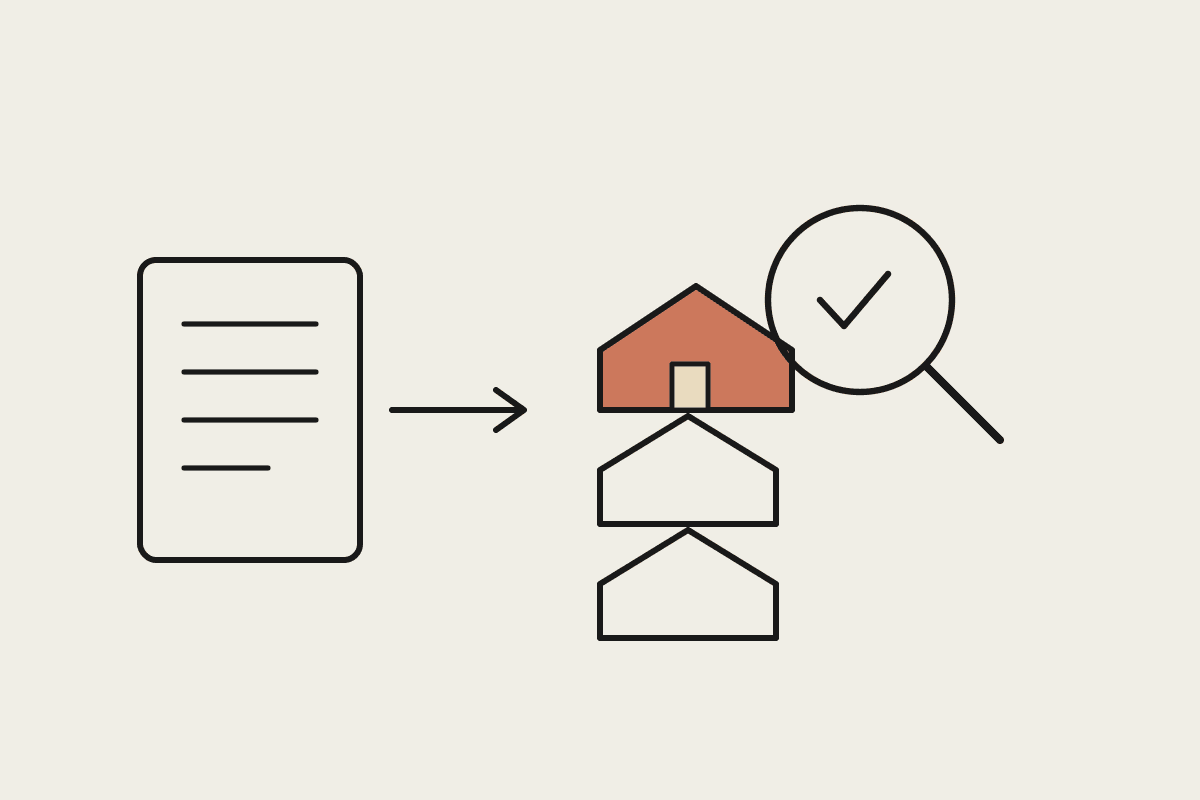
A buyers' agent lives or dies on judgement, not data entry. Yet most of the week disappears into the same research grind: reading through listings, pulling comparable sales, cross-checking suburb reports, and writing up why one property fits a client's brief and another does not. For a Sydney or Brisbane agent running three or four active mandates at once, that synthesis work quietly eats the hours that should go into inspections, negotiation, and client calls.
Claude, the AI assistant built by Anthropic, is well suited to that middle layer of the job. It reads long documents, compares them against a set of criteria, and drafts clear write-ups in your voice. Used carefully, it can take a client brief and help you reach a defensible shortlist in a fraction of the usual time. This guide walks through a brief-to-shortlist workflow, and, just as importantly, where a licensed agent has to stay firmly in control.
Where the research hours actually go
Ask most buyers' agents where their time goes and the answer is rarely 'finding properties'. Portals like Domain and realestate.com.au surface listings easily enough. The cost sits in everything after that: reconciling a client's stated brief with what the market actually offers, reading strata minutes and contract clauses, checking flood and bushfire overlays, and pulling three or four comparable sales for every property worth a second look. A single thorough shortlist can involve reading tens of thousands of words across reports and listings.
This is exactly the kind of high-volume reading and comparison that a capable AI model handles well. Claude can hold a long brief, a batch of listing descriptions, and a set of comparable sales in the same context, then tell you which properties genuinely match and which fall short on the criteria that matter most to the client.
A brief-to-shortlist workflow with Claude
Turn the brief into structured criteria
Start with the client brief in plain language: budget, must-haves, deal-breakers, timeline, and the softer preferences that never quite fit a search filter. Give it to Claude and ask it to convert the brief into a scored criteria list, separating non-negotiables from nice-to-haves.
A typical output might treat a $1.4M budget ceiling and a minimum of three bedrooms as hard constraints, while treating 'walking distance to a train station' and 'north-facing living areas' as weighted preferences. Writing the criteria down as an explicit rubric does two things: it forces the client conversation to be precise, and it gives you a consistent yardstick to measure every property against.
A ranked list of non-negotiables the client cannot move on, with a note on any that quietly conflict, such as a $900,000 ceiling and a four-bedroom house in inner Melbourne.
A weighted scorecard for preferences, so two agents on your team would shortlist the same way.
A set of clarifying questions to take back to the client before you spend a dollar on inspections.
Compress suburb and comparable-sales research
Feed Claude the suburb reports, recent sales data, and listing descriptions you have already gathered. Ask it for a short summary of each property against the scorecard, and to flag anything that needs a human check: an unusually short settlement, a heritage overlay, or a strata levy that looks high for the building. Claude will not replace CoreLogic or a proper title search, but it turns a two-hour reading session into a fifteen-minute review of a structured summary.
Draft the shortlist report
The last step is the client-facing write-up. Give Claude the shortlisted properties and your scoring, and ask for a shortlist report in your usual tone: a short recommendation per property, how each scores against the brief, and the open questions to resolve at inspection. You review, correct, and sign off. What used to be an evening of writing becomes a morning edit.
Where Claude helps and where you must stay in the loop
The workflow above keeps Claude on the research and drafting side of the ledger, never the licensed-judgement side. That distinction matters, both legally and for client trust.
Claude helps with: reading and summarising listings, reports and contracts; scoring properties against a brief; drafting shortlist reports, inspection checklists and client updates; and comparing several properties side by side.
You stay responsible for: verifying every figure against its source, confirming legal and building due diligence, forming the actual valuation and negotiation strategy, and giving advice that falls under your licence.
Never hand over: the final recommendation, price guidance, or any statement a client will rely on when committing $1M or more of their own money.
A useful rule of thumb: Claude can prepare the evidence, but a licensed agent signs the conclusion. If a summary says a property sold for $1.2M last quarter, you still open the comparable-sales record and confirm it before it reaches a client.
Compliance and client trust in an Australian context
Buyers' agents handle sensitive material: a client's borrowing capacity, personal circumstances, and financial position. Under the Privacy Act, that information carries obligations, and pasting it into any tool deserves thought. Keep client data minimal in prompts, avoid full names and account numbers where you can, and use a business-grade Claude plan with the data controls your practice needs rather than a personal login.
State licensing rules still govern the advice itself. Fair trading regulators in New South Wales, Victoria and Queensland do not care whether a shortlist was drafted by hand or with an assistant; they care that a licensed agent stands behind it. Treat Claude as a research assistant whose work you check, not an adviser whose word you pass on.
For a buyers' agency running several mandates a week, the payoff is real. Cutting even six hours of research and writing off each engagement, across a book of forty settlements a year, hands back the better part of a working month. That is time for more inspections, sharper negotiation, and the client contact that wins referrals. If you want help setting up a brief-to-shortlist workflow that fits your practice and your compliance obligations, book a brainstorm with our team.