Most plumbing businesses do not lose money on the job itself. They lose it in the gap between finishing the work and sending the invoice. You wrap up a hot water system replacement in Parramatta at four in the afternoon, drive to the next call, and the paperwork waits until the weekend. By then the details are fuzzy, the invoice goes out late, and the payment lands later still. Claude closes that gap. It takes the rough notes you already make on site and drafts a clean, itemised, GST-ready invoice the same day, so you get paid for the work while it is still fresh.
The real cost of slow invoicing
Late invoicing is quiet, so it rarely gets the attention a broken-down ute would. The numbers still add up fast. A one-person plumbing business turning over $40,000 a month that invoices five to ten days after each job is routinely carrying $8,000 to $15,000 in completed but unbilled work at any given time. That is your cash sitting in a notebook instead of your bank account. Forgotten variations, undercharged materials, and slow chase-ups quietly eat into your margin on top of that.
There is a labour cost as well. Plenty of Australian trades owners spend three to four hours every week writing up jobs and building invoices after hours, once the family has gone to bed. At a charge-out rate of $150 an hour, that admin is worth more than $20,000 a year in billable time you are handing back to your own paperwork. Getting invoices out on the day turns most of that time back into either billable work or an earlier night.
What job notes to invoice looks like with Claude
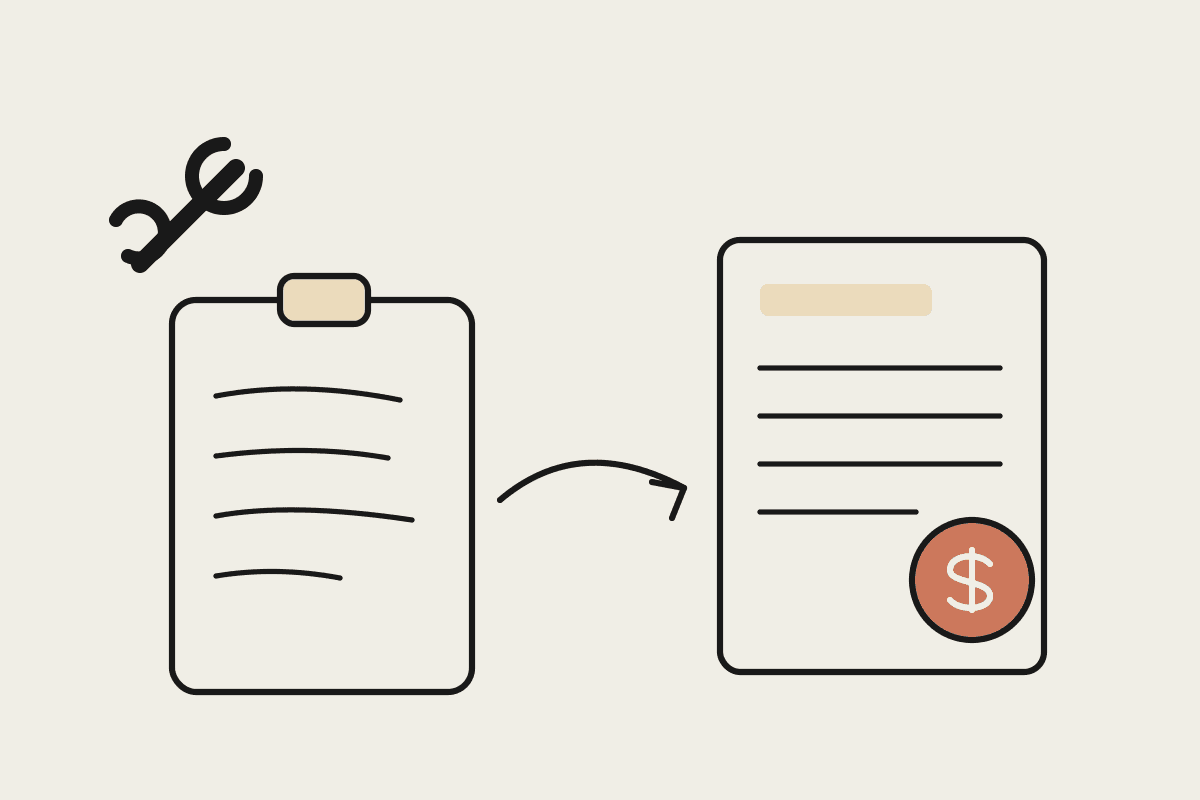
The idea is simple, and it fits how you already work. You capture what happened on site, whether that is a voice memo recorded in the ute, a few lines typed on your phone, or a photo of a handwritten docket. Claude reads those notes and drafts a structured invoice you can check and send. A typical flow looks like this:
You dictate or type the job in plain language: replaced a 250 litre electric hot water unit, supplied a new unit, two hours labour, added a tempering valve and sundries, rental property in Blacktown.
Claude turns that into clear line items with quantities, matches them to your price book, and keeps labour and materials separate.
It applies GST correctly, adds your payment terms and bank details, and flags anything it is unsure about rather than guessing a price.
You get a draft invoice in your own format, ready to review, adjust, and send before you leave the next job.
Because Claude works from your price book and your past invoices, the drafts stay consistent. The same tap replacement is described and priced the same way whether you did it on a Monday or a Friday, which makes your quoting fairer and your records much easier to reconcile at BAS time.
Setting it up without replacing your existing tools
You do not need to throw out Xero, MYOB, or the invoicing app you already run. Claude sits in front of those tools as a drafting layer, not a replacement. Give it your price list, your standard labour rates, and two or three examples of invoices you are happy with, and it learns your house style. From there you can paste notes into a chat, or connect it to your job management software so drafts appear on their own. A plumbing business in Sydney can be up and running in an afternoon rather than waiting on a long software rollout.
The setup that works best keeps a person in the loop. Claude drafts, and you approve. That one habit catches the rare mistake before it reaches a customer, and it keeps you in control of everything that goes out under your ABN and licence number.
Where a human still has to sign off
Claude is good at the repetitive drafting that eats your evenings. It is not your bookkeeper, and it is not your licensing authority. Keep a person across a few things:
GST and tax treatment on unusual jobs, especially mixed supply or work for GST-registered builders. Your accountant sets the rules, and Claude follows them.
Licensed work and compliance wording, which has to match your state plumbing regulations and any certificate of compliance you issue.
Final pricing on variations and goodwill calls, which are commercial decisions that only you should make.
Customer and job records, which you still need to store and handle in line with the Privacy Act.
For a plumbing business, same-day invoicing is not about fancy software. It is about getting paid for work you have already done, while the details are fresh and the customer still has the job front of mind. Claude turns the notes you already take into invoices you can send before the kettle boils. If you want to see how this fits your business, book a free brainstorm and we will map it to your real price book and job types.