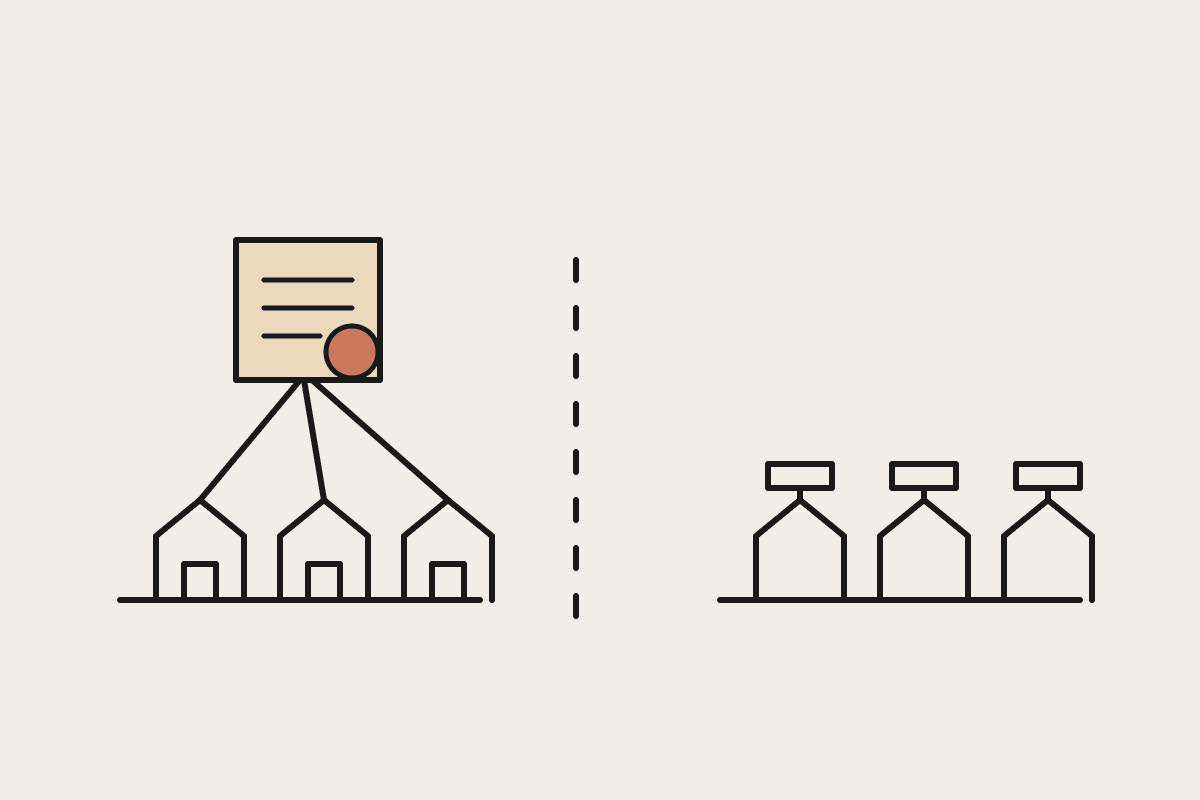
From 9 June 2026, Claude Managed Agents can run on a schedule, and they can reach command-line tools and other authenticated services securely. Both features are in public beta on the Claude Platform. For an Australian small business, this closes the gap between a clever one-off automation and a system that quietly does the work every day without anyone pressing a button. The practical change is that an agent no longer needs a person to remember to run it.
What changed on the Claude Platform
Two changes landed together, and they matter more in combination than apart. One gives an agent a clock, the other gives it safe access to your tools.
Scheduled deployments give an agent a cron schedule. Each run starts a fresh session, completes its task, and stops. There is no scheduler for you to build or host.
You can pause, resume, archive, or trigger a scheduled agent on demand at any time.
Environment variables can now sit in vaults, so an agent authenticates to CLIs and other tools without secrets living in plain text.
Together they let an agent do real, recurring work against your actual systems, not just answer a prompt in a chat window.
Why scheduled agents suit a lean team
Most Australian SMBs do not have a spare engineer to stand up cron jobs, hosting, and monitoring. That overhead is usually what kills a good automation idea before it ships. Scheduled agents remove the part that used to need a developer, which is exactly the part a small team cannot easily cover.
No infrastructure to provision, patch, or watch overnight
Nightly data syncs and weekly reports run whether or not anyone is at their desk
A failed run is visible and re-runnable, rather than silently skipped
The same agent can be triggered by hand when you need an off-cycle run
Recurring work worth automating first
The best first candidates are tasks that repeat on a fixed rhythm and follow a known procedure. In an Australian business, plenty of these sit around finance and compliance, where the deadline never moves and the steps rarely change.
BAS and GST reminders that pull figures from your accounting system before each lodgement
Weekly cash-flow and sales summaries assembled from the same sources every Monday
Payroll and super deadline checks ahead of each cycle
A daily digest of overnight emails, support tickets, or form submissions
Monthly compliance scans that flag anything needing a human decision
How early adopters are using scheduled agents
The published examples show the pattern clearly. A trained agent on a schedule replaces self-built scheduling infrastructure and a fair amount of manual assembly, and it does so without a new system for anyone to babysit.
Rakuten runs weekly and monthly spreadsheet analysis into reports and decks, and watches production logs and metrics without standing up dashboards
Actively AI uses scheduled refreshes for cross-account search, retiring the scheduling infrastructure it used to maintain itself
Ando watches channels for next steps, due follow-ups, and meeting reminders
Getting it right without adding risk
A scheduled agent acts on its own, so the controls around it matter as much as the task. This is where the vault feature and a few plain rules earn their keep, because an unattended run has nobody watching it in real time.
Keep credentials in vaults, never in prompts or code, and give each agent only the access its task needs
Put approval gates on anything that commits money, sends client mail, or changes a record
Meet Privacy Act duties for any personal data the agent touches, and log what it reads and writes
Start with a read-only or draft-only run, then widen autonomy once you trust the output
What this means for Australian businesses
The saving is rarely the model cost. It is the hours a small team loses each week to assembling the same report, chasing the same deadline, or copying the same figures. A Sydney business that spends six hours a week on recurring reporting and reminders is carrying close to $45,000 a year in loaded time on work a scheduled agent can prepare for roughly $1,200 a month in platform and build cost. The point is not to remove the person, but to hand them a finished draft instead of a blank page.
Pick one recurring task with a clear procedure and a clear owner
Prove it on real work for a fortnight before adding a second
Measure the hours returned, not the novelty of the automation
Scheduled agents move Claude from a tool you open to a system that runs in the background on your terms. We help Australian teams choose the right first workflow, wire it to the systems you already run, and keep a human on the decisions that matter. Book a brainstorm at automataai.com.au.