Building a voice agent that books meetings now takes about five minutes. In a recent community workshop, a presenter wired one up using Dogra, an open source self-hosted voice platform, with Claude handling the reasoning over MCP. The room watched it answer a call, check a calendar, and confirm a time. The demo was real. The trouble is that a demo and a production voice agent are different products, and the distance between them is measured in error rates.
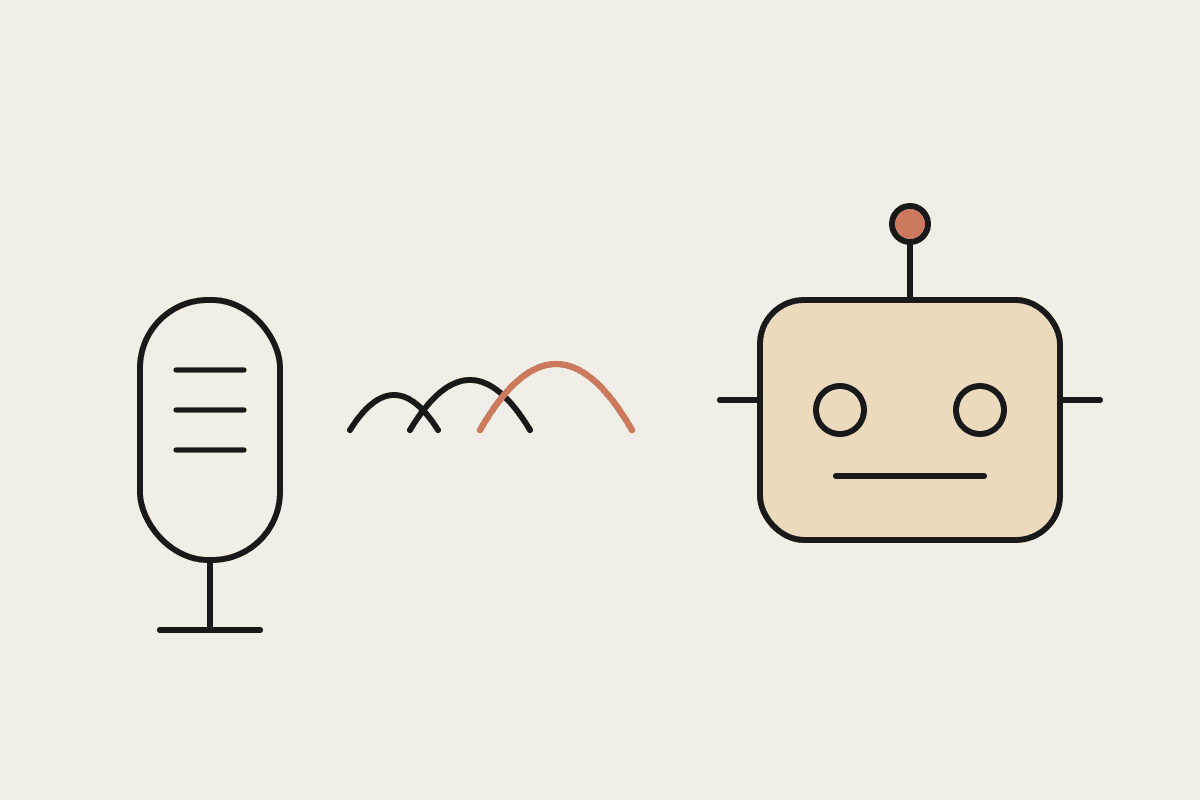
At Automata AI we build voice agents on Claude for Australian businesses, and the number that matters most rarely shows up in a demo. Community-reported figures put the per-turn error rate of a single voice conversation at 20 to 25 percent across the speech-to-text, language model, and text-to-speech cascade. Each handoff carries its own chance of going wrong. That figure decides whether your agent is a party trick or something you can put in front of customers.
Why a 20-25% per-turn error rate compounds
The trap is reading 20 to 25 percent as the failure rate of the whole call. It is the failure rate of a single turn. A booking conversation is not one turn; it is a sequence. If each turn has even a one-in-five chance of mishearing a date, misreading intent, or speaking back something slightly wrong, the odds of a clean multi-turn call drop quickly.
A single turn at 80 percent reliability sounds acceptable on its own.
Three turns at 80 percent each land near 51 percent, barely better than a coin flip.
Five turns at 80 percent each fall to roughly 33 percent, so two in three calls hit at least one error.
Push per-turn reliability to 95 percent and a five-turn call recovers to about 77 percent.
That arithmetic is why the workshop headline lands the way it does. Cutting the per-turn error rate by a few points is worth more than any single clever prompt, because the gain multiplies across every turn in every call. Production voice work is mostly the unglamorous job of dragging that per-turn number down.
The architecture choices that move the number
Two design decisions from the workshop do real work here. The first is multi-agent workflow architecture. Instead of one prompt trying to greet, qualify, check a calendar, and handle objections, you split the conversation into focused agents that each own a narrow job. A smaller, well-scoped task hallucinates less than a sprawling one, and Claude routing between agents over MCP keeps each step honest about which tools it is allowed to call.
The second is latency. The classic cascade of speech-to-text, then the language model, then text-to-speech adds up. Community figures put that round trip above 400 milliseconds, while speech-to-speech models can bring it closer to 300. On a phone call, that gap is the difference between a natural pause and an awkward one, and awkward pauses make callers talk over the agent, which creates more errors. Latency and accuracy are the same problem wearing two hats.
Three disciplines that separate demos from deployments
The demo is the easy 80 percent. The last stretch is operational, not clever, and three habits do most of the work.
Call tracing
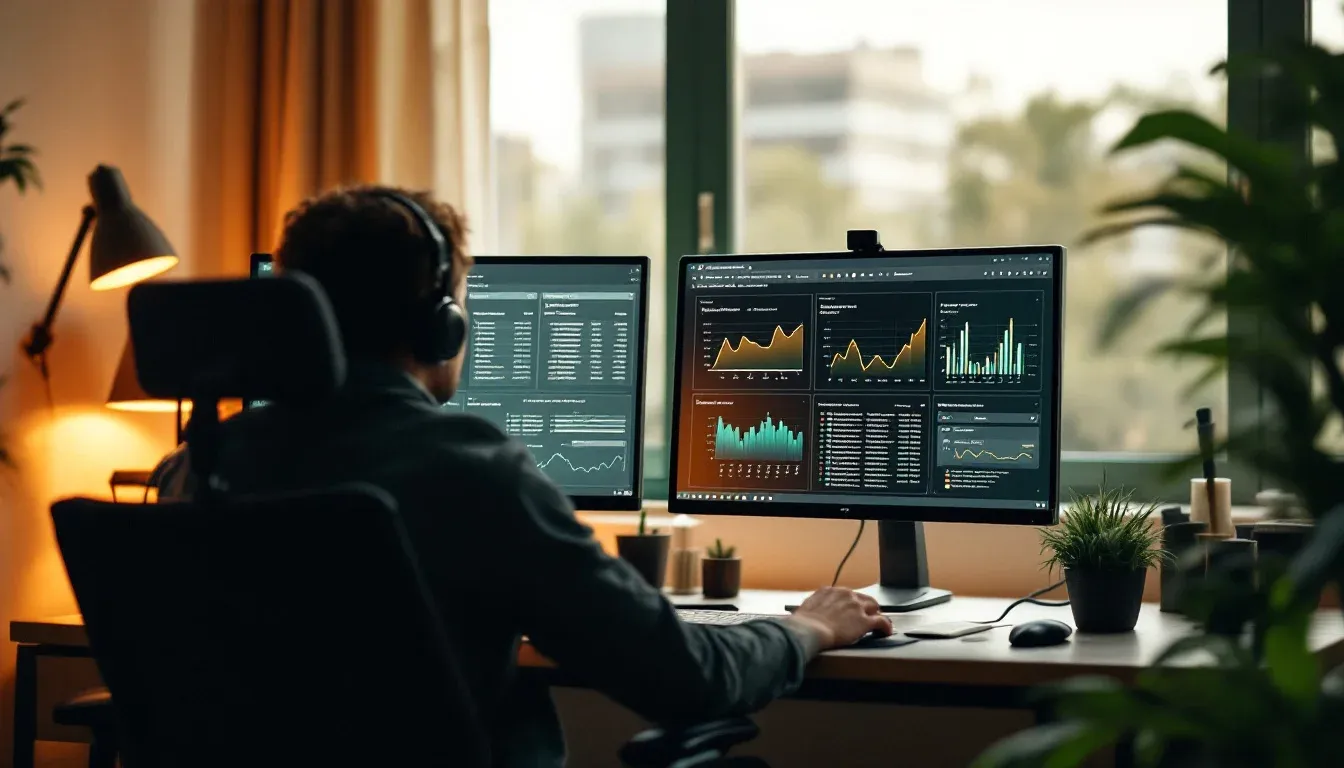
You cannot fix what you cannot replay. Every production call should write a trace: the audio, the transcript, the model interpretation at each turn, and the tool calls it made. When a booking goes sideways, the trace tells you whether speech-to-text misheard 'Tuesday' as 'Thursday', or whether Claude reasoned correctly on bad input. Without traces you are guessing, and guessing does not lower an error rate.
QA on real transcripts
Synthetic test scripts catch the obvious failures. Real callers find the ones you never imagined: accents, background noise, half-finished sentences, two people on speakerphone. QA nodes that score real transcripts against what should have happened turn a pile of calls into a ranked list of failure modes, so you fix the errors that actually occur rather than the ones you assumed would.
Continuous prompt iteration
Prompts are not set once. The traces and QA scores feed a loop: find the turn that fails most often, adjust the agent that owns it, ship, and watch the next batch of calls. This is the iteration loop the five-minute demo hides, and it is where most of the reliability gains come from over the first few weeks in production.
What this costs, and what it returns
Voice AI is not free to run. Community-reported budgets put small-business voice projects around USD $5,000 to $6,000 a month and mid-size ones at USD $40,000 to $50,000, which lands near AUD $8,000 to $9,000 and AUD $60,000 to $75,000 respectively. Treat those as community figures rather than quotes; your real number depends on call volume, model choice, and how much human review you keep in the loop early on.
For an Australian business fielding hundreds of repetitive scheduling or triage calls a week, that spend can pay back quickly, but only if the agent is reliable enough that customers trust it. An agent that mishears one booking in three does not save staff time; it adds a cleanup queue. The cost case and the error rate are the same conversation.
The honest version of the pitch is this: you can stand up a Claude voice agent over MCP in an afternoon, and you will spend the following weeks earning the right to leave it unsupervised. That work, the tracing, the QA, and the iteration, is the actual product. If you are weighing a voice agent for your business and want a clear-eyed view of what production really takes, you can book a brainstorm with our team.