If you run maintenance for a book of strata schemes, your day rarely starts with a plan. It starts with a backlog. A leaking hot water system in a Sydney unit block, a broken security gate in a townhouse complex, a lift fault flagged by a nervous building manager, and eleven emails that all say "urgent" in the subject line. The work is not the hard part. Sorting the work is.
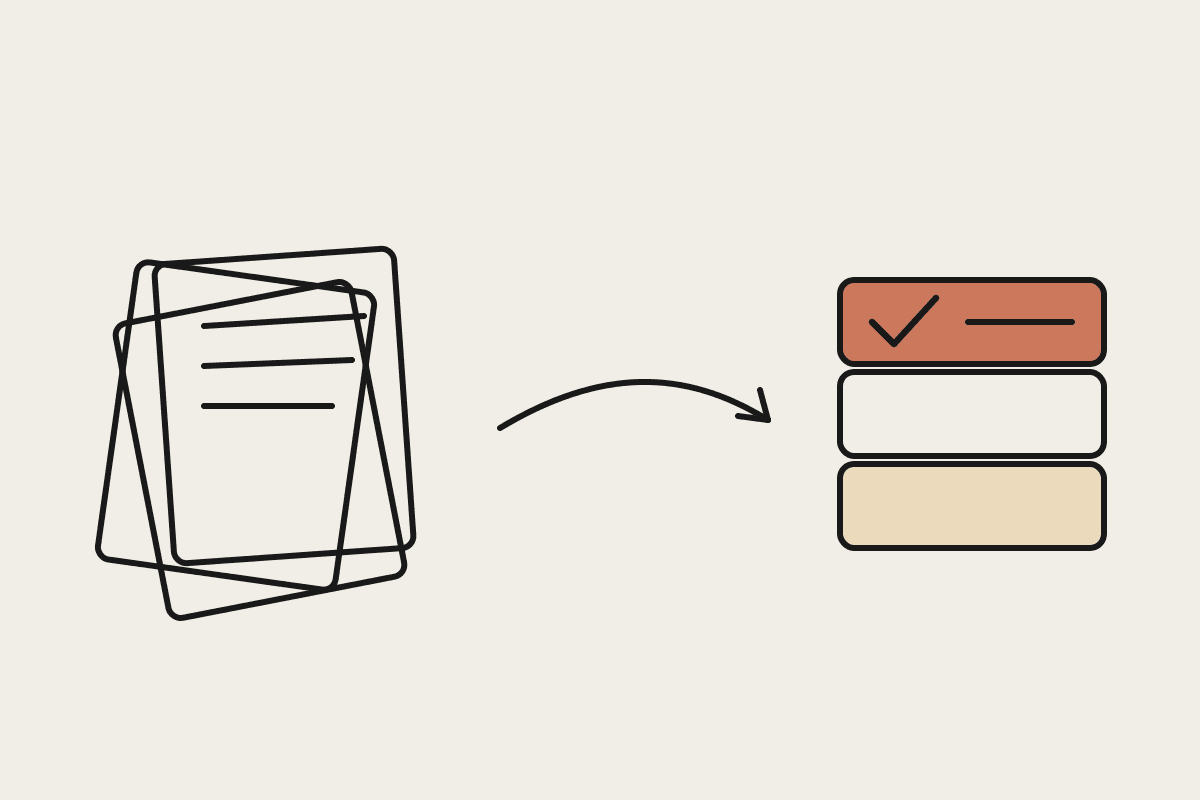
Strata maintenance contractors sit at the messy intersection of dozens of buildings, multiple strata managers, owners corporations, tenants, and trades. Every job arrives in a different format through a different channel. Claude, used carefully, can take that flood of unstructured requests and turn it into a clean, prioritised list your team can actually work from. This is a practical look at what that means for an Australian contracting business.
Where the chaos actually comes from
Most contractors assume they have a scheduling problem. Usually they have an intake problem. Work arrives faster than anyone can read it, and the reading is what decides what happens next. The common sources of that pileup:
Email from strata managers, often forwarding a tenant complaint with no address, unit number, or access details.
After-hours phone calls that get scribbled on paper and lost by morning.
Portal notifications from strata management platforms that nobody checks until the afternoon.
Photos sent by text with a caption like "this is getting worse" and no building name.
Repeat jobs for the same defect that never get linked, so you quote the same fix three times.
Each of these is readable by a person. The problem is volume and inconsistency. A mid-size Sydney contractor handling 40 buildings can field 60 to 120 requests a week, and the person triaging them is often the owner doing it at night. That is where quality slips and genuinely urgent jobs get buried under noise.
What Claude can sort today
Claude is strong at reading messy human text and returning consistent structure. Point it at your intake and it can do the unglamorous first pass that a coordinator would otherwise do by hand:
Extract the building, unit, contact, and described fault from a free-text email or transcript.
Flag jobs that mention safety words like gas, fire, lift entrapment, or electrical, and push them to the top.
Match a new request against recent jobs at the same building to catch repeats and warranty callbacks.
Draft a plain, professional reply to the strata manager confirming receipt and the next step.
Group the week's work by suburb so you are not sending a van across Sydney twice for two jobs on the same street.
None of this replaces a tradesperson or a scheduler. It removes the 90 minutes of daily sorting that stands between a request landing and someone deciding what to do with it. That is the bottleneck for most small contracting teams.
Start with intake, not scheduling
The temptation is to automate the whole pipeline at once. Do not. The highest-value, lowest-risk starting point is intake triage: take everything that lands today, and by 8am tomorrow have it sorted into a ranked list with the missing details already chased. Once that runs reliably for a month, you can decide whether to extend it toward quoting or dispatch.
A worked example
Take a contractor turning over roughly $1.2M a year across strata maintenance and reactive repairs. Their coordinator spends around two hours a day on intake and triage. At a loaded cost of about $45 an hour, that is close to $22,000 a year of pure sorting, before a single spanner is turned.
Move the first pass to Claude and the coordinator's two hours drop to about 40 minutes of checking and correcting. The saving is not just the $15,000 or so of recovered time. It is the missed-job risk. One overlooked lift entrapment or one warranty repair invoiced by mistake can cost far more than that in a single event, both in dollars and in the relationship with the strata manager who feeds you work worth $85,000 a year.
What it costs and what you get back
A setup like this is not a large capital project. For a small contractor the running cost of the Claude usage itself is typically tens of dollars a month, not thousands. The real investment is the few days of design work to map your intake channels, agree the priority rules, and connect Claude to where your jobs already live. Most teams recover that inside the first quarter through recovered coordinator time alone, and the missed-job protection is upside on top.
The businesses that get the most from this are not the biggest. They are the ones drowning at 40 to 80 buildings, where the owner is still personally triaging and every new contract makes the nights longer.
Where to draw the line
Two boundaries matter. First, Claude sorts and drafts, it does not dispatch. A human confirms priority and sends the van, especially for anything safety-related. An AI ranking is an input to that decision, not the decision. Second, tenant and owner details are personal information under the Privacy Act, so job data should stay inside systems you control and be handled on the same terms as the rest of your records. Neither of these is a reason to avoid the tool. They are reasons to set it up properly.
Strata maintenance will always involve surprise, urgency, and buildings that misbehave on public holidays. What it should not involve is the owner reading 90 emails at 9pm to work out which fire is the real one. That specific job, the sorting, is exactly what Claude is good at.
If you want to see what intake triage would look like against your own week of jobs, book a short brainstorm and we will map it with you.