Google announced Gemini Omni this month: generative video as a native modality, conversational editing, persistent characters, scene memory, and image-and-audio outputs on the published roadmap. For Australian businesses running Claude, the news raises a sensible question. Should the agent stack change? Our answer at Automata AI, after a week of working through what Omni actually does and what it does not, is mostly no. But the right architecture for Claude users does shift today, and pretending otherwise would be dishonest. This post lays out what shipped, what Claude still wins on for AU enterprise work, and the concrete pipeline shape we now recommend for Sydney and Melbourne teams that need video output from a Claude-led workflow.
What Gemini Omni actually shipped
Strip away the marketing, and Omni is two things. First, Gemini can now take any combination of text, images, audio, and video as input and generate a high-quality video grounded in its existing world knowledge. Second, you can edit those videos through conversation. Tell it to change the lighting, swap a character's outfit, or extend a scene; the model keeps characters consistent across cuts and the physics of the scene mostly holds up. Output is rolling out inside the Gemini app, Google's Flow product, and YouTube Shorts. Image and audio output modalities are in Google's announced roadmap, not yet shipping.
For an Australian marketing team that produces ad creative weekly, this is a real shift in production economics. A Melbourne-based agency director told us their typical 30-second product video runs around $4,200 to produce externally. A first-pass Omni draft, by the team's own estimate, lands much closer to $180 in cloud spend plus an hour of in-house editor time. The catch is the first-pass quality is not yet client-deliverable for most categories, and the editor time required to get there varies wildly by brand requirements.
Where Claude still wins for AU enterprise work
It is tempting to read every competitor launch as a forcing function to switch models. For most AU enterprise Claude work, that read is wrong. Three reasons matter here.
First, Omni is a generation model. The hard parts of an enterprise agent are not generation; they are reasoning over messy private context, calling tools reliably, following long instruction chains without drift, and behaving safely when the model does not know something. Claude remains the strongest model we have tested for those properties, particularly on AU regulatory work where APRA prudential standards, AUSTRAC reporting obligations, and Privacy Act constraints sit alongside the actual task.
Second, AU data residency and security posture matter. Claude on AWS Bedrock in the Sydney region gives our financial services and government clients a story they can defend to an auditor. The Gemini story on AU residency is still maturing, and for ASIC-regulated workloads our default recommendation remains the Bedrock Sydney deployment.
Third, Claude Skills and Claude Code give an AU consultancy real defensibility. A custom Skill that encodes how your Sydney accounting practice writes a tax position paper, or how your Brisbane mining client structures a board-level risk brief, is portable, inspectable, and version-controlled. That moat is not threatened by a competitor's video model.
The new architecture for Claude users who need video
For AU teams that genuinely need video output today, the right answer is not to abandon Claude. It is to wire Claude as the reasoning and orchestration layer in front of a dedicated video model. The pattern is straightforward in three steps:
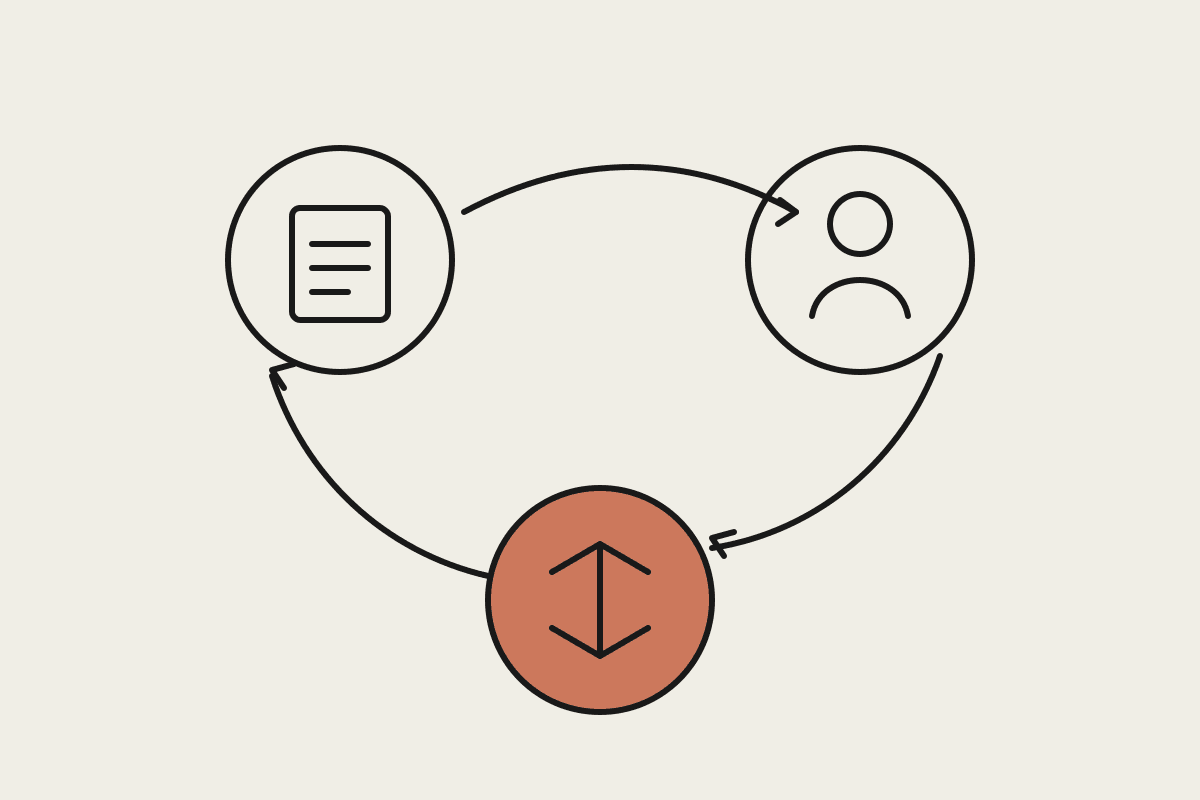
A user request hits Claude via the API or Claude Code. Claude decides whether the job needs a video at all, what the brief should be, and which constraints apply (brand voice, regulatory disclaimers, IP clearance, ad-platform rules).
Claude drafts the storyboard, dialogue, and shot list as structured text, then calls a video-generation tool with that brief as input. The tool can be Gemini Omni today, an alternative like Runway or Pika, or a future Anthropic-shipped video model when one exists.
The returned video flows back to Claude for review against the original brief. Claude flags drift, suggests re-shoots, and only releases output that passes the original constraints. A human approves the final cut before it goes out.
This pattern keeps Claude as the system of record for reasoning and policy. The video model is a downstream service that you can swap. A Sydney media client running this pattern today pays around $1,800 a month in combined Claude and video API spend to produce roughly $25,000 worth of social video at agency replacement rates. The economics are real, and the architectural risk of vendor lock-in stays low because Claude does not care which video model sits behind the tool boundary.
What this costs in AUD for a typical AU team
For a mid-sized Sydney or Brisbane team running a Claude-led workflow with Gemini Omni as the video step, the rough cost profile looks like this. Claude Sonnet at production volume for an agent that handles, say, 400 video briefs a month runs around $650 in API cost. Omni's published preview pricing puts a 30-second 1080p generation at roughly USD $0.45 to $0.80 depending on quality, so 400 outputs is about AUD $300 to $500. Add the orchestration code, monitoring, and a part-time prompt engineer to maintain the briefs, and the all-in monthly running cost lands near $4,500.
Compare that to the alternative of producing the same 400 short-form videos with an external production house at AU agency rates: closer to $120,000 a month. The architecture works because Claude does the parts that require judgement and the video model does the parts that require pixels. Neither model is asked to do the other's job, and the AU team keeps the option to swap either component when something better ships next quarter.
What we recommend AU Claude teams do this week
Three concrete steps if this matters to your business.
Map the workflows in your business that currently produce video as a deliverable. Be specific: ad creative, product demos, internal training, social shorts, sales enablement. Write the monthly output volume next to each.
For each workflow above 20 monthly outputs, prototype the Claude-plus-video-tool pattern this week. Start with a sandbox account, a single agent, and ten test briefs. You will know within a day whether the quality threshold is close enough to invest further.
Hold off on locking in long video-model vendor commitments. The video-model market will move twice more before Christmas. Keep your Claude orchestration layer stable and treat the video step as a swappable backend, not a strategic bet.
For AU teams that have not yet adopted Claude as the reasoning layer, the Omni launch is a useful prompt to do the Claude work first. The orchestration brain matters more than the rendering hands, and the brain choice compounds over the next two years of agent work in a way that no single video model will.
Where to go from here
If you are an AU business working out where Claude fits in a multimodal stack, and how to wire video generation in without rebuilding the reasoning layer every six months, we can walk through the architecture with you. Book a half-hour brainstorm and we will go through your specific workflow on the call, including the AUD numbers for your output volumes.