At I/O 2026 Google announced a Managed Agents API: a way to build and run autonomous, stateful agents inside secure Linux sandboxes that Google hosts for you. The pitch is that you write the agent logic and Google handles the isolation, scaling, and plumbing underneath. For developers who have spent weeks wiring up their own container orchestration just to run an agent safely, that sounds appealing.
The dust has settled enough to judge it honestly. This guide walks through what the API actually does, where it saves real effort, and the trade-offs an Australian business should weigh before moving a core workflow onto it. We build on Claude every day, so we will also be clear about where a managed agent platform fits and where it does not.
What Google actually shipped
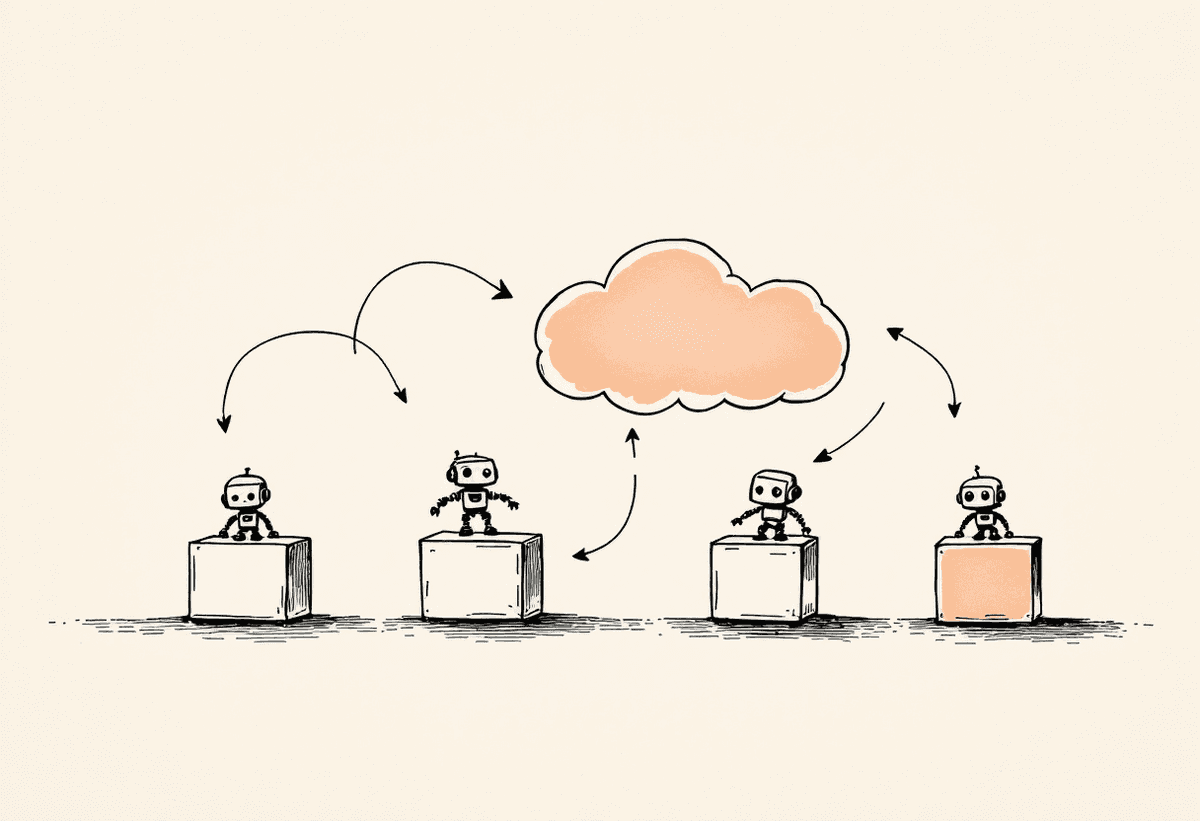
The Managed Agents API lets developers define an agent, hand it a task, and have it run to completion inside a Google-controlled environment. Each agent gets its own isolated sandbox, keeps state across steps, and can call tools you register. You are not managing the host, the runtime, or the per-agent isolation yourself.
In practical terms, the platform covers three things that teams usually build by hand:
Autonomous, stateful agents that remember context across a multi-step task rather than treating every call as fresh.
A secure, isolated Linux sandbox per agent, so a misbehaving run cannot reach into another customer or another job.
Managed hosting, scaling, and lifecycle handled by Google rather than your own infrastructure team.
Why developers are paying attention
The interesting part is not the model. It is how much setup work disappears. Running agents safely in production normally means sandboxing, resource limits, secrets handling, and a queueing layer. A managed platform removes most of that, which shortens the path from a working prototype to something you can put in front of customers.
For a small Sydney team, that difference is real money. Building production-grade agent infrastructure from scratch can easily absorb $30,000 of engineering time before a single customer sees value. A managed platform can compress that to a few days of integration work. The catch is that the saving is front-loaded, and the cost of being tied to one vendor shows up later.
The questions to ask before you build
Managed convenience always comes with strings attached. Three of them matter most for Australian businesses, and they are easy to skip when the demo looks good:
Where does your data sit and travel? Under the Privacy Act, you are accountable for how customer data is handled even when a third party processes it. Confirm the region your sandboxes run in and what Google retains.
How portable is the agent later? If your agent logic, prompts, and tool definitions are written to one provider's format, moving away means a rebuild, not a config change.
What happens if pricing changes? Usage-based platforms can reprice. Model the cost of a busy month, not just a quiet pilot, before you commit a revenue workflow to it.
None of these are reasons to avoid the platform. They are reasons to keep the parts that are expensive to replace, like your prompts and business logic, in a form you control.
Getting the implementation right
Most problems with autonomous agents come from skipping verification and trusting autonomy too far. Build the checks in early and the rest of the work gets safer and faster, because your team spends less time cleaning up after a confident mistake. A few habits do most of the work:
Start in a contained, low-risk environment before the agent touches anything that matters.
Verify output before it reaches a customer, a database, or a payment.
Keep approval gates on costly or irreversible actions so a human signs off on the big calls.
Log prompts and changes so any run can be reproduced and audited.
Grant the agent only the access the task needs, not a standing key to everything.
Common mistakes to avoid
Technical rollouts tend to stumble on the same few issues. Watch for these:
Letting an agent act on production data without an approval gate.
Shipping output with no verification step in front of it.
Hard-wiring prompts and logic to one platform, so a switch later costs $120K instead of an afternoon.
Assuming a benchmark score predicts how the agent behaves on your actual workload.
Where Claude fits for Australian teams
A managed agent platform is a hosting and orchestration decision. The model doing the reasoning is a separate choice, and the two should not be welded together in your head. We build on Claude because its behaviour on long, high-stakes business tasks, like reviewing a contract or drafting a compliance summary, has been steadier in our hands, and because keeping the model layer portable means we can run the same agent logic in a sandbox we control if a managed platform stops making sense.
The honest read is that Gemini's Managed Agents API is a genuine convenience for getting agents running quickly. For a prototype or an internal tool, it can save weeks. For a workflow that handles Australian customer data or sits on your revenue line, weigh the convenience against portability and data residency before you commit.
Key takeaways
The Managed Agents API runs autonomous, stateful agents in Google-hosted sandboxes, removing most of the infrastructure work.
The saving is front-loaded; lock-in and repricing are the costs that arrive later.
Keep prompts, logic, and the model choice portable, and put verification and approval gates on anything irreversible.
Match the tool to the task, keep a human on high-stakes work, and review the choice as the models change.
Automata AI is a Sydney-based consultancy that helps Australian businesses put Claude to work safely. If you are weighing managed agents against building your own, book a short brainstorm and we will map the fastest safe path to value for your team.