Claude can draft a blog post, a client proposal, or a follow-up email in under a minute. The catch is that readers can often tell a machine had a hand in it. A few habits give AI writing away, and once you notice them you cannot unsee them. The good news for Australian business owners is that a short editing routine removes most of the tells, and you can build that routine into how you already work with Claude.
Why Claude drafts can still read as AI
A capable model produces clean, confident prose, and that polish is part of the problem. Human writing has texture: uneven sentence length, the odd blunt statement, a willingness to leave a thought slightly rough. AI drafts tend to smooth all of that out. The patterns below are the ones a community of writers flags most often. This is community-reported guidance rather than a formal study, so treat it as a practical checklist, not a rule of grammar.
Significance inflation, where ordinary points get dressed up as pivotal moments
Copula avoidance, where a plain "is" becomes "serves as" or "functions as"
The rule of three, where ideas keep arriving in tidy groups of three
Dash clusters, where punctuation piles up in place of full stops
Chatbot closers, such as "I hope this helps" tacked on at the end
One of these on its own means nothing. Real writers inflate a point or use a dash now and then. The signal is several of them stacked in the same paragraph.
Step one: give Claude your own voice
Most people prompt Claude with a topic and accept whatever comes back. A better first move is to hand the model a sample of how you actually write. Paste one or two of your own past articles, emails, or posts into the prompt and ask Claude to match that voice, rough edges included. This gets you most of the way to something that sounds like you.
Choose two pieces you wrote yourself that sound the way you want to read
Paste them in as a voice reference, not just a topic brief
Ask Claude to keep your sentence rhythm, including the short blunt ones
Tell it which words and phrases you never use
Claude will copy a lot of your style this way. It will still leave in AI habits it does not know to remove, which is what the second step handles.
Step two: run a humanizer editing pass
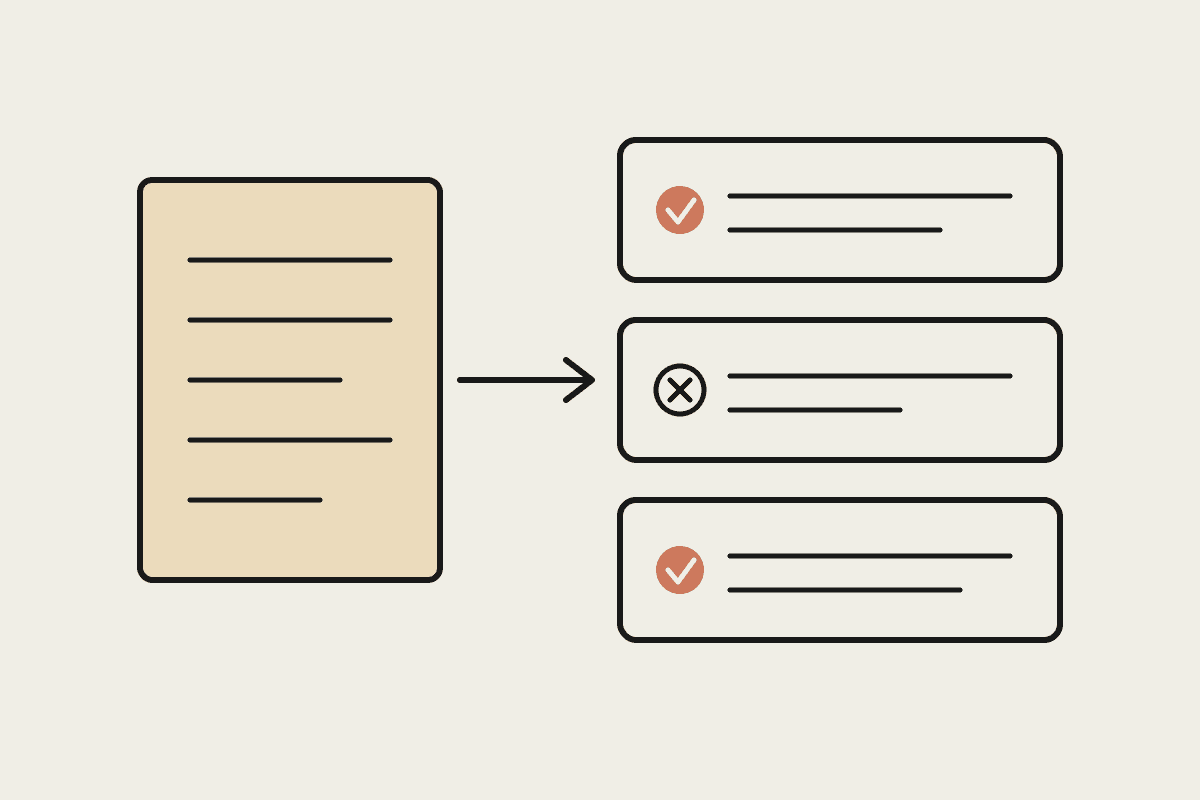
A popular open-source agent skill called Humanizer (github.com/blader/humanizer) automates the cleanup. It is built on Wikipedia's community guide to the signs of AI writing and checks for roughly 33 patterns. It installs into your Claude skills folder at ~/.claude/skills/humanizer and runs as an editing pass over a draft. Because it is community-built and open source, treat its output as a strong first edit rather than a final proofreader.
The author behind the skill points to five tells that show up most:
Significance inflation, like "marking a pivotal moment for the industry"
Copula avoidance, where "serves as" quietly replaces "is"
The rule of three, as in "innovation, inspiration, and insight"
Dash clusters used instead of separate sentences
Chatbot closers, the "I hope this helps" sign-off
The judgement rule is the useful part. A single pattern is normal human writing. When several appear together in one paragraph, the text is cooked, and that is your cue to rewrite by hand.
The editing workflow we use at Automata AI
We build this into client work so that Claude-written content reads like a person from the business wrote it. The routine is short enough to run on every piece.
Draft the rough version with Claude, fast and without fuss
Paste one or two of your own past pieces as a voice reference
Run the Humanizer editing pass over the draft
Read it once yourself, out loud if you can, and ship if nothing jumps out
This matches our own house style: minimal dashes, plain and direct language, and no filler sentences that say nothing. The aim is not to hide that you used Claude. The aim is for the writing to carry your judgement rather than a model's defaults.
What this is worth to an Australian business
For a Sydney small business, outsourcing content to an agency can run from $2,000 to $4,000 a month. Bringing that work in-house with Claude and a tight editing routine removes most of that cost while keeping the output in your own voice. One staff member can produce and clean a week of blog posts, proposals, and email copy in the time it used to take to brief a freelancer. Where the content touches customer data, keep your usual care under the Privacy Act and avoid pasting anything sensitive into a prompt.
If you want a writing workflow that produces content in your voice without sounding like a machine, we can set it up with your team. Book a brainstorm with us and we will map it to how your business already writes.