Open models now ship with context windows up to one million tokens. MiniMax M3 pairs that headroom with strong coding and multimodal performance, and the commercial frontier models are moving the same way. For technical teams, the question is no longer whether long context is possible. It is what you would actually build with it, and when the big window is the wrong tool for the job.
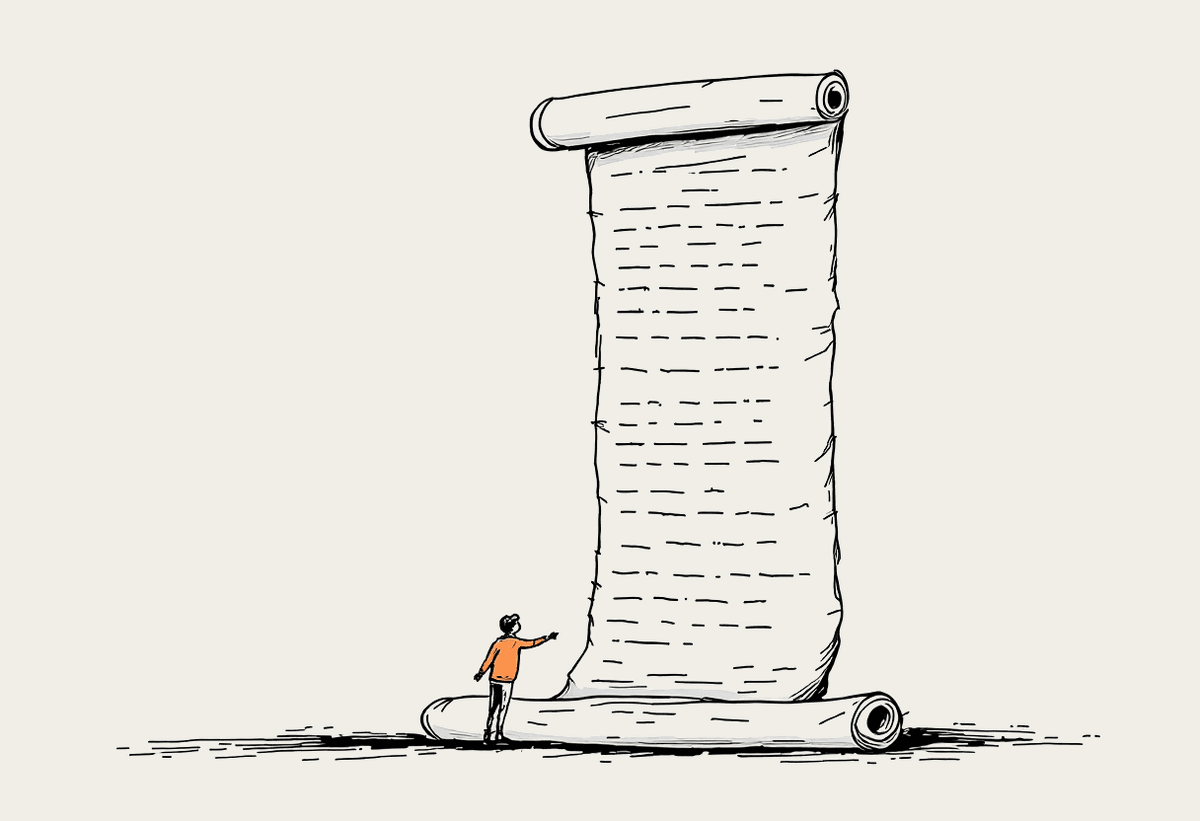
A million tokens is roughly 750,000 words. That is a moderately sized codebase, a year of board papers, or every contract a small business has signed since it opened. Workflows that used to need careful chunking, indexing and stitching can now, in principle, happen in one call. The engineering question for Australian teams is where that trade is actually worth making.
What long context actually enables
The new headroom removes a whole class of pipeline work. Tasks that once required splitting documents, summarising the pieces and hoping nothing important fell between the cracks can now run against the full input.
Reading an entire codebase in a single pass, so the model sees how modules connect rather than guessing from fragments
Reviewing long commercial contracts without splitting them, keeping definitions and clauses in the same view
Holding a whole project history in view for an agent, including decisions made months ago
Cross-referencing dozens of documents at once, such as a policy set against a new regulation
Analysing a full quarter of meeting transcripts for patterns no single meeting reveals
For the right task this is a real simplification. A contract review that once needed a chunking pipeline with overlap tuning and a reranker becomes a single prompt with the whole document in view. Less code, fewer failure points, and no risk that the answer lived in the chunk you dropped.
The catch: cost, latency and attention
More context is not automatically better, and treating the big window as a default is an expensive habit. Three things degrade as the window fills.
Cost scales with tokens processed. A prompt that includes 900,000 tokens of context costs hundreds of times more than one that includes the 3,000 tokens that mattered
Latency grows with input size. A full-window call can take minutes, which rules out interactive workflows
Attention is uneven. Models are measurably better at using information near the start and end of a long input than in the middle, so a fact buried at token 500,000 is the one most likely to be missed
Most tasks fit in far fewer tokens than teams assume. The honest baseline is to measure before reaching for the big window
Retrieval still earns its place
Long context and retrieval are not rivals so much as tools for different shapes of problem. Retrieval shines when only a small part of a large corpus is relevant to any one question, because it feeds the model just that part. Long context shines when the relationships across the whole input are the point, as in a codebase or a single long contract. The strongest production systems we see use both: retrieval to select candidate material, and a generous window to let the model reason over everything selected.
Prefer retrieval when questions touch a small slice of a large corpus
Prefer long context when the whole input must be in view at once
Measure answer quality both ways before committing to an architecture
How to get the implementation right
Most technical problems here come from skipping verification and over-trusting the headline capability. Build the checks in early and the work gets safer and cheaper, and your team spends less time explaining a surprise compute bill.
Start in a contained, low-risk environment with a representative document set
Verify output against known answers before the system touches live work
Track tokens per task so cost regressions surface in days, not at invoice time
Log prompts and context composition so good results are repeatable
Common mistakes to avoid
Long-context rollouts stumble on the same few issues. Catch them early and the build stays sensible.
Stuffing the window because it is there, instead of curating what goes in
Assuming a needle-in-a-haystack benchmark score predicts real reasoning over long inputs
Skipping a retrieval comparison, so nobody knows the cheaper design was just as accurate
Ignoring what is in the documents. Long inputs often contain personal information, and Privacy Act obligations apply no matter how large the window is
Hard-wiring the architecture to one model, when window sizes and pricing are still moving quarter to quarter
What this means for Australian businesses
A well-judged long-context workflow can replace a fiddly retrieval pipeline that cost $25,000 a year to maintain. Used carelessly, the same feature quietly adds $3,000 a month to the compute bill for no measurable gain. We have seen both outcomes in Sydney teams within the same quarter, and the difference was never the model. It was whether anyone measured.
We design context to the task, not to the maximum the model accepts
We keep Claude as the baseline for everyday work, with long context applied where it earns its cost
We benchmark retrieval against the big window on your real documents before you commit
Key takeaways
If you remember nothing else about long context AI models for your Australian business, hold on to these points:
A million tokens removes real pipeline work for whole-input tasks like codebases and long contracts
Cost, latency and mid-window attention all degrade as the window fills
Retrieval remains the better design when only a slice of the corpus is relevant
Measure both designs on real work before committing, and revisit as pricing moves
Talk to a Claude specialist
Automata AI is a Sydney based consultancy that helps Australian businesses put AI to work safely, with Claude as the core. If you are weighing long context against retrieval for a real workload, book a short brainstorm and we will map the fastest path to a defensible architecture.