Pair programming has a specific shape: two people, one keyboard, one person driving while the other thinks a step ahead. Claude Code changes that shape without deleting it. For an Australian dev team weighing whether to keep running pairing sessions once Claude Code is doing a chunk of the mechanical work, the useful question isn't whether pairing still matters. It's which of the old rituals still earn their keep, and which ones a fast, tireless coding agent quietly makes redundant.
What Traditional Pairing Actually Bought You
Before working out what changes, it helps to be honest about what pair programming was actually for. Two people at one screen forced real-time review, so defects got caught before they reached a pull request rather than three days later in a comment thread. It moved knowledge between a senior developer and a junior one faster than documentation ever could, because context transferred alongside the code. And it created shared ownership: nobody could claim a piece of logic was purely someone else's problem, because two people had sat with it.
That value came at a real cost. Pairing is slow by design, and it's tiring over a full day. For a distributed Australian team spread across Sydney, Melbourne, and Perth, it's also a scheduling problem: three time zones make synchronous pairing harder to arrange than it looks on a whiteboard. Most teams that ran a formal pairing rotation quietly let it slide within a year, not because the value wasn't real, but because the overhead outlasted the enthusiasm.
What Claude Code Actually Takes Over
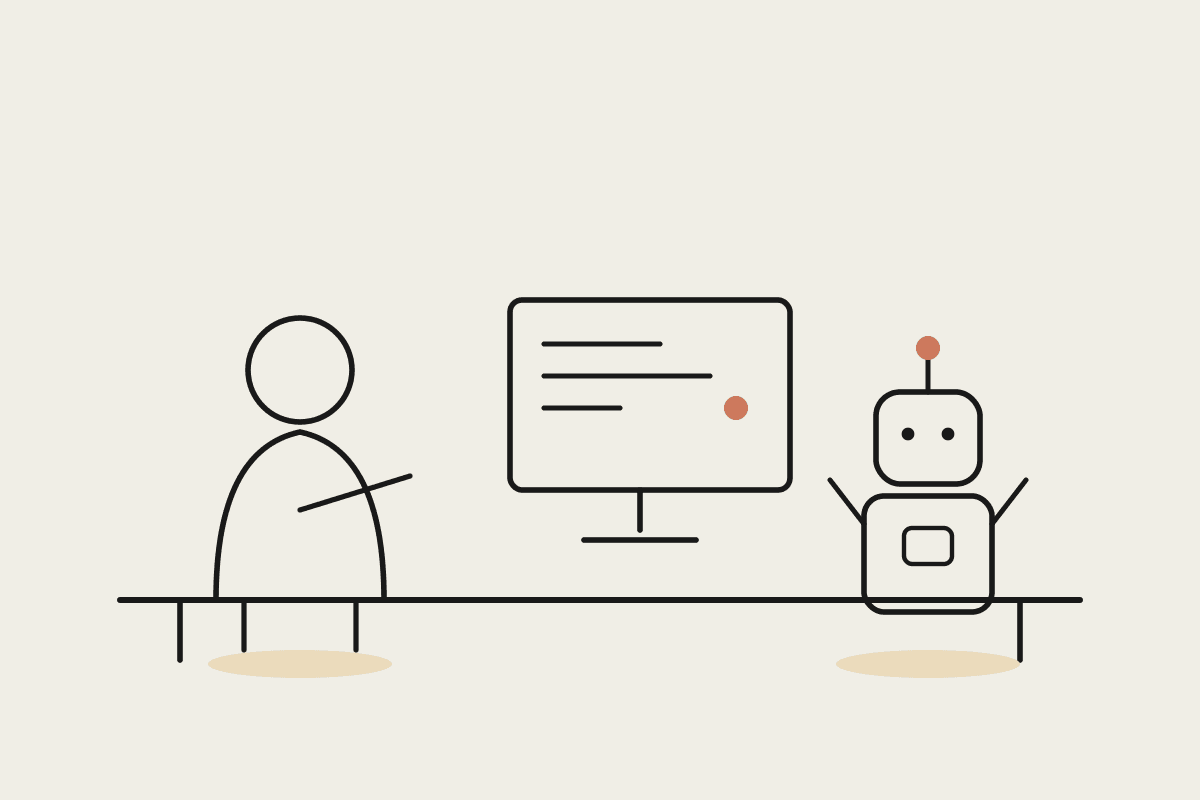
Claude Code is good at exactly the parts of pairing that wore people out. It knows the syntax, the test scaffolding, the boilerplate, and the library APIs cold, and it never needs a coffee break. A developer working solo with Claude Code open gets a version of the old navigator role on demand: something that can hold the next three steps in mind, suggest the test case you forgot, and catch a null check you missed, without needing a second person's calendar to line up with yours.
The shape of a session changes as a result. Instead of two people sitting together for three hours, a developer runs a solo session with Claude Code, produces a working diff in twenty minutes, and only then brings in a second person, to review the result rather than co-author it in real time. The synchronous, expensive part of pairing shrinks. The asynchronous, cheap part, a second set of eyes on a finished change, does most of the heavy lifting that pairing used to do.
What It Doesn't Replace
Claude Code is not a substitute for the parts of pairing that were never really about typing speed. Architectural judgment, the trade-off between two designs that both compile and both pass tests, still needs a human who understands the business reason the system exists. A coding agent can tell you a function works; it can't tell you whether the feature it belongs to should exist at all, or whether the shortcut it just took will cost your team six months from now.
It also doesn't replace the social function of pairing. A new graduate joining an Australian dev team learns the unwritten rules, the shortcuts, the office history of "we tried that once and it broke prod," by sitting next to someone, not by prompting a model. And for anything touching customer data, the second-human review that pairing built in as a habit is still worth keeping deliberately, particularly for teams operating under the Privacy Act, where "a human looked at this before it shipped" is a genuinely useful answer to have on hand.
Teams that get the most out of Claude Code don't drop pairing. They replace the old rituals with a smaller set of new ones:
Session handoff notes: a short summary of what Claude Code did and why, written before the diff goes to a reviewer, so the human isn't reverse-engineering intent from a stack of commits.
A shared rules file, the CLAUDE.md pattern, instead of a shared mental model built up over months of sitting together, so every session starts from the same conventions.
A structured review slot, fifteen to twenty minutes, where a human pairs with the diff rather than with the tool, and asks the questions Claude Code can't answer about why the feature exists.
Rotating review ownership across the team, so judgment doesn't quietly concentrate in whoever happens to run the most Claude Code sessions.
A clear, written boundary for what Claude Code can merge with a single reviewer and what still needs two humans, particularly for anything touching payments, personal data, or production infrastructure.
A Practical Structure for Australian Teams
The maths behind this shift is straightforward. A mid-level Sydney developer costs a business somewhere around $150,000 a year once superannuation and overheads are included, and a full day of synchronous pairing is a meaningful chunk of that cost for both people involved, not just one. Replacing three hours of side-by-side typing with a twenty-minute structured review, run against a diff Claude Code helped produce, can save a team something in the order of $45,000 a year in senior-developer time across a handful of engineers, without cutting the review step that actually catches problems.
For a distributed team, a Melbourne-based developer running a solo Claude Code session and a Sydney-based lead doing the structured review is a workable pattern that doesn't need two calendars to align for three hours. The pairing habit that mattered, a second person genuinely engaging with the change before it ships, survives. The part that was really just compensating for two people needing to be in the same room to get anything done doesn't need to.
The teams getting real value out of Claude Code aren't the ones that dropped pairing to save time, and they aren't the ones pretending nothing has changed either. They worked out which rituals were actually protecting code quality and which ones were just the cost of not having a fast, always-available navigator. If your team is still running the old pairing schedule out of habit rather than by design, that's usually a good place to start.
Automata AI works with Australian dev teams to set up Claude Code workflows that keep the review discipline and drop the scheduling overhead. Book a short call to talk through what that looks like for your team.