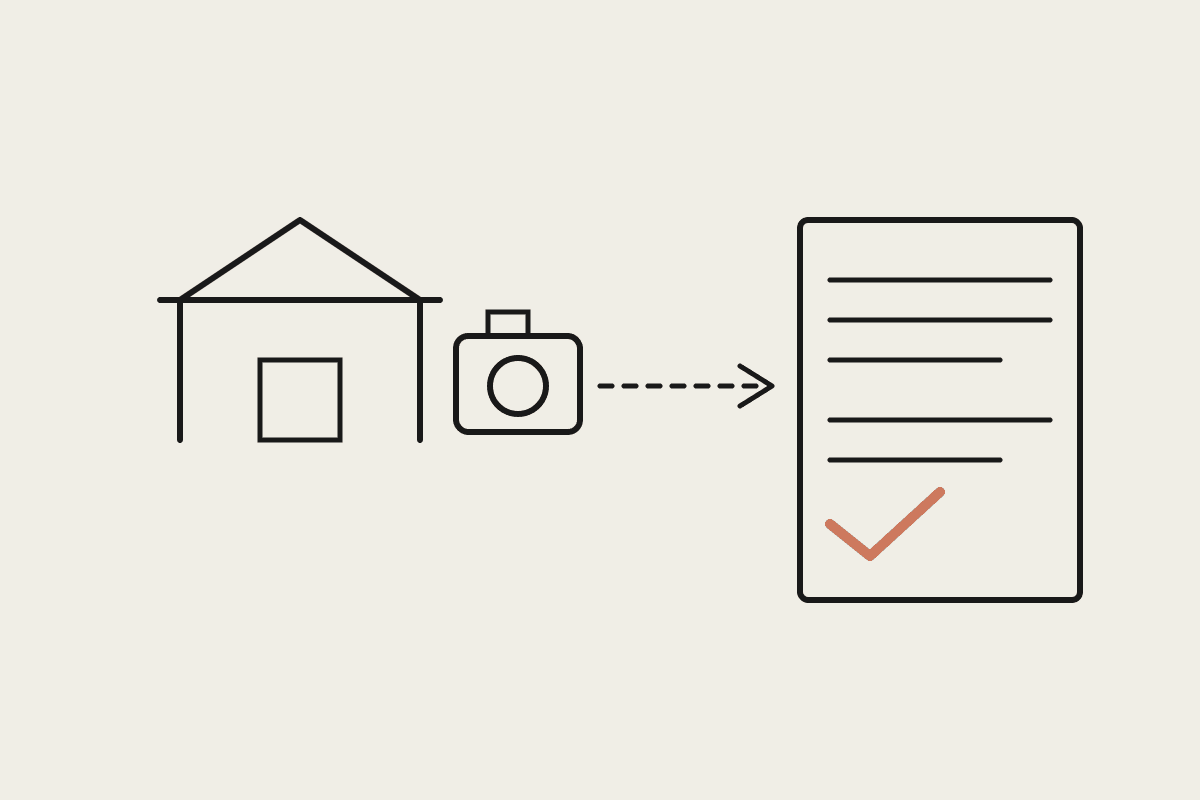
Property managers running routine inspections spend more time writing up the report than doing the inspection itself. A typical entry, exit or periodic inspection across a Sydney or Melbourne portfolio means walking the property, taking twenty to forty photos, jotting rough notes on a phone, then sitting down later to turn all of that into something an owner can actually read. Claude removes the second half of that job.
The Real Cost of a Routine Inspection Report
For a property manager handling 150 to 200 properties, quarterly inspections alone can eat 8 to 12 hours a week just on write-ups. At an average admin cost of $38 an hour, that is roughly $1,500 to $2,300 a month spent turning photos into paragraphs, before a single lease renewal or maintenance call gets touched. Agencies charging owners $15 to $35 per inspection report are often losing money on the admin time alone once photo sorting, note transcription and formatting to the agency's letterhead are counted in.
This is not a small-agency problem either. Larger Brisbane and Perth property management arms with dedicated inspection teams report the same bottleneck: the inspection itself is fast, the report is what backs up the schedule, and the backlog of unwritten reports tends to grow every busy fortnight rather than shrink.
What Claude Actually Does With the Photos and Notes
The workflow is straightforward. A property manager exports the inspection photos with their captions (most inspection apps, including Property Tree, Console Cloud and Inspection Express, let you export a raw photo set with timestamps and short notes), pastes the rough notes into Claude, and asks for an owner-ready summary in the agency's usual format.
Claude typically handles:
Grouping photos by room and flagging anything that needs owner attention, such as damage, wear beyond fair use, or overdue maintenance items
Converting shorthand field notes, like "carpet stain lounge, prob pet", into clear, neutral sentences an owner can read without a follow-up phone call
Drafting the covering summary paragraph that highlights the two or three things that actually matter, instead of a flat room-by-room list nobody reads
Matching the agency's existing report template and tone, so reports look consistent across different property managers on the same team
Flagging anything that reads like a tenancy condition issue rather than routine wear, so genuine problems don't get buried in a forty-photo report
The output is a first draft, not a final one. A property manager still reviews it, adds anything Claude missed, and sends it under their own name. What changes is that the draft takes minutes instead of the better part of an hour, and the reviewing step is quicker too, because the structure and tone are already consistent from report to report.
A Worked Example
A Brisbane agency managing 180 properties piloted this on their quarterly inspection round. Report drafting time per property dropped from an average of 22 minutes to about 6 minutes of review and light editing. Across one quarter's inspection cycle that works out to close to 48 hours of admin time back, worth roughly $1,800 to $2,200 at their internal cost rate. None of it required new inspection software or a change of process. The photos and notes still come from the same app the team already uses; Claude sits inside the write-up step, not somewhere new.
A second Adelaide agency running a smaller portfolio of around 60 properties saw a similar proportional saving, even though the absolute hours were smaller. The pattern held regardless of portfolio size: the bottleneck was always the write-up, never the walk-through.
What This Doesn't Replace
Claude doesn't walk the property, and it should never be the sole judge of condition from photos alone in a dispute-sensitive case, such as an outgoing bond claim. Photos with poor lighting or ambiguous framing still need a property manager's eye, and anything contested needs a human decision, not a generated paragraph. Reports referencing tenant information should also be handled with the same care an agency already applies under the Privacy Act, since inspection reports often include personal details, access notes and occasionally photos of tenant belongings.
There's a training curve too. The first few reports usually need more editing than the tenth, because Claude is learning the agency's specific tone and the property manager is learning what to hand it. Agencies that get the most out of this treat the first month as calibration, not a finished workflow.
Where This Fits Into a Broader Setup
Inspection reports are usually one part of a wider admin load that includes arrears follow-ups, maintenance triage and lease renewal comms. Agencies that start with inspection reports, because the win is fast and the risk is low, often extend the same approach to those other admin-heavy tasks once the team trusts the output. It's a sensible order: prove the model on the lowest-risk, highest-volume task first, then expand once the reviewing habit is established across the team.
For agencies drowning in inspection admin, the fix rarely needs new inspection software. It needs the write-up step handled properly. If you want to see whether this fits how your team already runs inspections, book a brainstorm session and we'll walk through your current workflow.