An AI agent is software that uses an AI model, such as Claude, to work towards a goal across multiple steps. It reads context, decides what to do next, uses tools like email, spreadsheets or a browser, checks the result, and keeps going until the job is done or a human steps in. That last part is the whole distinction. A chatbot answers a question and stops. An agent keeps working.
If you run a business, you have probably heard the term used to sell everything from a $29-a-month email plugin to a six-figure consulting engagement. The word is doing more work than it should. This post gives you a plain definition, shows where agents genuinely earn their keep in Australian businesses, and covers the limits that vendors tend to leave off the landing page.
The definition, minus the marketing gloss
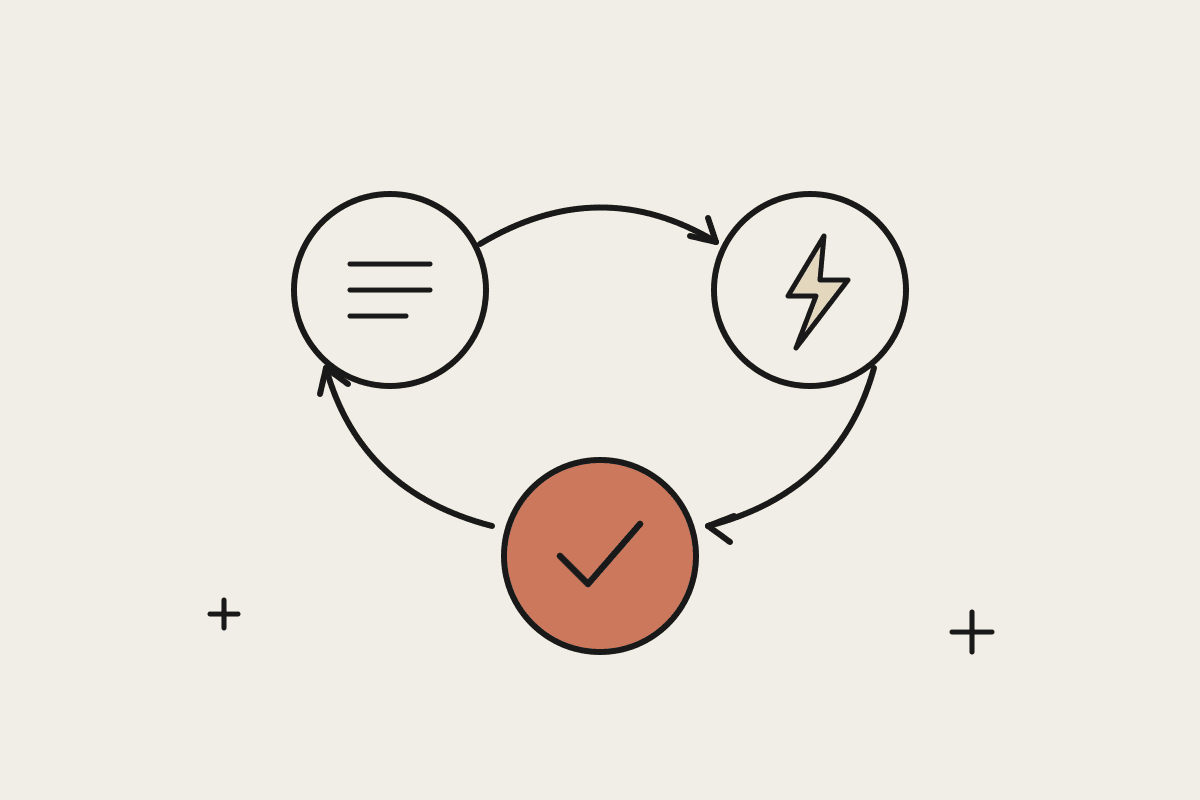
Strip away the branding and every real agent has three ingredients:
A model that can reason. The engine is a large language model such as Claude, which reads your instructions and the situation in front of it, then works out what a sensible next step looks like. This is what separates an agent from a script that runs the same way every time.
Tools it can use. An agent needs hands as well as a brain: access to your inbox, calendar, files, accounting software or CRM, with permissions you set. Without tools, the smartest model in the world can only give advice.
A loop with a goal. The agent acts, looks at what happened, and adjusts. It might draft an email, notice a missing attachment, go and find the file, attach it, and try again, all without being told each individual step.
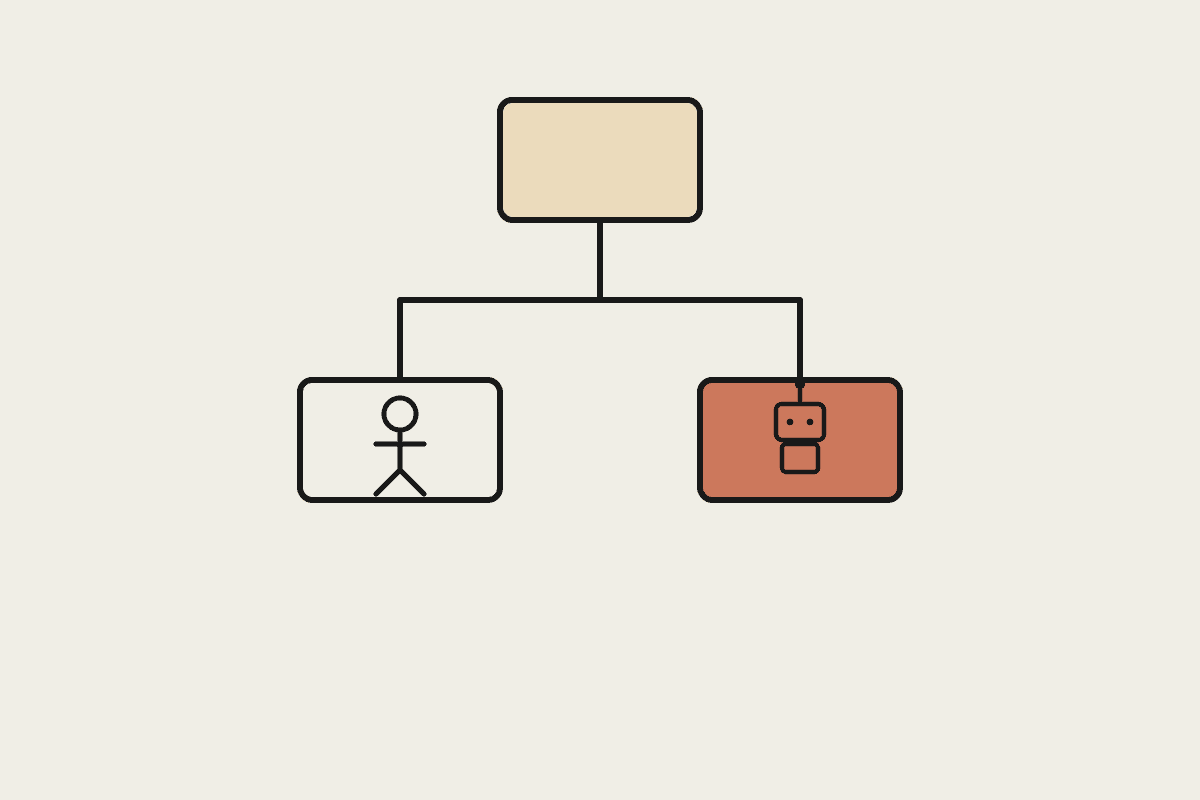
If a product has no tools and no loop, it is a chatbot. If it has tools but follows one fixed path, it is workflow automation. Both are useful and often cheaper. Neither is an agent, whatever the brochure says.
Agent, chatbot or plain automation? A quick test
"When an invoice arrives, save the attachment to a folder and add a row to a spreadsheet" is automation. The rule never changes and nothing needs to be judged. Tools like Zapier have done this well for a decade, often for under $50 a month, and if that solves your problem you should stop reading and go buy that instead.
"Answer customer questions about our opening hours and returns policy" is a chatbot. It retrieves an answer and hands the conversation back. Valuable, but it never takes an action in your systems.
"Chase every overdue invoice this week, match the tone to each customer's payment history, and flag anything that looks disputed for me to handle personally" is agent territory. The software has to read each situation, make a judgment call, use several tools, and know when to escalate to a human. No fixed rule covers every customer.
Three questions that cut through vendor claims
When someone tries to sell you an "agent", ask three things. Does it decide its own next step, or follow a script? Can it actually use my systems, and who controls those permissions? And what happens when it gets something wrong? If the answers are vague, you are looking at a chatbot with a new label.
What agents actually do in Australian businesses
The useful examples are boring, which is a good sign. A Sydney trades business carrying $45,000 in overdue invoices can hand the chasing to an agent that reads each customer's payment history, drafts a reminder in the right tone, and queues every email for the owner to approve before anything is sent. A professional services firm can have an agent read incoming enquiries, log them in the CRM with the right details, and draft a reply for a partner to review. A wholesaler can point an agent at supplier price lists and have quotes drafted in minutes instead of hours.
The economics are straightforward. Admin work like this typically consumes 10 or more hours a week in a small business. At a loaded cost of around $35 an hour, that is roughly $18,000 a year of skilled people doing low-judgment work. An agent that reliably absorbs half of it pays for itself quickly, which is why scoped setups in the $3,500 to $10,000 range have become the common entry point for Australian small and mid-sized businesses, rather than the six-figure builds of a few years ago.
Products like Claude Cowork have lowered the entry cost further by putting agent capability inside a desktop app, so the work of a setup shifts from building software to configuring permissions, connections and guardrails around your existing tools.
The limits nobody puts on the landing page
Agents make mistakes, and they make them confidently. A well-designed setup assumes this. Anything client-facing gets drafted, never sent, until a human approves it. Anything irreversible, like deleting records or moving money, stays off the table entirely. The businesses that get burned are the ones that skip approval gates because the first fortnight went well.
Data handling deserves the same scrutiny you would give any new supplier. If an agent reads customer records, you need to know where that data goes, what the provider does with it, and whether your obligations under the Privacy Act are covered. Reputable providers publish this. Anthropic, for example, does not train its models on business customers' data by default. If a vendor cannot give you a straight answer on data handling, that is your answer.
And agents are not a substitute for fixing a broken process. An agent pointed at a chaotic inbox with no rules about what matters will produce chaos faster. The preparation work, deciding what good looks like and writing it down, is usually half the value of a setup.
When an agent is worth paying for
The best candidates share a shape: the task repeats weekly or daily, it eats hours, each instance needs some judgment but not much, the cost of an occasional error is tolerable, and there is a natural point for a human to review the output. Invoice chasing, enquiry triage, quote drafting, report assembly and CRM upkeep all fit. One-off projects, high-stakes negotiations and anything where a single error is expensive do not, at least not without a human tightly in the loop.
Start with one task, measure the hours it gives back, and expand from there. If you want a second opinion on whether a task in your business is agent-shaped, book a free brainstorming session and we will tell you honestly, including when a $50 automation tool is the better answer.