Australian newsrooms are reaching a quiet inflection point with generative AI. The first wave, a flurry of AI-written sidebars and auto-generated explainers, burned several mastheads in 2024 and 2025. Readers caught the slop. Trust dipped. Subscriptions softened. The publishers that recovered fastest were the ones who reset the boundary early: Claude assists the journalists, but the byline still belongs to a person who reads every word, makes every editorial call, and bears the consequences.
That is the line that holds in the Australian market. The MEAA Code of Ethics, the Australian Press Council Statement of General Principles, and the editorial codes at the ABC and SBS all assume a human author who has exercised judgement, verified facts, and considered the public interest. None of those obligations transfer to a model. Generative AI can speed up the work that surrounds the byline, research, fact-pattern checking, copy polish, transcript cleanup, but it cannot carry the responsibility.
This piece is a practical guide for AU newsroom editors, magazine publishers, and book publishers who want to use Claude inside a workflow that respects those obligations. It assumes you have read the MEAA Code, you understand the APC Statement of Principles, and you are not interested in shortcuts that cost reader trust to save $40,000 a year.
Where Claude earns its keep in an editorial workflow
Most of the value sits before the journalist starts typing. A reporter assigned a 1,400 word feature on the AUSTRAC review of crypto exchanges can spend the first day reading 200 pages of submissions, parliamentary committee transcripts, and prior coverage. Claude reads that material in minutes and produces a structured brief that names the parties, summarises positions, lists open questions, and flags claims that need verification. The reporter then does the actual reporting: phone calls, on-the-record sources, document checks. Claude has not written a word that reaches the page. It has saved the reporter most of a day.
The second high-value use is fact-pattern checking before publication. Once a draft is ready, a sub-editor asks Claude to read the piece against the source documents and flag any claim, figure, or attribution that does not appear to be supported. This is not a substitute for the sub. It is a second set of eyes that catches the careless paste of an old quarterly figure or the misattribution that slipped in during the fourth revision. AU mastheads that have introduced this step report typical corrections issued per week falling by roughly 40 percent within two months.
The third use is copy polish. A reporter on deadline produces a draft that needs tightening, headline options, and a stronger nut graf. Claude proposes three to five alternatives. The reporter picks one or writes their own. The mind that decides what the story is still belongs to the journalist. The model is a writing partner with no opinion of its own.
Where Claude does not belong
The bright line for AU newsrooms is the byline. A piece carrying a journalist's name needs to be the journalist's work, in the same sense the MEAA Code has always meant it. That means no AI-generated paragraphs pasted into the body, no model-drafted ledes presented as the reporter's own writing, and no AI-written quotes attributed to real people. Mastheads that have crossed this line in the past two years have, without exception, ended up issuing corrections, losing readers, and explaining themselves to the APC.
A second category that does not belong to Claude is opinion. Columns, leaders, and editorial endorsements are the most identity-laden product an outlet publishes. They are also the product readers are most sensitive to. AI-assisted opinion writing tends to read as bland, hedged, and committee-drafted, even when the columnist has lightly rewritten the output. The cheapest signal of editorial quality is voice. Model output, by design, has none of that.
A third area is investigations. Investigative reporting depends on chains of evidence that a court could pick apart. Putting model output into that chain, even as a summary step, introduces an artefact that opposing counsel can interrogate. Most AU investigations editors keep Claude out of the evidence chain entirely. It can help with research at the perimeter, but the documents that matter are read by the journalist directly.
A workflow that holds the line
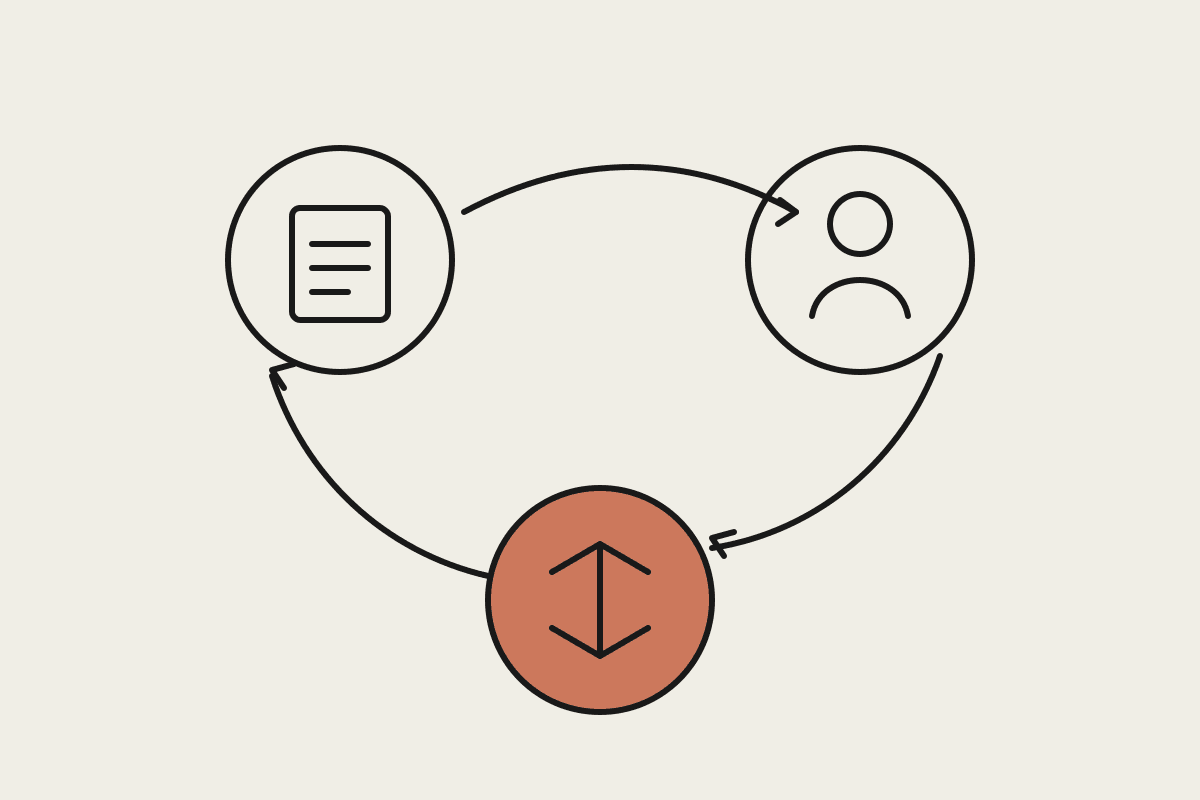
A workflow that respects the MEAA Code while extracting real value from Claude looks something like the steps below. The exact shape varies by masthead, but the structure recurs across the AU outlets that have made this transition well.
Research and briefing: Claude reads the source material, produces a structured brief, and lists open questions. The reporter does the reporting from that brief.
Drafting: the reporter writes the piece. Claude is not in this step at all.
Fact-pattern review: the sub-editor or a dedicated checker uses Claude as a second reader against the source documents, treating flagged items as candidates for verification, not as findings.
Copy polish: Claude proposes tighter sentences and headline options. The editor chooses or writes their own.
Final pass: the editor reads the piece end to end, on the page, the way a reader will. No model output reaches publication without this step.
Provenance log: the masthead keeps a brief internal record of where AI assistance touched the piece. This is what the APC will ask for if a complaint is lodged.
The provenance log is the most overlooked part of the workflow. AU mastheads that have been challenged by the APC over AI-related complaints recover much faster when they can show a precise record of where the model touched the piece and where the journalist's judgement carried. Mastheads that cannot produce that record tend to settle the complaint quietly and rewrite the workflow under pressure.
What this costs and what it saves
A mid-sized AU masthead with 30 reporters and 8 subs running this workflow sees a meaningful cost picture. Claude usage at the Pro and Team tier runs around $60,000 a year for that headcount, including pooled access for fact-checkers and a small allowance for research-heavy reporters. The reclaimed time on the research and fact-pattern checking steps is typically worth between $250,000 and $400,000 a year, measured as journalist time redirected to original reporting rather than as headcount reduction. The mastheads that try to bank the saving as a headcount cut are the ones that lose voice, lose subscriptions, and end up cancelling the rollout within a year.
Book publishers see a similar pattern at smaller scale. A trade publisher producing 40 to 60 titles a year typically saves around $90,000 on first-pass developmental editing and structural review, which is then reinvested into more careful work on the back third of the list, the books that previously got the lightest editorial pass. The visible quality of those titles tends to lift within an imprint or two.
Magazine publishers running short-form journalism see the largest relative gains on research and the smallest on drafting. Niche titles that maintain a strong house voice, the kind of voice readers subscribe to a single publication for, see almost no value from copy polish and substantial value from research compression. Generalist titles benefit more evenly across the steps.
Reader trust is the constraint
Every other consideration is downstream of reader trust. AU newsrooms that have made the AI transition well are the ones that decided early what they would never automate, communicated it plainly to readers, and held the line when it would have been cheaper to slip. The mastheads that have stumbled have done so by treating AI as a cost programme rather than an editorial programme. The Code of Ethics is not a constraint to optimise around. It is the product readers pay for.
Automata AI works with Australian publishers on Claude rollouts that fit inside the MEAA framework rather than around it. If you are an AU editor, publisher, or editorial operations lead and you want to discuss what a careful rollout could look like in your masthead, our brainstorming call is the easiest place to start. Book a slot via our contact page.