Most Australian SMB owners hit the same fork within a year of getting serious about AI. You can hire someone to build automations in-house, or you can bring in an agency to do it for you. Both pitches sound reasonable, so the decision usually rests on a spreadsheet nobody has actually filled in. This piece fills it in, with real AUD figures and the trade-offs that never show up on a salary line.
We build with Claude for a living, so we see both routes up close. Some clients genuinely need a full-time person. Most do not, at least not yet. The honest answer depends on how much work you have, how quickly you need results, and whether the skill you are buying needs to live inside your business for good.
What an in-house AI hire really costs
The salary is the number people quote, and it is the smallest part of the bill. A capable automation engineer or AI specialist in Sydney or Melbourne sits around $120,000 to $150,000 base in 2026. By the time you add the true cost of employment, you are well past that headline figure.
Superannuation at 12% adds roughly $15,000 to $18,000 on a $130,000 base salary.
Recruitment fees run 15% to 20% of first-year salary if an agency finds the person for you, so $20,000 to $28,000.
Payroll tax, workers compensation, software licences and a laptop add another $10,000 to $15,000 a year.
Ramp-up is a hidden cost: expect two to three months before a new hire ships anything you would put in front of a customer.
Add it up and a single in-house hire lands near $170,000 to $190,000 in the first year, before they have delivered a dollar of value. That is fine if you have a backlog of automation work to keep them busy. It is expensive idle capacity if you have three workflows to fix and then a quiet stretch.
What an automation agency costs
An agency is priced by the job or by a monthly retainer, not by the year. A defined build, say an intake bot that reads incoming email and drafts replies, or a document workflow that turns messy PDFs into structured records, is commonly a fixed fee in the $2,500 to $15,000 range depending on scope. Ongoing support and iteration typically runs as a retainer between $3,000 and $8,000 a month.
The maths flips the question. For the $170,000 a first-year hire costs, you could run a $6,000 monthly retainer and still have close to $100,000 left over. The trade is that the agency's people are not in your standups every day, and the knowledge they build has to be documented and handed back rather than absorbed by osmosis.
A worked example on one workflow
Take a common Australian SMB job: a services firm buried in quote requests. Staff spend maybe 15 hours a week reading enquiries, pulling out details and drafting responses. At a loaded cost of $55 an hour that is about $43,000 a year in labour on one task alone.
An in-house hire could automate it with Claude in a few weeks, but you carry their full salary the whole time and for every week after. An agency can ship the same Claude-based workflow in two to three weeks for a fixed $6,000, then charge a small retainer to keep it tuned. On this single workflow the agency route pays for itself inside two months, while the in-house route does not break even until the hire has several such workflows to justify the salary.
When in-house actually wins
The numbers are not the whole story, and there are clear cases where hiring is the right call.
You have a steady backlog of automation work, enough to keep one person busy for a year or more.
The automations touch sensitive systems and you want the knowledge and access held internally, which matters under the Privacy Act and for clients who ask hard questions about data handling.
You are building AI into the product you sell, not just your back office, so the capability is core intellectual property.
You want someone on hand for same-day changes rather than a support queue.
When an agency wins
For most Australian SMBs at the start of this, the agency route wins on speed and on risk. You get working automations in weeks instead of months, you pay for outcomes rather than headcount, and you are not locked into a fixed cost if priorities shift. It also lets you find out what the work is worth before you commit to a salary. Plenty of our clients start with a fixed-scope build, learn where automation actually moves the needle, and only then decide whether an internal hire is justified.
We are Claude specialists, so our bias is toward getting a real workflow live quickly and measuring what it saves, then letting that number drive the staffing decision. Anthropic's models are the engine; the value sits in choosing the right first job and building it so it holds up in production.
How to decide
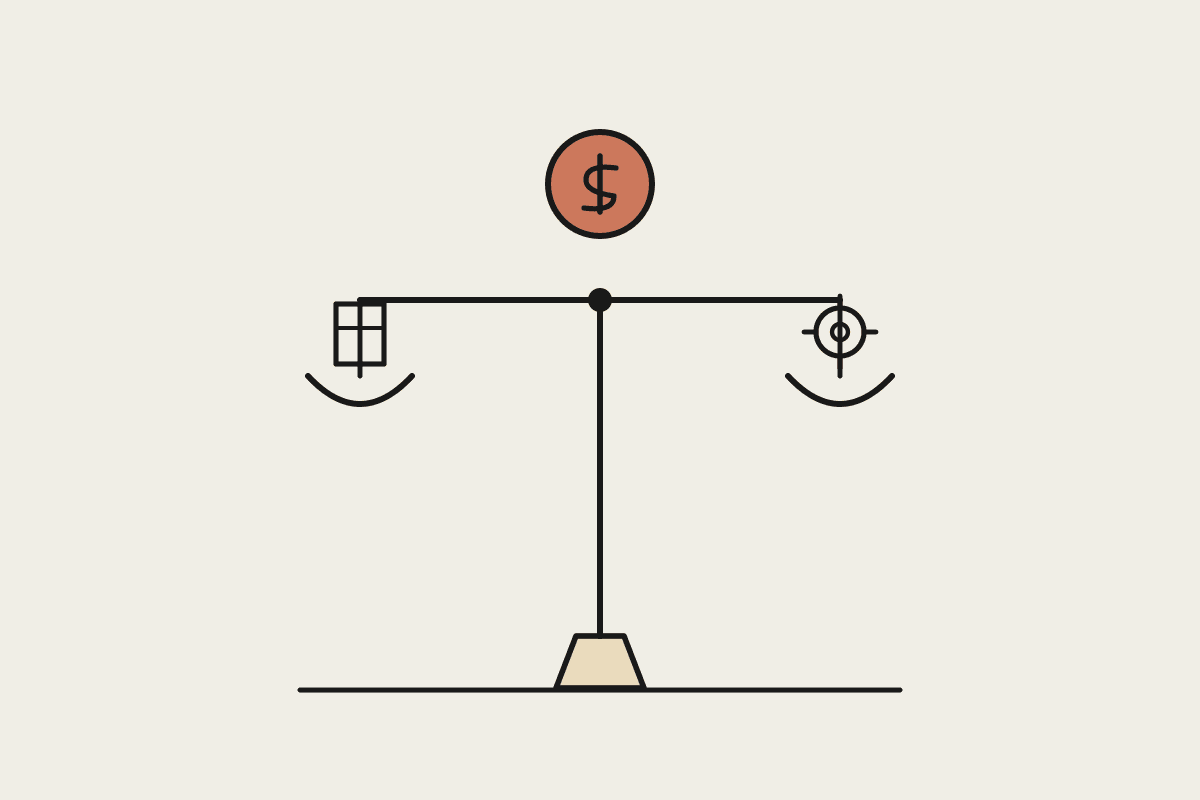
Run the comparison on your own figures before you commit either way. Count the hours your team loses to repetitive work, put a loaded hourly cost against them, and weigh that against a full first-year hire at roughly $180,000 versus a fixed build plus a modest retainer. If you have one or two painful workflows, an agency almost always wins. If you have a dozen and a plan for more, start costing a hire.
If you want a straight answer for your situation, we are happy to run the numbers with you. Book a short brainstorm and we will map your workflows and give you an honest read on build versus hire, with no obligation. Start here.