"AI automation" gets used to describe everything from a chat widget on a website to a full back-office rebuild. For an Australian business owner comparing quotes, that vagueness is expensive: two proposals at $8,000 and $80,000 can both wear the same label. This guide sets out what the phrase actually covers in 2026, what sits behind each price band, and how to tell a real service from a thin wrapper around someone else's software.
What "AI automation services" actually includes
Most reputable providers deliver some mix of the following. The list matters because a quote that covers only one or two of these items is not the same product as one that covers all of them.
Discovery and process mapping: sitting with your team to document how work moves today, where the delays are, and which tasks are worth automating first.
Build and integration: connecting a model like Claude to the systems you already run, such as Xero, your CRM, email, and document storage, so it can read and act on real data.
Guardrails and review steps: deciding what the system does on its own and what a person signs off, which counts most in regulated work.
Testing and rollout: running the automation against real cases before it touches live customers or money.
Training and handover: making sure your staff can run, adjust, and trust the system without the provider in the room.
Ongoing support: monitoring, fixing, and improving the automation as your processes change.
A provider who quotes only for the build, and skips discovery, testing, and handover, is selling you a demo rather than a service. The gap usually shows up three months later when the automation breaks on an edge case nobody mapped.
What you get at each budget band
Prices vary, but the shape of what you receive is fairly consistent across the Australian market in 2026.
Under $5,000
At this level you are buying a single, well-defined automation: an email triage assistant, a document summariser, or a first-draft generator for quotes and reports. Expect one process, light integration, and a short handover. This is a sensible way to test whether AI automation earns its keep before committing to more. A Sydney firm spending $4,000 to remove ten hours of weekly admin is making a low-risk bet.
$15,000 to $50,000
This band buys a connected system rather than a single tool. Several processes are automated, the model is wired into your core software, and there are proper guardrails and review points. Most small and mid-sized businesses land here for a project that genuinely changes how a team works. A $45,000 engagement might automate quote generation, client onboarding, and inbox triage across a 20-person business, with a payback period measured in months rather than years.
$50,000 and above
Larger projects span multiple departments, custom integrations, and stricter compliance handling. This is where regulated industries, such as financial services under ASIC oversight or health providers bound by the Privacy Act, invest in systems that need audit trails and careful data handling. The cost reflects the review, documentation, and testing that regulated work demands, not simply more code.
Where Claude fits
At Automata AI we build most of these services on Claude, Anthropic's model family, because it holds up well on the two things that decide whether an automation survives contact with real work: following instructions precisely, and knowing when to stop and ask. A model that quietly guesses on an ambiguous invoice is worse than useless in a finance workflow. Claude's stronger instruction-following, and its willingness to flag uncertainty, make it a good fit for Australian businesses that cannot afford silent errors.
The service, though, is never just the model. The value sits in the mapping, the integration, the guardrails, and the handover. The model is one component; the judgement about where to apply it is what you are actually paying for.
How to tell a real service from a wrapper
Before you sign anything, ask the provider these five questions. The answers separate a genuine service from a subscription with your logo on it.
Who owns the automation when the engagement ends: you, or the provider's platform?
What happens on an edge case the system has not seen before?
Can you see the review steps, or does the automation act with no human checkpoint?
How is your data handled, and does it meet your obligations under the Privacy Act?
What does month four look like, once the novelty has worn off?
A provider who answers these clearly is selling a service. One who deflects to a polished demo is selling you a promise you cannot inspect.
Working out the return
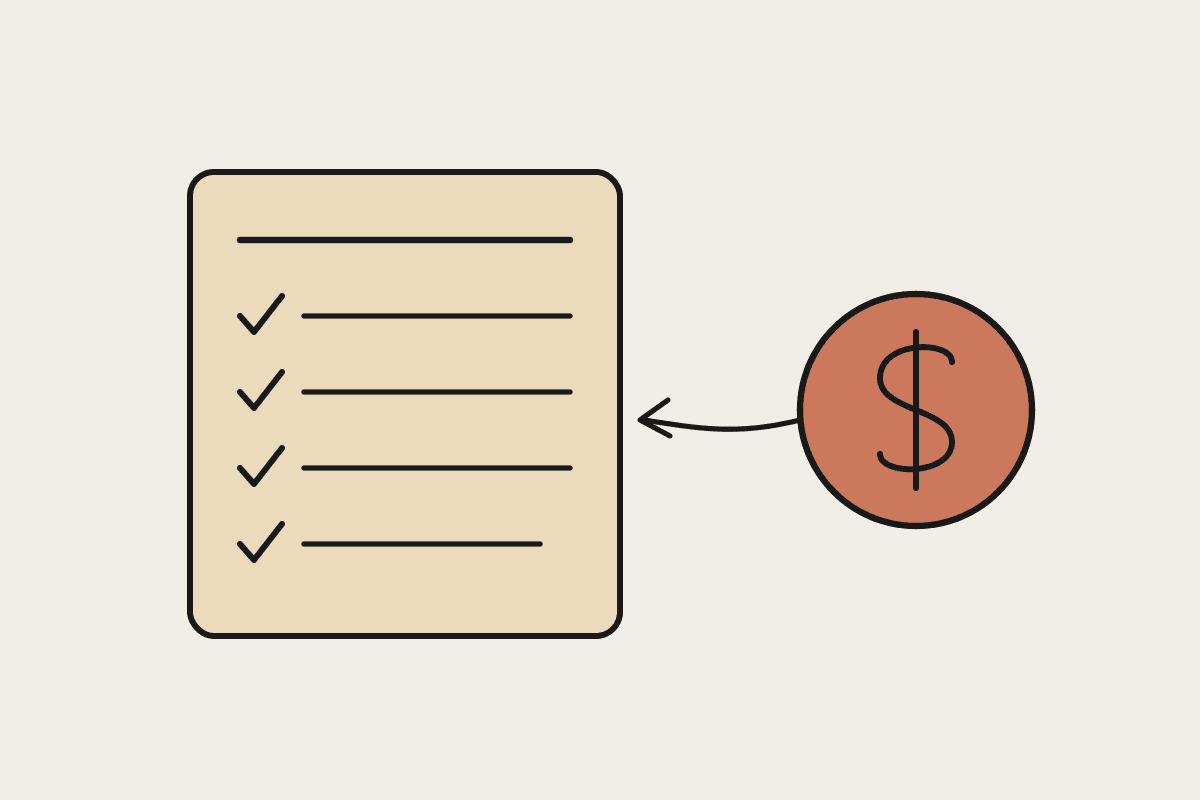
The maths is simpler than most quotes make it look. Take the hours a process consumes each week, multiply by a loaded hourly cost, and compare that to the build price plus ongoing support. If a task eats 15 hours a week at $60 an hour, that is roughly $46,800 a year. A $30,000 automation that removes most of it pays for itself inside the first year and keeps returning after that. The figure that matters is not the sticker price, it is the price set against the cost of the work you are doing by hand today.
The honest answer to "what do I get for my money" is this: a mapped process, a working system built on a model you can trust, guardrails you can see, and a team that knows how to run it. If you want to work out which of your processes is worth automating first, and what it would realistically cost, book a brainstorm with us and we will walk through it together.